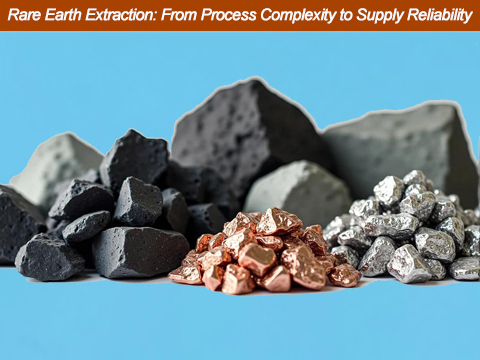
| Key Insight | Data / Explanation |
| What is rare earth extraction? | Recovery and separation of rare earth elements from ores, concentrates, or recycled materials |
| Main challenge | Extremely similar chemical properties make separation complex |
| Waste generation | Can reach up to 2,000 tonnes of waste per tonne of rare earths (varies by process) |
| Global supply | China produces over two-thirds of global output |
| Why it matters | Directly impacts cost, purity, and supply stability for industrial buyers |
Rare earth extraction is the process of recovering and separating rare earth elements from ores, concentrates, or recycled materials into usable high-purity forms.
Rare earth extraction plays a critical role in modern industry. From advanced electronics to aerospace systems, many high-performance technologies depend on stable access to rare earth materials. However, the extraction process is far more complex than most people expect. It involves multiple stages, strict quality control, and significant environmental considerations. For industrial buyers, understanding rare earth extraction is essential. This is because it directly affects pricing, lead times, and material performance.
Rare earth extraction involves two main stages. First, rare earth elements (REEs) are obtained from natural or secondary sources. Then, they are converted into usable materials. These elements include scandium, yttrium, and the fifteen lanthanides. Although they are called "rare", many of them are relatively abundant in the Earth's crust. The real challenge lies in extracting and separating them efficiently.
Rare earth extraction is not just mining. It is a multi-step process that includes mining, physical concentration, chemical treatment, separation, purification, and final material production. Each stage requires specialized technology and careful control. For example, after ore is mined, it must be crushed and processed to increase the concentration of rare earth minerals. Then, chemical methods are used to dissolve and separate the elements.
The complexity of rare earth extraction comes from the fact that these elements often occur together in the same deposits. Unlike metals such as iron or copper, rare earth elements have very similar chemical properties. This makes it difficult to isolate individual elements without advanced processing techniques.
For industrial buyers, rare earth extraction determines the quality of the final product. High-purity materials are essential for applications such as lasers, magnets, and electronics. Even small impurities can affect performance. Therefore, understanding rare earth extraction helps buyers make better decisions when selecting suppliers and materials.
Rare earth extraction is widely known as one of the most complex processes in the materials industry. The main reason is the chemical similarity between rare earth elements. Many of these elements have nearly identical ionic sizes and chemical behaviors. As a result, separating them requires multiple stages of processing, often involving hundreds of steps.
Rare earth elements sit next to each other in the periodic table. This means they behave in very similar ways during chemical reactions. This makes it difficult to separate one element from another. In some cases, advanced solvent extraction systems are required. These systems must run through dozens or even hundreds of cycles. This repetitive process is necessary to achieve the desired purity level.
Rare earth extraction involves several stages, including crushing, leaching, separation, and purification. Each stage adds time and cost to the process. For example, solvent extraction systems require precise control and continuous operation. This increases operational complexity. This is why rare earth materials often have longer lead times compared to other metals.
Rare earth extraction can generate large amounts of waste. This includes tailings, wastewater, and chemical residues. Some deposits also contain radioactive elements, which require careful handling. Managing these environmental risks adds another layer of difficulty and cost.
| Challenge | Effect | Business Impact |
| Similar chemistry | Difficult separation | Higher production cost |
| Multi-step processing | Long production cycles | Delayed supply |
| Waste generation | Environmental burden | Compliance and disposal costs |
Rare earth extraction relies on a combination of physical and chemical processes to separate and purify individual elements. Achieving high purity in rare earth elements is a challenge. These elements share very similar chemical properties. Therefore, the process requires advanced separation technologies. The choice of method depends on ore type, desired purity, and application requirements.
Physical concentration is the first step in rare earth extraction. It focuses on increasing the grade of rare earth minerals in the ore before chemical processing. Common techniques include flotation, gravity separation, and magnetic separation.
This step removes a large portion of waste rock, also known as gangue, which improves the efficiency of downstream processes. Physical concentration does not separate individual rare earth elements. However, it is a vital step. It reduces both processing costs and chemical consumption in the later stages.
Hydrometallurgy is widely used in rare earth extraction. It's used to dissolve rare earth elements from concentrated ore. This process typically involves acid or alkaline leaching, depending on the mineral type.
For example, bastnäsite ores are often treated with acid leaching. Ion-adsorption clays may use ammonium sulfate solutions. The result is a solution containing mixed rare earth ions, which must then be separated and purified.
This method allows for controlled extraction and high recovery rates. However, it requires careful handling of chemicals and waste streams.
Solvent extraction is the core technology in rare earth extraction. It's widely used for separating individual rare earth elements at an industrial scale.
This process works by exploiting small differences in how rare earth ions distribute between two liquid phases: an organic phase and an aqueous phase.
For example, in the separation of mixed rare earths from Bayan Obo deposits:
This multi-stage design enables the production of high-purity rare earth oxides, often reaching 99.99% purity or higher.
However, solvent extraction also has challenges:
In some cases, pre-treatment steps are needed. For example, when extracting yttrium from ion-adsorption clays, impurities such as iron and aluminum must first be removed using naphthenic acid extraction.
Ion exchange and chromatographic separation are advanced extraction methods. They are used when very high purity is required. These techniques are especially important for heavy rare earth elements.
Traditional ion exchange uses resin materials to selectively bind rare earth ions and separate them based on slight differences in affinity. This method provides excellent purity control but is relatively slow and costly.
A more recent development is chromatographic separation, which uses columns packed with silica gel or specialized resins. Elements are separated based on their different migration speeds through the column.
For example:
These improvements make chromatographic methods promising for high-value applications where purity and efficiency are critical.
Pyrometallurgy involves high-temperature processing and is used in rare earth extraction for certain types of ores, especially those that are difficult to treat chemically.
One important example is the high-temperature chlorination method used for bastnäsite concentrates:
This allows step-by-step crystallization and separation of individual elements.
Pyrometallurgical methods are effective for processing resistant mineral structures. However, they are energy-intensive and require specialized equipment.
| Method | Best For | Strengths | Limitations |
| Physical concentration | Pre-processing | Reduces waste volume, improves feed grade | No separation of individual REEs |
| Hydrometallurgy | Most ores | High recovery efficiency | Chemical use and waste handling |
| Solvent extraction | Separation of REEs | High purity (up to 99.99%), scalable | Complex, multi-stage process |
| Ion exchange / Chromatography | High purity, heavy REEs | Excellent separation precision | Slower and higher cost |
| Pyrometallurgy | Resistant ores | Effective for difficult materials | High energy consumption |
Rare earth extraction has significant environmental impacts. These impacts are becoming more important for both regulators and buyers. The process can generate large amounts of waste. Common examples include tailings, wastewater, and chemical byproducts.
One of the biggest concerns is waste generation. In some cases, rare earth extraction can produce up to 2,000 tonnes of waste for every tonne of rare earth material. This waste must be carefully managed to avoid environmental damage. Improper handling can lead to soil contamination and water pollution.
Another issue is the presence of radioactive elements in some rare earth deposits. Materials such as thorium and uranium can be found alongside rare earth elements. During extraction, these materials must be safely separated and stored.
Water usage is also a major factor. Rare earth extraction often requires large amounts of water for leaching and processing. This can put pressure on local water resources, especially in regions with limited supply.
Because of these challenges, environmental regulations are becoming stricter. Companies must invest in cleaner technologies and better waste management systems. For buyers, this means that ESG (environmental, social, and governance) factors are becoming more important when selecting suppliers.
Rare earth extraction can generate large volumes of wastewater, tailings, and hazardous byproducts. This makes environmental management a key industry challenge.
The global rare earth supply chain is highly concentrated. This creates risks for industrial buyers. Most rare earth extraction and processing takes place in a small number of countries, with China playing a dominant role.
| Country | Share of Global Production | Insight |
| China | More than two-thirds | Leading producer and processor |
| United States | About 11.6% | Growing but limited capacity |
This concentration means that supply disruptions can have a significant impact on global markets. Factors such as trade policies, environmental regulations, and geopolitical tensions can affect availability and pricing.
Rare earth extraction is closely linked to several downstream industries. These include the electronics, automotive, and defense industries. For example, high-performance magnets used in electric vehicles rely on stable supplies of rare earth materials. Any disruption in extraction or processing can affect entire supply chains.
For buyers, understanding the global supply chain is essential. It helps them plan for risks, manage inventory, and choose reliable suppliers. Diversifying supply sources and working with experienced partners can reduce exposure to market volatility.
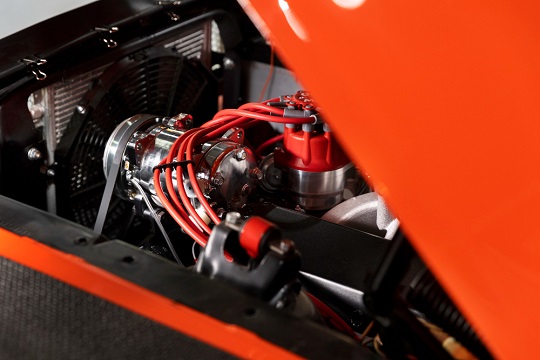
Rare earth extraction supports a wide range of advanced applications. These materials are used in industries that require high performance and precision.
In electronics, rare earth elements are used in displays, semiconductors, and optical systems. In aerospace, they are used in high-temperature alloys and advanced components. In the automotive sector, rare earth magnets are essential for electric motors and hybrid systems.
Other important applications include catalysts, ceramics, and metallurgical additives. Rare earth elements improve strength, efficiency, and durability in many materials.
One of the most important factors is purity. High-purity materials are critical for performance. For example, in laser systems, even small impurities can reduce efficiency. In magnets, purity affects magnetic strength and stability.
Particle size and consistency are also important. In catalysts, controlled particle size can improve reaction efficiency. In ceramics, uniform materials lead to better structural properties.
For buyers, this means that rare earth extraction quality directly affects end-use performance. Choosing the right supplier ensures that materials meet technical requirements and deliver consistent results.
Industrial buyers face several challenges when sourcing rare earth materials. These include quality consistency, lead times, and technical requirements. As a result, supplier evaluation is a critical step in the procurement process.
| Buyer Pain Point | Risk | Supplier Solution |
| Inconsistent purity | Product failure | Strict quality control |
| Long lead times | Production delays | Reliable inventory |
| Limited customization | Poor performance | Custom solutions |
| ESG concerns | Compliance issues | Transparent processes |
Buyers typically look for suppliers that can provide high-purity materials with consistent quality. Certification, such as ISO 9001, is often used as a benchmark for quality management. Technical support is also important, especially for complex applications.
Customization is another key factor. Many applications require specific material forms, such as powders, alloys, or compounds. Suppliers that offer flexible production capabilities can better meet customer needs.
Lead time is also critical. Delays in rare earth extraction can affect entire production schedules. Suppliers with efficient processes and reliable logistics can help reduce these risks.
When selecting a rare earth supplier, buyers should evaluate several factors. Purity and consistency are essential to consider. Additionally, buyers should look for traceability and application-specific technical support.
Rare earth extraction is evolving as new technologies and market demands emerge. One major trend is the development of cleaner extraction methods. Companies are investing in processes that reduce waste and improve environmental performance.
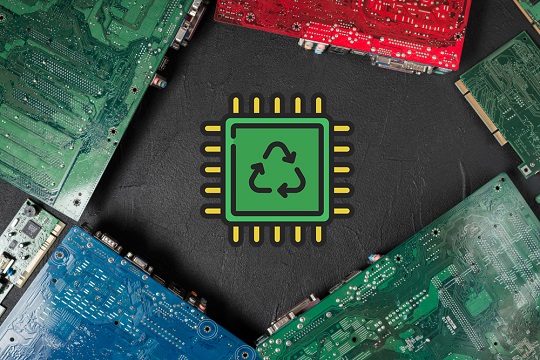
Recycling is a growing area in the industry. Companies are no longer relying solely on mining. Instead, they recover rare earth elements from electronic waste. They also extract them from industrial residues. This approach can reduce environmental impact and improve supply stability.
Automation and digital technologies are also improving rare earth extraction. Advanced control systems allow for more precise processing, which improves efficiency and consistency. This is especially important for high-purity applications.
The market is also expanding. Projections show strong growth in the rare earth sector over the next decade. This is driven by demand from electric vehicles, renewable energy, and advanced electronics.
For buyers, these trends offer new opportunities. Improved technologies can lead to better materials and more stable supply chains. At the same time, increasing demand means that competition for resources may continue to grow.
Rare earth extraction is complex, and this complexity directly affects supply reliability. Long processing chains, environmental constraints, and market concentration all contribute to potential disruptions.
For industrial buyers, reliable supply is essential. Delays or shortages can impact production, increase costs, and reduce competitiveness. This is especially important in industries such as aerospace, defense, and electronics. In these fields, performance and timelines are critical.
Working with a reliable supplier can help reduce these risks. Suppliers should have strong technical capabilities, quality control systems and flexible production. These strengths allow them to provide consistent materials even in challenging market conditions.
In addition, suppliers that offer a wide range of products can support different applications and adapt to changing requirements. This flexibility is valuable in industries where technology is constantly evolving.
Rare earth extraction is one of the most complex processes in modern materials science. It involves multiple stages, advanced technologies, and strict quality control. The challenges of separation, environmental management, and supply concentration all contribute to its difficulty.
Understanding how rare earth extraction works is useful. However, industrial buyers have different priorities. They are primarily concerned with two things: reliable supply and high material performance.
Key takeaways:
For companies that depend on high-performance materials, choosing the right supplier is essential. AEM REE is a trusted rare earth materials supplier with over 10 years of experience. It provides high-purity metals, oxides, alloys, and compounds to industrial and research customers worldwide. With strong technical expertise, strict quality control, and flexible customization capabilities, AEM REE helps customers overcome the challenges associated with rare earth extraction and material sourcing.
Whether you require controlled purity levels, specific particle sizes, or customized material forms, AEM REE is equipped to support your application needs with reliable supply and professional technical service. If you have specific requirements or would like to request a quote, you are welcome to contact AEM REE for expert support and tailored solutions.
By understanding rare earth extraction and working with the right partners, buyers can reduce risk, improve performance, and secure reliable access to critical materials.
 +86-731-89578196