Holmium is one of the least talked-about rare earth elements, yet it plays a major role in many high-tech fields such as medical lasers, nuclear reactors, high-field magnets, scientific instruments, and emerging quantum technologies. Many engineers, buyers, and R&D teams want to understand exactly what makes holmium special, how it behaves, and why it is used in demanding environments. If you are searching for what is holmium, holmium facts, and how industries use this advanced material, this guide will give you a complete and easy-to-understand explanation.
This article follows a technical but clear structure. It's suitable for professionals in aerospace, electronics, photonics, medical technology, nuclear engineering, and advanced manufacturing. It provides definitions, facts, properties, applications, safety considerations, and sourcing support. It can help you get the full picture of how holmium performs in real-world systems.
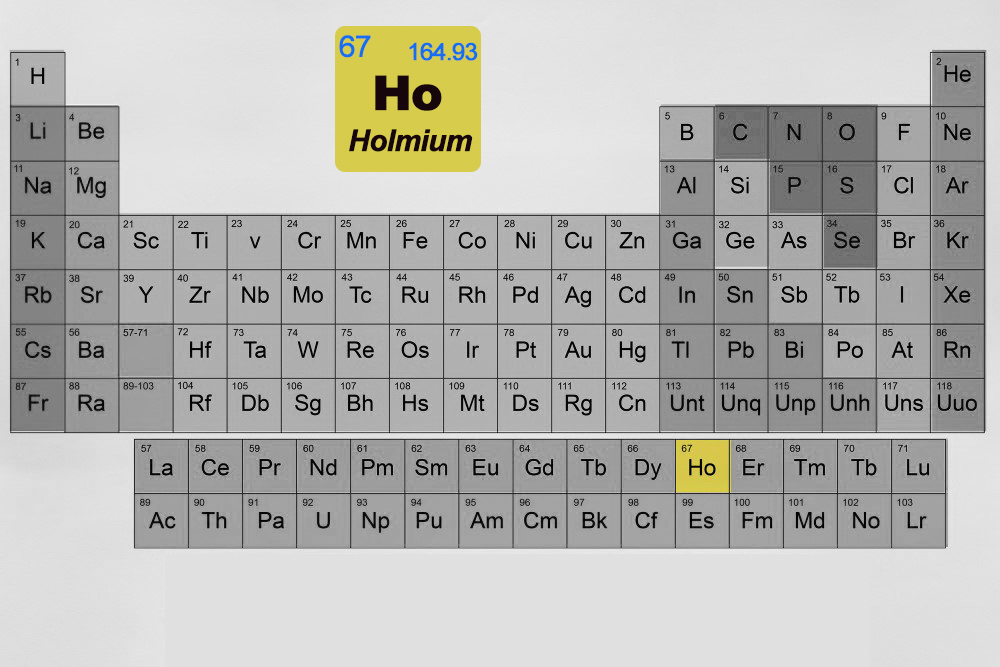
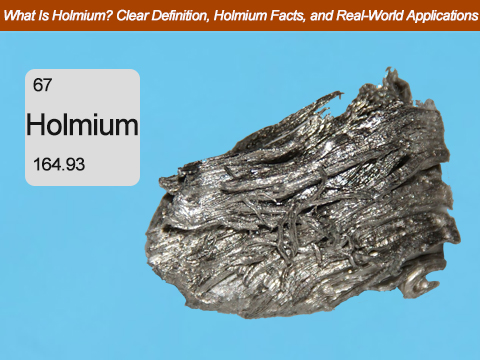
When people ask what is holmium, they usually want a simple and accurate definition. Holmium is a silvery rare earth metal that belongs to the lanthanide series and has the atomic number 67. It is best known for having one of the strongest magnetic moments of any element and for its excellent ability to absorb neutrons. These two traits alone make it important in high-field magnets, nuclear reactor control components, and advanced scientific equipment. Holmium is also used in high-tech lasers, optical filters, calibration standards, and specialty glass.
A clear way to understand what is holmium is to look at where its properties matter most. When a designer needs extremely strong, concentrated magnetic fields, holmium alloys offer performance that few other materials can match. When a nuclear engineer needs a material that can absorb neutrons predictably and safely, holmium becomes a reliable choice. When a medical device manufacturer needs a laser that cuts precisely with minimal heat damage, holmium-doped materials help deliver the correct wavelength and beam stability. For these reasons, what is holmium is more than just a definition. Holmium is a material with powerful functional behavior that solves real-world engineering problems.
Holmium is naturally found in minerals like monazite and bastnäsite, but only in small amounts. In industry, it is usually produced as a metal, oxide, or compound depending on the application. The answer to what is holmium is therefore both simple and practical: it is a high-value rare earth element with exceptional magnetic, optical, and nuclear properties that support advanced technologies across multiple industries.
Professionals researching what is holmium often want a quick set of data points before diving deeper. Below is a clear and scannable overview of the most important holmium facts.
Holmium Key Data Table:
|
Property
|
Value / Description
|
|
Atomic number
|
67
|
|
Symbol
|
Ho
|
|
Element category
|
Lanthanide rare earth metal
|
|
Density
|
About 8.8 g/cm³
|
|
Melting point
|
Around 1470–1474 °C
|
|
Boiling point
|
Around 2700 °C
|
|
Common oxidation state
|
+3 (common in compounds like Ho₂O₃)
|
|
Magnetic moment
|
Among the highest of all elements
|
|
Natural occurrence
|
Found in monazite, bastnäsite (low abundance)
|
These holmium facts show why engineers care about the material. The extremely high magnetic moment makes holmium useful in devices where localized magnetic fields must be strong, stable, and precisely controlled. The +3 oxidation state gives predictable chemistry, which helps when producing holmium oxide and other compounds. The high melting point and density contribute to its behavior in alloys and device components.
Understanding what is holmium also means understanding how it behaves. Holmium's properties are what make it valuable in advanced technologies. Engineers who work in magnetics, optics, nuclear systems, or precision manufacturing often depend on the unique characteristics listed below.
Holmium is famous for having one of the strongest magnetic moments of any naturally occurring element. This strong magnetism becomes especially useful in magnetic flux concentrators, magnet assemblies designed for high-field environments, and research systems that study magnetic behavior. When a design requires a stable and intense magnetic field focused in a small area, holmium-based materials can significantly enhance performance.
Holmium has a large neutron-capture cross section. This property makes it extremely useful in nuclear engineering. It is often used in reactor control rods and as a "burnable poison" to help stabilize the fission process. Materials that absorb neutrons must behave predictably over long periods. Holmium provides both stability and reliability.
Holmium ions create sharp absorption bands, especially in the visible and near-infrared regions. These bands are used for optical filters, spectrophotometer calibration standards, and holmium-doped solid-state lasers. Engineers working with high-precision optical systems value holmium because its spectral lines are stable and repeatable.
Below is a list of practical design implications:
• When extremely strong localized magnetic fields are needed, consider holmium alloys.
• When building or modeling neutron-absorbing components, holmium offers stable performance.
• When designing medical lasers or photonics devices, holmium-doped materials provide reliable IR wavelengths.
• When calibrating scientific instruments, holmium spectral standards maintain accuracy.
For these reasons, engineers who ask what is holmium often end up using it in real projects. Its properties directly support performance, reliability, and safety across many advanced technologies.
Before exploring specific industries, it helps to understand the broad answer to how holmium is applied across the modern technology landscape. Many of the people who search for what is holmium are also searching for how it is used, because its main value comes from its applications.
One of the most important uses is in high-performance magnets and magnetic systems. Because holmium has one of the strongest magnetic moments, it is included in alloys and magnetic assemblies where concentrated magnetic fields are required. The combination of holmium with other rare earth elements can help tune the performance of the magnetic system.
Holmium is also widely used in nuclear technology. Its neutron absorption capability makes it suitable for control rods and neutron-managing components in both commercial power reactors and research reactors. Nuclear designers use holmium to help control reactivity and ensure safe operation.
Another major use is in lasers and photonics. Holmium-doped laser crystals and fibers generate infrared wavelengths that are particularly useful in medical treatments. These lasers deliver energy in ways that minimize damage to human tissue. This makes holmium a key element in some surgical procedures.
Holmium oxide is used in glass, ceramics, and optical filters. It can provide yellow-to-red coloration in glassmaking. It is also used as a calibration standard in many optical instruments.
These uses explain why so many modern technologies depend on holmium. If someone asks what is holmium or why it matters, the answer is simple: it provides performance advantages that few other materials can match in the fields of magnetics, nuclear engineering, optics, and medical technology.

Holmium plays a major role in the medical and healthcare sectors, mainly through holmium-doped YAG lasers. Engineers and device manufacturers who want to know what is holmium often discover its importance when learning about medical laser technologies.
Holmium-doped YAG lasers emit infrared light around 2.1 micrometers. This wavelength is strongly absorbed by water, which is a major component of biological tissue. Because of this absorption behavior, the laser can cut or ablate tissue with high precision while keeping surrounding tissue safe from excessive heat. This makes holmium lasers popular in minimally invasive procedures.
One of the most common uses is in urology, such as kidney stone removal. Holmium lasers can fragment stones cleanly while minimizing damage to surrounding tissue. They are also used in prostate treatments, making them an essential tool in modern urologic surgery. Some ophthalmic procedures also use holmium lasers. This is because the wavelength is comfortable for delicate tissues around the eye.
Medical device manufacturers depend heavily on the purity, composition, and stability of holmium-doped materials. A small change in the holmium content or impurity levels can influence beam quality, output stability, and overall device reliability. This is why high-purity holmium oxide and holmium-doped crystals are so important.
If a designer is trying to understand what is holmium from a medical point of view, the answer is clear. It is one of the rare earth elements that directly influence patient outcomes by enabling precise, reliable, and minimally invasive laser treatments.

Holmium is strongly associated with magnetic applications. Engineers working on MRI systems, laboratory magnets, or magnetic research tools often ask what is holmium. This is because they need materials capable of producing strong magnetic effects.
Holmium alloys are used in flux concentrators and magnetic pole pieces. These components channel magnetic fields into smaller spaces, creating extremely strong localized fields. In some research setups, the magnetic field needs to be both strong and sharply focused, and holmium helps achieve that.
Holmium also plays a role in some MRI-related systems. While holmium is not typically used in the main MRI magnet itself, it can be used in components that adjust or concentrate local magnetic fields. Holmium compounds and isotopes have also been studied for use as MRI contrast agents because of their magnetic characteristics.
Advanced imaging systems benefit from the stability of holmium's magnetic behavior. When strong or specialty fields are required, holmium alloys can fine-tune the magnetic environment and improve overall performance.
Most engineers who ask what is holmium from a magnetics perspective quickly understand why it is so useful. It delivers some of the strongest magnetic effects available from naturally occurring materials, making it invaluable for advanced imaging and research tools.

Holmium is also important in nuclear energy and research. This is one of the areas where understanding what is holmium becomes essential because its neutron absorption ability drives its value.
Holmium's high neutron-capture cross section allows it to function as a neutron absorber in nuclear reactors. It can be used in control rods, which regulate the rate of nuclear fission. It can also be used as a burnable poison. This is a material that absorbs neutrons early in the fuel cycle and slowly burns away, helping stabilize reactivity over time.
This neutron-absorbing behavior helps reactor designers maintain predictable and safe operation. Material purity is crucial here, because impurities can change how neutrons interact with the material. Engineers want holmium that behaves consistently for modeling, simulation, and long-term reactor performance.
Nuclear engineers who search what is holmium quickly learn that it is a dependable material for managing radiation and controlling reactivity. Its performance directly affects reactor safety, stability, and efficiency.

Holmium oxide and holmium compounds are essential in several optical and glass-related industries. This is often where optical engineers begin searching what is holmium because they need to understand how carefully controlled holmium additions affect product performance.
Holmium oxide is used to color glass and ceramics. Depending on the concentration, holmium can produce yellow, red, or orange tints. These colors are used in specialty glass, decorative ceramics, and color-tuned optical materials.
Holmium oxide solutions and holmium-doped glass are also widely used in optical calibration. Their sharp absorption lines help calibrate spectrophotometers and optical instruments. These calibration standards must be pure and consistent, because even tiny variations can affect wavelength accuracy.
Manufacturers of optical filters rely on holmium's precise absorption behavior. When designing a filter that must block or transmit specific wavelengths, controlling holmium content ensures stable performance.
If a reader is searching for what is holmium because they need glass colorants or optical filters, they will find that holmium oxide is one of the most predictable rare earth materials for these uses. It delivers reliable optical characteristics that support scientific and industrial accuracy.

Holmium is also gaining attention in cutting-edge research fields such as data storage, quantum computing, and spintronics. Researchers who study what is holmium often focus on its extreme magnetic anisotropy and electronic structure, which make it valuable in experimental technologies.
One of the most exciting developments is single-atom data storage. Scientists have demonstrated that a single holmium atom placed on a special surface can store a bit of information. This discovery hints at ultra-dense data storage devices far beyond what current technology can achieve.
Holmium is also being studied for use in qubits, the building blocks of quantum computers. Because holmium's magnetic properties are so strong and stable, they may help maintain quantum states under specific conditions.
In spintronics, holmium offers ways to manipulate electron spin in new and useful ways. Researchers exploring advanced memory devices often use holmium in their experimental materials.
Companies that supply holmium to R&D labs often provide non-standard forms, custom particle sizes, and high-purity materials. When researchers ask what is holmium, they often want to know whether they can obtain special material formats for experimental work.
Understanding what is holmium also means understanding safety requirements. Holmium metal and common holmium compounds have relatively low acute toxicity, but fine powders should always be handled with care.
Holmium powders can irritate the lungs if inhaled, so proper ventilation, respirators, and safety procedures are important. Like other rare earth metals, holmium can slowly oxidize when exposed to air. Fine powders and reactive forms should be stored in dry, inert environments.
Holmium reacts more quickly with hot water and with acids. For this reason, storage guidelines often specify cool, dry conditions and proper labeling.
When someone asks what is holmium in a safety context, the answer includes both its low toxicity profile and the general precautions required when working with fine metal powders or reactive materials.
AEM REE provides holmium in several forms, helping customers working in magnetics, nuclear systems, lasers, optics, and experimental technologies. When engineers ask what is holmium and decide they need it, the next question is usually where to get reliable, high-purity material.
AEM REE supplies holmium metal in forms such as ingots, rods, foils, and sputtering targets. These are used in alloy production, magnetic systems, and nuclear components. Holmium oxide powders are used in glassmaking, ceramics, and optical standards. Holmium compounds and alloys can be tailored to customer requirements.
Customization is one of the major advantages offered. Customers often need specific purity grades, precise particle sizes, or alloy compositions. Some need machining to drawings, while others require batch traceability and documentation for regulated industries.
Common customer pain points include inconsistent purity, variable particle size, unreliable sourcing, and long qualification cycles. AEM REE focuses on resolving these challenges by providing stable supply, consistent quality, and technical support.
For customers who want more detailed holmium facts or material specifications, AEM REE can provide data sheets, technical guidance, and application support tailored to specific industries.
Is holmium a rare earth metal and how rare is it?
Yes, holmium is a lanthanide rare earth metal. It is relatively scarce in the Earth's crust and is usually found in minerals like monazite and bastnäsite.
What is holmium mainly used for today?
Holmium is mainly used in high-field magnets, medical lasers, nuclear reactor control components, optical filters, glass colorants, and calibration standards.
How does holmium compare to other magnetic rare earths?
Holmium has one of the highest magnetic moments of any element, making it useful when designers need peak magnetic field strength or localized magnetic flux concentration.
Holmium is one of the most powerful and versatile rare earth materials in modern engineering. When people ask what is holmium, the full answer includes its strong magnetic moment, its excellent neutron-absorption ability, and its stable optical behavior. These properties make it essential in high-field magnets, medical lasers, nuclear reactors, optical filters, and leading-edge technologies like quantum research.
Across aerospace, medical equipment, energy systems, photonics, and advanced manufacturing, holmium provides performance benefits that few other materials can match. Engineers rely on it when they need accuracy, stability, and efficiency in high-demand environments.
AEM REE supports these projects with high-purity holmium metal, holmium oxide, and customized holmium materials designed for technical applications. Whether you need precise particle sizes, specific alloy formulations, or help choosing the right material for a new design, our team is ready to assist.
If you are planning a project or want more detailed holmium facts, you are welcome to contact us or request a holmium data sheet. Our engineers can help you choose the right grade, optimize performance, and achieve consistent, reliable results.
 +86-731-89578196