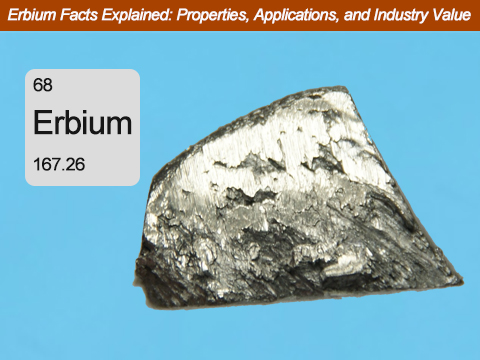
Erbium is one of those elements most people have never heard of, yet they rely on it every day. From long-distance internet cables and cloud data centers to medical lasers and advanced electronics, erbium plays a quiet but essential role in modern technology. These erbium facts show why this rare earth element is so valuable to engineers, researchers, and industrial buyers around the world.
In this article, we explain erbium facts in clear, practical terms. You will learn what erbium is, where it sits in the periodic table, how it behaves chemically and physically, and why it is critical for fiber optics, medical devices, electronics, and other high-tech industries. We also explore supply considerations and how to choose the right erbium grade for different applications, helping technical teams and procurement professionals make informed decisions.
Erbium is a lanthanide rare earth element with atomic number 68 and the chemical symbol Er. It is best known for its pink-colored ions and its unique ability to amplify light in optical fibers and lasers. Among all erbium facts, its role in modern communications is one of the most important.
Erbium is a soft, malleable, silvery-gray metal. Compared with some other rare earth metals, it is relatively stable in air at room temperature, although it slowly oxidizes when exposed to higher heat. Because of its reliable optical behavior and stable chemistry, erbium is widely used as a dopant in glass, crystals, and fibers.
Key erbium facts at a glance:
| Property | Description |
|
Atomic number
|
68
|
|
Symbol
|
Er
|
|
Standard atomic weight
|
about 167.26
|
|
Element category
|
Lanthanide (rare earth metal)
|
|
Typical purity for high-tech use
|
99.9% to 99.999%
|
|
Key roles
|
Fiber-optic amplification, medical lasers, specialty glass, phosphors, and advanced electronics
|
These basic erbium facts explain why the element is considered strategically important despite being used in relatively small quantities.
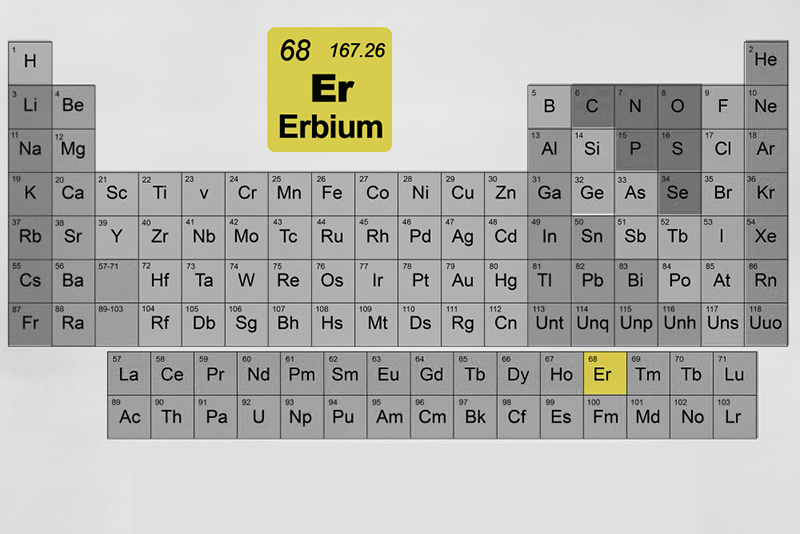
Understanding erbium facts starts with its position in the periodic table. Erbium is part of the lanthanide series, also known as the rare earth elements. It sits in the f-block of the periodic table, between holmium (Ho) and thulium (Tm). Like other lanthanides, erbium is usually shown in the separate row beneath the main body of the periodic table.
The electron configuration of erbium is [Xe] 4f¹² 6s². This arrangement of electrons, especially the partially filled 4f shell, controls most of erbium's chemical and optical behavior. In nearly all practical compounds, erbium exists in the stable trivalent state, Er³⁺. This stable oxidation state is one of the key erbium facts that makes the element so reliable as a dopant in optical materials.
Lanthanides share many similarities. But small differences in their 4f electron structures lead to very different optical properties. Erbium stands out because its electronic transitions produce light in the infrared region around 1.55 micrometers. This wavelength happens to match the low-loss window of silica optical fiber, which is why erbium is so valuable in telecommunications.
Compared with its neighbors:
These erbium facts explain why erbium holds a special place among the lanthanides.
The physical and chemical properties of erbium are central to many erbium facts that matter to engineers and materials scientists. Erbium has a density of about 9 grams per cubic centimeter. This makes it denser than many common metals but typical for rare earth elements. Its melting point is approximately 1529 degrees Celsius, and its boiling point is close to 2868 degrees Celsius. These values place erbium among moderately high-melting rare earth metals.
From a chemical perspective, erbium is most stable in the +3 oxidation state. Er³⁺ ions form pink oxides, salts, and glass dopants. This pink coloration is not just decorative; it reflects specific electronic transitions that are useful in optical filters and laser materials. One of the important erbium facts is that these optical properties remain stable across a wide range of temperatures and operating conditions.
Key properties and why they matter:
| Property |
Approximate Value/Behavior
|
Why lt Matters in Practice |
|
Density
|
~9 g/cm³
|
Influences the design of dense optical components and ceramics
|
|
Melting point
|
~1529 °C
|
Relevant for alloying and high-temperature processing
|
|
Boiling point
|
~2868 °C
|
Indicates good thermal stability in demanding environments
|
|
Oxidation state
|
3+
|
Provides predictable chemistry for repeatable performance
|
|
Color of Er³⁺ compounds
|
Pink
|
Useful for optical filters, glass coloration, and photonics
|
Because of these properties, erbium is well suited for applications where consistency, optical precision, and long-term stability are critical.
Another important group of erbium facts relates to how the element is sourced. Erbium does not occur as a free metal in nature. Instead, it is found together with other rare earth elements in minerals such as xenotime, monazite, and euxenite. These minerals contain a mixture of rare earth elements. These elements must be separated and purified before individual metals like erbium can be produced.
The separation process is complex and technically demanding. It typically involves multiple stages of solvent extraction or ion-exchange to isolate erbium from neighboring rare earth elements with very similar chemical behavior. This complexity is one reason why rare earth elements, including erbium, are considered strategically important materials.
From ore to optical-grade erbium, the process usually follows these steps:
Global rare earth production is geographically concentrated. This may create supply-chain risks for manufacturers. These erbium facts highlight why long-term sourcing strategies and reliable suppliers are so important for industries that depend on consistent quality and availability.
When discussing erbium facts, safety and environmental considerations are also important. Bulk metallic erbium is generally considered to have low acute toxicity. However, like many fine metal powders and rare earth compounds, erbium materials can cause irritation if inhaled or ingested. Proper handling practices are essential, especially in industrial and laboratory environments.
Facilities working with erbium powders or compounds should use appropriate dust control measures, such as local exhaust ventilation and sealed containers. Personal protective equipment, including gloves and respiratory protection when necessary, helps reduce exposure risks. These practical erbium facts are especially relevant for manufacturing and research settings.
Environmental management is another key issue. Processing erbium compounds generates waste streams that must be handled according to local and international regulations. Proper labeling, documentation, and disposal practices help ensure compliance and reduce environmental impact.
Best practices include:
These measures help organizations use erbium safely while meeting regulatory and environmental requirements.

Among all erbium facts, its role in fiber optics is arguably the most influential. Erbium-doped fiber amplifiers, often called EDFAs, are essential components of modern telecommunications networks. They allow optical signals to be amplified directly, without converting light into electrical signals and back again.
Erbium emits light at around 1.55 micrometers. This matches the wavelength range where silica optical fiber has the lowest signal loss. This unique property enables long-distance data transmission with minimal degradation. As a result, erbium is a foundational element for submarine cables, backbone networks, and data center interconnects.
In simple terms, light signals weaken as they travel through fiber. EDFAs boost these signals along the way, keeping data flowing efficiently over thousands of kilometers. One of the most important erbium facts is that without erbium-based amplification, today's high-speed global internet would not be possible.
Common applications include:
These applications show how a small amount of erbium can enable massive global infrastructure.

Erbium facts are also highly relevant in the medical field. Erbium-doped lasers, such as Er:YAG and erbium glass lasers, emit wavelengths that are strongly absorbed by water. Since human tissue contains a high percentage of water, these lasers can precisely remove tissue with minimal thermal damage to surrounding areas.
This property makes erbium lasers especially valuable in dermatology and cosmetic medicine. They are widely used for skin resurfacing, wrinkle reduction, scar treatment, and other aesthetic procedures. Dental applications also benefit from erbium lasers. Its precision and reduced heat damage improve patient outcomes.
Compared with older laser technologies, erbium lasers offer:
These benefits explain why erbium lasers are popular with both clinicians and patients. Among modern erbium facts, the element's role in improving medical precision and safety is one of the most impactful.

Erbium also plays a role in everyday consumer electronics, even though users rarely notice it. Erbium-containing phosphors and glass additives help fine-tune color output and efficiency in LEDs and display panels. This contributes to brighter images, more accurate colors, and improved visual quality.
In addition, erbium oxide is used in specialty glass to adjust optical properties and impart subtle pink or neutral tones. These materials are found in camera lenses, display covers, and decorative glass used in high-end electronics. These erbium facts connect advanced materials science with everyday products.
Devices where erbium-enhanced components may appear include:
For electronics manufacturers, erbium offers benefits in color quality, efficiency, and premium aesthetics, supporting competitive product design.
Beyond mainstream applications, erbium facts also include several specialized industrial and nuclear uses. Certain erbium isotopes and compounds are used in nuclear technology due to their neutron absorption properties. These materials can support safe and controllable reactor operation.
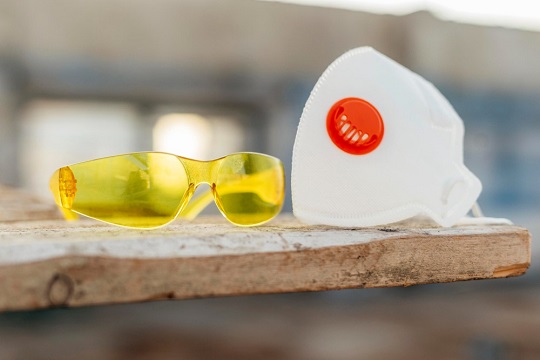
Erbium is also used in specialty alloys, infrared-absorbing glass for safety eyewear, advanced ceramics, and lighting systems. In these cases, erbium's specific optical or magnetic properties are more important than its bulk mechanical behavior.
Examples of specialized uses:
These applications often require close collaboration between materials suppliers and engineering teams to ensure the right specifications are met.
Market-related erbium facts are increasingly important for strategic planning. Demand for erbium is expected to grow as fiber-optic infrastructure expands, medical and cosmetic laser markets develop, and demand for high-resolution displays continues to rise.
Because rare earth refining capacity is concentrated in a few regions and erbium is difficult to substitute in key applications, it is often treated as a critical raw material. Long-term supply planning is essential, especially for industries that rely on stable optical performance.
Key demand drivers include:
These factors make erbium an important consideration in future technology roadmaps.
Choosing the right erbium material requires balancing performance, cost, and reliability. One of the most practical erbium facts is that purity alone does not tell the full story. For optical and laser applications, impurity profiles and batch consistency are often more critical than headline purity numbers.
Different industries prioritize different specifications:
Understanding these trade-offs helps engineers and buyers select the most suitable erbium form, whether metal, oxide, compound, or nano material.
To close, here are a few lesser-known erbium facts that highlight the element's unique character. Erbium ions can emit vivid pink or violet light under certain conditions. This is why they are popular in demonstration lasers and photonics research. The element is also named after Ytterby, a small Swedish village that gave its name to several rare earth elements.
Perhaps the most interesting fact is that many people use erbium-enabled technology every day. Streaming videos, video calls, and cloud services all depend on erbium-doped fiber networks. However, the element itself remains largely invisible to the public.
Understanding erbium facts is only part of the equation. Reliable performance also depends on consistent quality, proper documentation, and dependable supply.
AEM REE is a specialized supplier of high-purity rare earth materials with over 10 years of experience serving research institutes, high-tech industries, and OEMs worldwide. We provide erbium metals, oxides, and compounds engineered for consistency, performance, and compatibility with demanding applications in telecommunications, medical technology, electronics, fiber optics, and advanced manufacturing.
Whether you are designing fiber-optic amplifiers, erbium-doped lasers, specialty glass, or display components, AEM REE works closely with your engineering and procurement teams to support optimal material selection, process integration, and long-term supply security.
To discuss your specific erbium requirements and receive a personalized quotation, contact AEM REE's technical team today. We can provide detailed specifications, purity certifications, and guidance on the best form—metal, oxide, compound—for your application. With our reliable global supply chain, competitive pricing, and fast, secure delivery, you can confidently keep your projects on schedule while accessing materials trusted by leading high-tech and industrial customers.
 +86-731-89578196