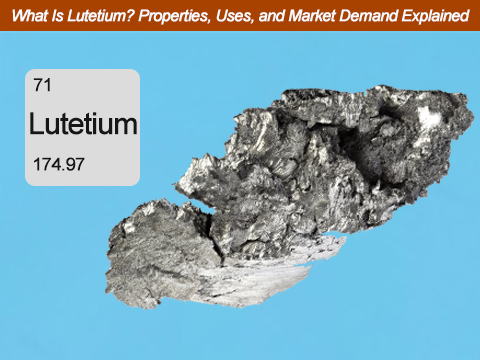
Before diving into details, here is the short answer many readers are searching for:
Lutetium is a heavy rare earth element with atomic number 71. It is the last element in the lanthanide series. Lutetium is valued for its high density, excellent thermal stability, and important applications in medical imaging, cancer therapy, optics, and advanced research. In industry, lutetium is most commonly used in the form of lutetium oxide and radioactive isotopes such as lutetium-177 rather than as a pure metal.
| Property | Value / Note |
| Element name | Lutetium (Lu) |
| Atomic number | 71 |
| Element category | Lanthanide (heavy rare earth element) |
| Density | ~9.84 g/cm³ |
| Melting point | ~1,663 °C |
| Common industrial forms | Lutetium oxide (Lu₂O₃), lutetium compounds, Lu-177 isotope |
| Main uses | Medical imaging, cancer therapy, optics, detectors, research |
As demand for lutetium accelerates in medical and high-tech applications, it is increasingly important for engineers, sourcing managers, and researchers to understand what lutetium is, why it is valuable, and how it is used across industries.
Lutetium is a chemical element belonging to the lanthanide series, often referred to as the rare earth elements. With atomic number 71, it is the last and heaviest of the lanthanides. When people ask what is lutetium, they are usually referring to both its position on the periodic table and its role as a high-performance material in advanced technology.
Although lutetium is classified as a rare earth element, it is actually one of the rarest among them. It is typically found in very small amounts within minerals such as monazite and bastnäsite, mixed with many other rare earths. Because of this, lutetium is difficult to separate and refine. This directly affects its cost and availability.
A common question related to what is lutetium is: is lutetium a metal? Yes, lutetium is technically a metal. It is a silvery-white metallic element under standard conditions. However, in practical industrial use, lutetium metal itself is rarely the final product. Most applications rely on lutetium oxide or lutetium compounds. These materials offer better stability, easier handling, and more predictable performance.
This distinction is important for buyers and engineers. Most projects do not require metallic lutetium when specifying materials. Instead, they require carefully controlled oxide grades or isotope-related compounds.
In short, lutetium matters because it combines unique physical properties with high-value applications, especially in medicine, optics, and scientific research.
To fully understand what is lutetium and why it is useful, it is important to look at its key physical and chemical properties. These properties explain why lutetium is chosen for demanding applications where performance, reliability, and stability are critical.
Lutetium has one of the highest densities among the rare earth elements, at approximately 9.84 g/cm³. This high density is particularly valuable in radiation detection and scintillation materials. In these applications, efficient absorption of radiation is required. Engineers designing detectors or imaging systems benefit from materials that can interact strongly with incoming radiation in a compact volume.
With a melting point of around 1,663 °C, lutetium demonstrates excellent thermal stability. This property makes lutetium-based materials ideal for use in high-temperature environments. These materials are used in optical components, ceramics, and specialized electronic systems that must operate reliably under thermal stress.
Lutetium is relatively stable in dry air and shows predictable chemical behavior. While it can react with acids, its oxide form (Lu₂O₃) is chemically stable and well suited for long-term industrial and medical use. This stability is one reason why lutetium oxide is preferred over metallic lutetium in most applications.
Although lutetium is a metal, metallic lutetium is rarely used directly. From an engineering perspective, this is an important sourcing consideration. The oxide and compound forms are easier to process, safer to handle, and more consistent in performance.
| Aspect | Lutetium Metal | Lutetium Oxide (Lu₂O₃) |
| Typical usage | Limited, mostly research | Widely used in industry |
| Thermal stability | High | Very high |
| Chemical stability | Moderate | Excellent |
| Buyer demand | Low | High |
| Main applications | Specialized studies | Medical, optics, detectors |
For most engineers and buyers, understanding these properties helps clarify what form of lutetium is most appropriate for their project and why lutetium oxide dominates the market.
Once the properties are clear, the next step in understanding what is lutetium is to look at how it is used across modern industries. Lutetium applications are diverse, ranging from everyday technologies to cutting-edge research.

Lutetium oxide is used in phosphor materials for fluorescent lamps and LED lighting. Its role is to help produce stable, high-quality light with consistent color output. Although lighting is not the fastest-growing application, it remains an important and steady market.
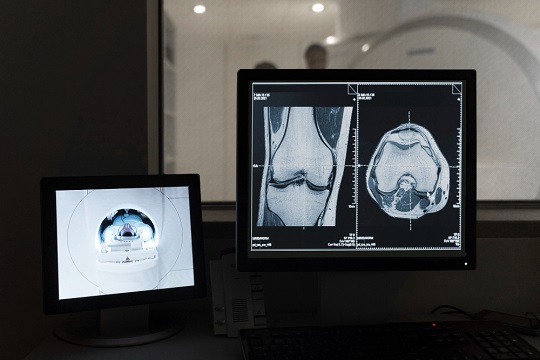
One of the most significant uses of lutetium today is in scintillation crystals. Lutetium-based materials are widely used in PET scanners, CT systems, and radiation detectors. Although lighting is not the fastest-growing sector, it remains an important and stable market.
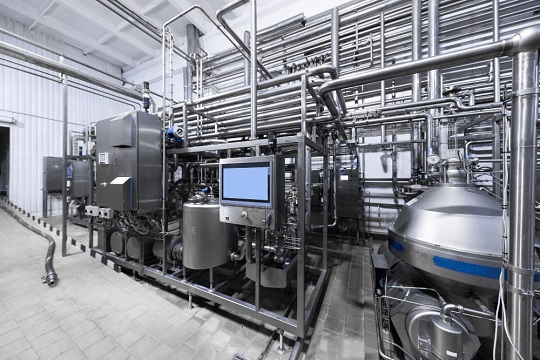
Lutetium oxide and other lutetium compounds are used as catalysts in specialized chemical reactions, including hydrocarbon cracking and fine chemical synthesis. These applications benefit from lutetium's thermal stability and unique electronic properties.
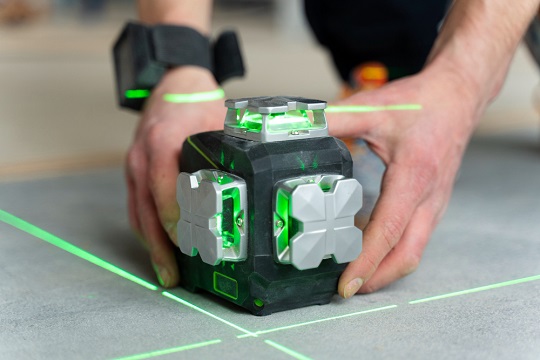
In optics, lutetium contributes to high-refractive-index glass, optical coatings, and laser components. These materials are used in aerospace, defense, and industrial laser systems where precision and durability are critical.

Lutetium also plays a significant role in emerging fields such as quantum materials, superconductors, and advanced spectroscopy. Research institutions and R&D labs use lutetium compounds to explore new material behaviors and next-generation technologies.
This broad range of applications explains why interest in what is lutetium continues to grow across many industries.
Among all applications, medical use deserves special attention. For many readers searching what is lutetium, the answer is closely tied to lutetium-177 (Lu-177).
Lutetium-177 is a radioactive isotope with a half-life of approximately 6.7 days. It emits beta radiation that can destroy cancer cells while limiting damage to surrounding healthy tissue. This balance makes Lu-177 highly effective for targeted radioligand therapy.
Lu-177 is used in approved and emerging cancer treatments, including:
These therapies attach Lu-177 to molecules that specifically target cancer cells, delivering radiation directly where it is needed.
The medical market for Lu-177 is expanding rapidly.
| Metric | Value |
| Lu-177 market value (2025–2026) | ~USD 2.7–3.4 billion |
| Projected value (2034) | ~USD 14.7 billion |
| Estimated CAGR | ~19.95% |
| Key drivers | Radioligand cancer therapies |
This strong growth is one of the main reasons why companies and research institutions are paying closer attention to what is lutetium and how to ensure its stable supply.
In medical applications, consistency, purity, and documentation are critical. Any variation in precursor materials can affect regulatory approval, patient safety, and treatment effectiveness. Therefore, it's essential to source lutetium materials from specialized suppliers with robust quality systems.
The supply and demand dynamics of the lutetium market have exhibited a significant upward trend in recent years. According to data from the International Rare Metals Institute, global annual lutetium production has nearly tripled from approximately 100 tons in 2010 to an estimated 300 tons by 2025. This growth is primarily driven by increased demand for lutetium across industries such as electronics, automotive, and aerospace. Taking smartphones as an example, advancements in smartphone battery technology have driven a steady annual increase in lutetium demand, thereby influencing the market's supply-demand equilibrium.
Despite rising production, lutetium supply remains constrained by resource limitations. The metal is primarily distributed across a few countries, including China, Russia, and Canada. China stands as the world's largest producer, accounting for over 60% of global output. However, the mining and refining processes for lutetium are complex and costly, limiting global supply. Furthermore, lutetium refining requires specialized techniques and equipment, further constraining market supply capacity.
On the demand side, the primary driver for the lutetium market stems from the electronics industry. With the rapid advancement of smartphones, electric vehicles, and new energy technologies, demand for lutetium continues to grow. Market research institutions project that by 2026, lutetium demand will exceed 400 tons, with an annual compound growth rate (CAGR) projected to surpass 15%. However, due to the scarcity of lutetium resources and limitations in extraction technology, the supply-demand imbalance persists in the lutetium market, potentially exposing it to future supply shortages. Taking electric vehicles as an example, as the global new energy vehicle market expands, demand for lutetium will further increase, significantly impacting supply chain stability and price trends.
The lutetium-177 market holds substantial growth potential driven by increasing demand for cancer treatment and nuclear medicine diagnostics. Rising cancer incidence rates, coupled with lutetium-177's targeted therapeutic efficacy as a radiopharmaceutical, indicate broad market prospects in oncology.
Advancements in medical technology continuously refine lutetium-177 production and application techniques. The introduction of new production methods and supporting technologies has reduced manufacturing costs while enhancing product quality and efficacy. This will further propel the development of the lutetium-177 market.
Beyond its established roles in radiation therapy and nuclear medicine diagnostics, lutetium-177 holds potential for new applications in other fields. For instance, recent studies indicate its potential in treating other cancers, such as pancreatic and breast cancers. Furthermore, Lanthanum-177 can be integrated into combination radioisotope therapies, used alongside other radioactive isotopes or chemotherapy drugs to enhance treatment efficacy.
With increasing emphasis on cancer treatment and nuclear medicine diagnostics, corresponding regulatory frameworks and policy support are expanding. Governments and medical institutions are directing greater attention and resources toward the research, development, and application of radiopharmaceuticals like lutetium-177, creating favorable conditions for the growth of the lutetium-177 market.
In addition to medicine, electronics, optics, and imaging systems provide steady baseline demand. These industries rely on lutetium oxide for detectors, optical materials, and advanced ceramics.
Universities and research labs contribute ongoing demand through work on quantum materials, superconductors, and advanced spectroscopy. While volumes may be smaller, purity requirements are often very high.
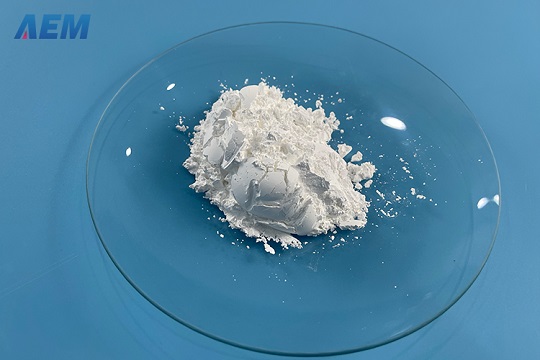
To fully answer what is lutetium in an industrial context, it is important to focus on lutetium oxide and compounds, which dominate real-world usage.
Lutetium oxide (Lu₂O₃) offers superior thermal stability, chemical resistance, and optical properties compared to metallic lutetium. These advantages make it the preferred form for most high-tech applications.
| Lutetium form | Key industrial uses |
| Lutetium oxide (Lu₂O₃) | Scintillators, optics, ceramics |
| Lutetium compounds | Catalysts, materials research |
| Metallic lutetium | Specialized laboratory research |
For buyers and engineers, understanding these distinctions helps ensure the correct material is selected for each application.
Despite its value, sourcing lutetium presents several challenges.
Lutetium is one of the rarest rare earth elements. Limited availability and complex separation processes contribute to higher costs and price volatility.
Many applications, especially in medicine and electronics, require extremely tight purity specifications. Inconsistent material can lead to failed qualifications and delays.
Global supply chains, export controls, and limited production capacity can result in long lead times, affecting R&D schedules and production planning.
Non-specialist suppliers may not fully understand the differences between oxide grades or compound forms, increasing the risk of incorrect material selection.
Addressing these challenges requires working with experienced rare earth specialists.
AEM REE supports lutetium users by combining manufacturing expertise with technical understanding.
Key strengths include:
This approach aligns with the needs of medical device manufacturers, optics and laser OEMs, and research institutions worldwide.
Is lutetium a metal?
Yes, lutetium is a metal, but it is most commonly used in oxide or compound form rather than as a pure metal.
Is lutetium toxic?
Lutetium is not highly toxic, but standard laboratory safety practices should be followed, especially when handling powders.
Why is lutetium so expensive?
Its rarity, complex separation process, and growing demand from medical and high-tech applications contribute to higher costs.
What is lutetium used for in medicine?
Lutetium-177 is used in targeted cancer therapies and medical imaging systems.
Which form of lutetium should I buy?
Most applications require lutetium oxide or specific compounds rather than metallic lutetium. Material selection depends on your application requirements.
Understanding what is lutetium is the first step toward unlocking its full value in medical, optical, and high-tech applications. As demand continues to grow, especially for lutetium oxide, lutetium compounds, and Lu-177 precursors, it becomes critical to work with a knowledgeable and reliable supplier.
AEM REE specializes in high-purity lutetium products designed to meet the strict requirements of research institutions, medical manufacturers, and advanced industrial users. With consistent quality, flexible specifications, and experienced technical support, we help customers move from concept to production with confidence. If you are looking for a trusted source of lutetium materials tailored to your application, we invite you to contact us today to discuss your requirements and explore how our lutetium solutions can support your success.
 +86-731-89578196