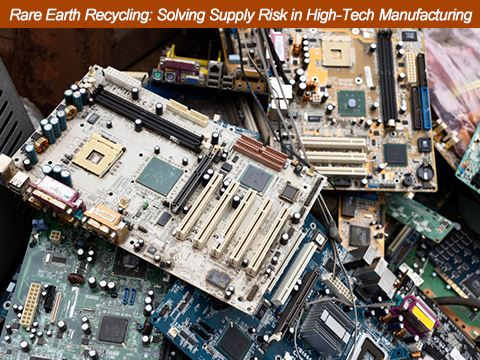
| Key Insight | Why It Matters for Industry |
| Rare earth recycling reduces supply risk | Helps manufacturers secure stable material supply |
| NdFeB magnet recycling is most valuable | High demand in EVs, electronics, and aerospace |
| Recycling supports ESG and compliance goals | Important for regulated industries |
| Secondary supply enables “urban mining” | Reduces dependence on limited mining regions |
| High-purity output is critical | Industrial reuse requires strict specifications |
Rare earth recycling is becoming an essential part of modern industry. In simple terms, it means taking used products or industrial waste and extracting valuable rare earth elements so they can be reused. These elements are not actually rare in nature, but they are difficult to mine, separate, and refine. That is why they are often called critical materials.
Rare earth recycling refers to the process of collecting, treating, and reusing waste, discarded materials, or production scraps containing rare earth elements. Through physical, chemical, or biological methods, these rare earth elements are separated and extracted, allowing them to re-enter the industrial production cycle to achieve the efficient utilization of rare earth resources and promote sustainable development. This process not only minimizes the waste of rare earth resources and reduces reliance on the mining of primary ores, but also helps to mitigate environmental pollution.
For engineers and procurement teams, rare earth recycling is not just about environmental benefits. It is about solving real business problems. Many companies face supply shortages, price fluctuations, and long lead times when sourcing rare earth materials. This is especially true for elements used in magnets, electronics, and advanced alloys.
Rare earth recycling helps reduce these risks by creating a secondary supply source. Instead of relying only on mining, companies can recover materials from existing products. This approach is often called urban mining, where valuable materials are extracted from waste streams.
Another important factor is supply concentration. A large portion of global rare earth production comes from a limited number of regions. This creates geopolitical risks and supply chain uncertainty. By increasing rare earth recycling, manufacturers can diversify their sourcing strategy and improve supply security.
In addition, rare earth recycling supports sustainability goals. Many industries, such as aerospace and medical technology, must meet strict environmental and regulatory requirements. Using recycled materials can help reduce environmental impact while maintaining high performance.
Overall, rare earth recycling is a practical solution that combines supply stability, cost control, and sustainability. It is becoming a key strategy for companies that rely on high-performance materials.
Rare earth recycling can be divided into several industry categories based on where the waste materials come from. Understanding these categories helps engineers, procurement teams, and manufacturers identify the most reliable sources of recycled rare earth materials.
This type of rare earth recycling focuses on waste generated during mining, refining, and manufacturing processes. These materials are often high in purity and easier to recover compared to end-of-life products.
Typical sources include:
Because these materials come directly from controlled industrial processes, they usually have known compositions. This makes recycling more efficient and cost-effective. For many manufacturers, industrial scrap recycling is one of the most stable and scalable sources of rare earth recovery.
This category involves recovering rare earth elements from discarded products that have reached the end of their useful life. It is one of the most visible forms of rare earth recycling and plays a key role in urban mining.
Common sources include:
Although this source has large potential, it is more complex. Products must be collected, sorted, and disassembled before materials can be recovered. However, the high value of rare earth magnets makes this type of recycling increasingly important for long-term supply.
This type of rare earth recycling comes from materials that are lost, rejected, or discarded during distribution, storage, or intermediate use. It includes waste generated outside of primary manufacturing and final product disposal.
Examples include:
These materials often have relatively high purity and are easier to process than complex end-of-life products. As a result, they provide an important supplementary source of recycled rare earth materials.
Rare earth recycling involves several steps before materials can be reused in industrial applications. Understanding this process helps engineers and buyers see how recycled materials can fit into their supply chain.
The process usually begins with collection. This includes end-of-life products such as motors, hard drives, wind turbine components, and electronic devices. It also includes industrial scrap like manufacturing offcuts, rejected parts, and process waste.
Next is disassembly. Products must be taken apart to access the components that contain rare earth elements. This can be done manually or with automated systems. However, disassembly is often complex because many products are not designed for easy recycling.
After disassembly, the materials go through separation. This step isolates the parts that contain rare earth elements, such as magnets or alloys. Mechanical and chemical methods are often used at this stage.
The next step is recovery, where rare earth elements are extracted from the material. This can involve chemical leaching, thermal processing, or direct reuse methods depending on the recycling approach.
Once recovered, the materials must go through purification. This is one of the most critical steps because industrial applications require high purity levels. Impurities can affect performance, especially in aerospace, electronics, and medical devices.
Finally, the materials are reused in new products, such as magnets, oxides, alloys, or compounds.
Below is a simple overview:
| Input Material | Recovery Method | Output Product | Industry Use |
| NdFeB magnets | Hydrometallurgy | Rare earth oxides | Motors, EVs |
| Hard drives | Direct recycling | Magnet alloys | Electronics |
| Industrial scrap | Chemical extraction | High-purity metals | Aerospace |
The most challenging parts of rare earth recycling are separation and purification. These steps require advanced technology and strict quality control. However, when done correctly, recycled materials can meet the same standards as primary materials.
There are several methods used in rare earth recycling, and each has its advantages and limitations. Understanding these methods helps companies choose the best approach for their needs.
Hydrometallurgical recycling uses chemical processes to extract rare earth elements. Materials are dissolved in solutions, and then specific elements are separated using techniques like solvent extraction.
This method is widely used because it can achieve high purity levels. It is especially effective for recycling rare earth magnets and industrial scrap. However, it requires careful handling of chemicals and waste management.
Pyrometallurgical recycling uses high temperatures to process materials. Metals are melted and separated based on their properties.
This method is robust and can handle mixed materials. However, it is energy-intensive and may produce emissions. As a result, it is often used in combination with other methods rather than as a standalone solution.
Direct recycling focuses on preserving the structure of rare earth magnets. Instead of breaking them down into individual elements, the material is processed and reused directly.
This method can reduce processing steps and energy use. It is particularly useful for NdFeB magnet recycling. However, it requires clean and well-sorted input materials.
New methods are being developed to improve efficiency. These include robotic disassembly systems and bio-based processes that use microorganisms to extract rare earth elements.
While these technologies are still in development, they show strong potential for reducing costs and environmental impact.
Below is a comparison:
| Method | Cost | Purity | Energy Use | Scalability | Maturity |
| Hydrometallurgical | Medium | High | Medium | High | Mature |
| Pyrometallurgical | High | Medium | High | Medium | Mature |
| Direct Recycling | Low–Medium | High | Low | Growing | Emerging |
| Bio-based | Low (potential) | Medium | Low | Low | Experimental |
No single method is perfect. The best choice depends on the type of material, required purity, and production scale.
Rare earth recycling is growing rapidly because of increasing demand and supply challenges. Market data shows strong growth potential, even though estimates vary.
Some forecasts estimate the market at USD 117.02 million in 2024, growing to USD 230.2 million by 2035. Other reports suggest USD 0.601 billion in 2025 rising to USD 0.94 billion by 2034. Another estimate places the market at USD 410.16 million in 2023 and USD 871.16 million by 2032.
These differences exist because the industry is still developing. Technology, policy, and regional factors all influence growth rates.
Several key drivers are pushing rare earth recycling forward:
In particular, NdFeB magnets are a major focus. They are widely used in EV motors and renewable energy systems, making them a key target for recycling.
Rare earth recycling also supports corporate sustainability goals. Many companies are under pressure to reduce their environmental impact. Recycling helps reduce waste and lower carbon emissions.
Overall, rare earth recycling is moving from a niche activity to a strategic industry solution. As demand for rare earth materials continues to grow, recycling will play an increasingly important role.
One of the biggest reasons for the growth of rare earth recycling is supply chain risk. Many industries depend on rare earth elements, but the supply is often concentrated in a few regions. This creates uncertainty for manufacturers.
Rare earth recycling provides an alternative source of materials. Instead of relying only on mining, companies can recover materials from existing products and waste streams.
Here are the top reasons manufacturers care about rare earth recycling:
This concept is often called urban mining, where valuable materials are recovered from products already in use. It turns waste into a resource.
For procurement teams, this means more flexibility. They can diversify their supply sources and reduce the risk of disruptions. For engineers, it means access to materials that meet performance requirements.
Rare earth recycling also helps companies meet regulatory requirements. Many industries must track material sourcing and environmental impact. Using recycled materials can support compliance efforts.
In a global market with increasing uncertainty, rare earth recycling is not just an environmental solution. It is a strategic tool for supply chain resilience.
Rare earth recycling is highly relevant across several industries, especially those that rely on advanced materials and high-performance components.
The aerospace industry uses rare earth materials in sensors, actuators, and specialty alloys. These applications require high reliability and precision. Recycling helps ensure a stable supply of high-quality materials.
Medical technology relies on rare earth elements in imaging systems and diagnostic equipment. High purity is essential for performance and safety. Rare earth recycling supports consistent material quality.
Electronics use rare earth elements in magnets, displays, and components. Recycling helps recover valuable materials from e-waste and reduce costs.
Manufacturers use rare earth materials in alloys, ceramics, and process applications. Recycling industrial scrap can improve efficiency and reduce waste.
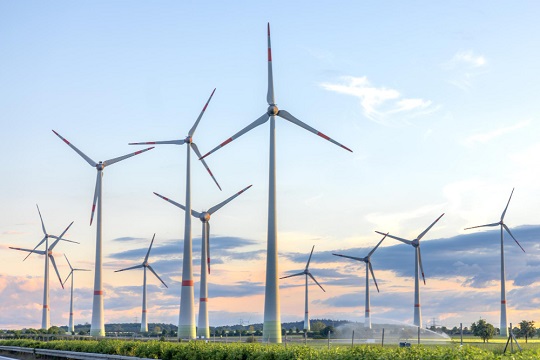
EV motors and wind turbines depend heavily on rare earth magnets. These systems are major sources of recyclable materials at end-of-life.
| Industry | Why Rare Earths Matter | Scrap Source | Recycling Benefit |
| Aerospace | Precision components | Manufacturing waste | Supply stability |
| Medical | Imaging systems | Device lifecycle | High purity reuse |
| Electronics | Magnets & chips | E-waste | Cost recovery |
| Manufacturing | Alloys & ceramics | Process scrap | Efficiency |
| Clean Energy | EV motors | End-of-life systems | Material recovery |
Rare earth recycling helps all these industries reduce risk and improve sustainability.

Rare earth recycling is most important for organizations that depend on stable access to high-performance materials. These are typically large industrial and technology-driven companies.
For example, aerospace manufacturers require reliable materials for aircraft systems. Companies similar to Boeing or Airbus need consistent supply and strict quality control.
In the medical field, companies like GE HealthCare or Medtronic rely on high-purity materials for imaging and diagnostic equipment. Any variation in material quality can affect performance.
Electronics and manufacturing companies, such as Intel or 3M, also depend on rare earth materials for components and production processes.
It is important to note that these are representative examples, not confirmed customers. However, they illustrate the types of organizations that benefit from rare earth recycling.
Typical buyers include:
These stakeholders all have different priorities, but rare earth recycling supports them by providing reliable, high-quality materials.
While rare earth recycling offers many benefits, it also faces several challenges that must be addressed.
The first challenge is collection and sorting. Many products are not designed for recycling, making it difficult to recover materials efficiently.
Another issue is complex disassembly. Devices like electronics and motors contain many components, and separating them can be time-consuming and costly.
High purity requirements are also a major challenge. Industrial applications often require very strict specifications. Achieving this level of purity from recycled materials can be difficult.
Economic factors also play a role. The cost of recycling depends on material availability, processing efficiency, and market prices.
Finally, some methods require significant energy and chemical use, which can impact sustainability.
Main challenges include:
Despite these challenges, technology is improving, and rare earth recycling is becoming more efficient.
Suppliers play a key role in making rare earth recycling practical for industrial use. They help bridge the gap between recycled materials and real-world applications.
AEM REE, as a high-purity rare earth materials supplier, supports customers in several ways. First, suppliers help with material selection. Not all recycled materials are suitable for every application, so expert guidance is important.
Second, suppliers provide customization. Industrial buyers often need specific purity levels, particle sizes, or material forms. Suppliers can tailor products to meet these requirements.
Third, testing and validation are essential. Suppliers ensure that materials meet industry standards and perform reliably.
Finally, suppliers offer technical support. This helps customers integrate recycled materials into their production processes.
In many cases, the role of a supplier goes beyond selling materials. It includes helping customers solve technical challenges and optimize their supply chain.
Talk to AEM REE experts about sourcing high-purity rare earth materials, evaluating recycling compatibility, and developing custom solutions for your application.
Rare earth recycling is the process of recovering rare earth elements from waste materials and reusing them in new applications.
NdFeB magnets are among the most commonly recycled because they contain high-value materials.
It reduces supply risk, supports sustainability, and lowers dependence on primary mining.
Aerospace, medical, electronics, clean energy, and manufacturing industries all benefit from rare earth recycling.
 +86-731-89578196