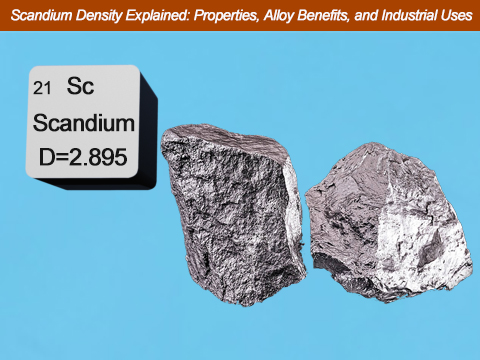
Scandium density is approximately 2.985 g/cm³. This lightweight transition metal is very important. It plays a key role in aerospace and advanced manufacturing. It is also vital for high-performance alloy design. Scandium is slightly denser than aluminum. However, adding even small amounts of it can greatly improve an alloy. It enhances strength, weldability, and corrosion resistance.
Today, scandium is widely used in aluminum-scandium alloys. These alloys are important for industries that require lightweight yet durable materials. Engineers and industrial buyers frequently study scandium density. This is a key step when selecting materials for aircraft structures. They also prioritize this data for precision components and advanced manufacturing systems.
| Property | Value | Why It Matters |
| Scandium Density | 2.985 g/cm³ | Supports lightweight alloy design |
| Melting Point | 1541°C | Suitable for high-temperature environments |
| Typical Alloy Addition | 0.1%–0.5% | Improves aluminum strength |
| Common Aerospace Content | 0.2%–0.4% | Used in sheet and plate alloys |
| Common Forms | Metal, oxide, powder | Supports different industrial uses |
Scandium density refers to the amount of mass contained within a specific volume of scandium material. The density of scandium is about 2.985 grams per cubic centimeter (g/cm³).
Density is an important property in materials science because it affects:
Scandium is considered a lightweight transition metal. It is slightly heavier than aluminum, which has a density of about 2.70 g/cm³. However, scandium is still much lighter than many engineering metals such as steel or nickel.
The importance of scandium density becomes more obvious in alloy applications. Small amounts of scandium can improve aluminum alloys significantly. These improvements include:
Scandium alloys are essential where weight reduction is a priority. Many industries rely on them for this reason. Aerospace and defense manufacturers carefully study scandium density. Advanced fabrication businesses do the same during material selection.
For many engineers, the goal is not simply choosing the lightest metal. Instead, they look for the best balance between weight, strength, and long-term reliability. This is where scandium becomes valuable.
Scandium density is not simply a laboratory measurement. It directly affects how materials perform in real industrial environments. Engineers and procurement teams carefully study density. This property is critical because it influences the final weight of a product. It also affects structural efficiency, manufacturing costs, and long-term reliability.
In many industries, reducing weight is a major design goal. Lightweight materials can improve fuel efficiency, increase transportation capacity, and reduce operational costs. At the same time, engineers must maintain sufficient strength and durability. This is why scandium density is so valuable in alloy design.
Aerospace companies are a good example. Aircraft manufacturers constantly search for ways to reduce structural weight. At the same time, they must maintain safety and performance. These two goals are equally important to their designs. Aluminum-scandium alloys help achieve this balance. Scandium itself is slightly denser than aluminum. However, small scandium additions significantly improve alloy strength. This allows thinner and lighter components to be produced.
Scandium density also affects manufacturing processes. Lower-density materials may reduce machining loads and improve handling efficiency. Small weight reductions make a big difference in high-precision industries. They allow for better motion control. Additionally, they help improve overall system responsiveness.
Another reason scandium density matters is thermal performance. Materials used in high-temperature or high-stress environments must maintain stability during operation. Scandium-containing alloys often show improved microstructure stability. This helps maintain performance under demanding conditions.
Industrial buyers also consider the economic side of material selection. Scandium is a specialty material. Companies must evaluate whether the performance benefits justify the investment. In many advanced applications, the answer is yes. This is because scandium improves strength-to-weight ratio, weldability, and corrosion resistance.
| Property | Scandium | Aluminum |
| Density | 2.985 g/cm³ | 2.70 g/cm³ |
| Melting Point | 1541°C | 660°C |
| Strength Contribution | Very high in alloys | Moderate |
| Weldability Improvement | Significant | Limited |
| Typical Use | Specialty alloys | Structural materials |
One of the main advantages of scandium is grain refinement. Scandium helps create a finer alloy microstructure, which improves:
Another major advantage is weldability. Traditional aluminum alloys often lose strength after welding. Aluminum-scandium alloys retain more of their mechanical performance. This helps manufacturers produce lighter and stronger structures.
This is especially valuable in aerospace and advanced manufacturing. Aircraft manufacturers seek materials that reduce weight while maintaining safety and durability.
Benefits of Aluminum-Scandium Alloys
| Benefit | Industrial Value |
| Higher Strength | Supports lightweight structures |
| Better Weldability | Improves fabrication efficiency |
| Improved Fatigue Resistance | Extends service life |
| Corrosion Resistance | Reduces maintenance |
| Grain Refinement | Improves alloy consistency |
Because of these advantages, scandium density remains important in advanced materials engineering.
1. Enhanced Strength and Hardness:
Scandium can increase the strength and hardness of alloys. At the same time, it maintains or improves other properties, such as toughness and corrosion resistance.
Aluminum-scandium alloys are a great example. Adding a small amount of scandium—typically 0.1% to 0.5%—can drastically boost strength and hardness. At the same time, the alloy preserves excellent ductility and toughness.
2. Improved Weldability and Corrosion Resistance:
The incorporation of scandium improves an alloy's welding characteristics. It reduces the formation of weld cracks and enhancing the strength and toughness of welded joints.
Scandium also bolsters an alloy's resistance to corrosion. This thereby extends its service life in harsh environments.
3. Weight Reduction:
Scandium alloys possess a low density. It enables the creation of lightweight yet high-strength alloy materials. This holds significant importance for applications where weight reduction is critical. This is especially true in the aerospace and automotive manufacturing sectors.
1. Aluminum-Scandium Alloys:
Aluminum-scandium alloys represent one typical applications of scandium in alloy manufacturing. By adding scandium, the strength and hardness of aluminum alloys can be substantially increased. It simultaneously improves their weldability and corrosion resistance.
Aluminum-scandium alloys have found widespread application. They are used in fields such as aerospace and automotive manufacturing. They are also common in the production of sports equipment. In the aerospace sector, these alloys are used for aircraft structures and engine parts. The automotive industry also relies on them. There, they are used to produce lightweight body panels and engine blocks.
2. Magnesium-Scandium Alloys:
Magnesium-scandium alloys constitute another important class of scandium-based alloys. These alloys possess several key properties, including high strength and low density. They are also known for their excellent corrosion resistance. These characteristics make them a popular choice for the aerospace and automotive industries.
For instance, these alloys are ideal for aircraft components like seats and instrument panels. They are equally useful in the automotive sector. There, they are used to produce lightweight parts including engine hoods and doors.
3. Titanium-Scandium Alloys:
Titanium-scandium alloys combine the advantages of both titanium and scandium. They exhibit high strength, high toughness, and excellent corrosion resistance and biocompatibility.
Titanium-scandium alloys have significant applications in fields such as aerospace and biomedicine. For instance, these alloys are essential in the aerospace sector for engine blades and turbine disks. They are also vital in the biomedical field. There, they are used to produce medical devices including artificial joints and dental implants.

The aerospace industry is closely linked to scandium density and alloy development. Aircraft manufacturers constantly work to reduce structural weight. This is because lighter aircraft consume less fuel. They also operate more efficiently.
Aluminum-scandium alloys help achieve this goal. These alloys combine:
These properties make scandium-containing alloys ideal for several applications. Manufacturers use them for aircraft frames and welded structures. They are also used to create a variety of advanced aerospace components.
Scandium alloys also provide good fatigue resistance. This is important because aerospace components experience repeated stress during operation. Materials that resist cracking and deformation can improve long-term reliability and safety.
Beyond aerospace, scandium alloys are also valuable in advanced manufacturing industries. Robotics and transportation systems require lightweight materials. Defense equipment and precision engineering have the same requirement. All of these fields need materials with strong mechanical performance.
Lightweight engineering continues to grow. Scandium density will remain important for next-generation industrial materials.
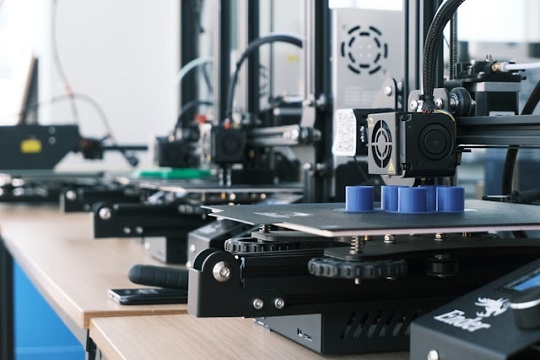
Scandium materials are also attracting attention in precision manufacturing and research environments. Industries that require stable, high-performance materials often evaluate scandium alloys. This is because of their structural consistency and reliability.
High-purity scandium materials are useful for:
Scandium-containing alloys may help improve dimensional stability and manufacturing consistency. These properties are important in specific industries. In these sectors, even small performance differences matter. They can ultimately affect the overall quality of a product.
Scandium powder is also increasingly studied for advanced 3D printing technologies. Its alloy performance and weldability make it attractive for complex precision parts.
Scandium technology is still developing in many areas. However, the material is seeing a steady rise in popularity. Advanced manufacturing industries are increasingly interested in its potential.
Many buyers searching for scandium density may actually need different scandium material forms.
Scandium metal is mainly used for alloy production. Aerospace manufacturers and advanced fabrication companies frequently use scandium metal. They do this to improve the performance of aluminum alloys.
Scandium oxide is commonly used in:
Scandium powder is important in additive manufacturing and powder metallurgy. Scandium sputtering targets are used in thin-film deposition and electronics production.
| Material Form | Common Use | Typical Industries |
| Scandium Metal | Alloy production | Aerospace, manufacturing |
| Scandium Oxide | Ceramics and research | Laboratories, electronics |
| Scandium Powder | Additive manufacturing | Advanced fabrication |
| Scandium Target | Thin-film deposition | Electronics industry |
Industrial buyers should carefully evaluate:
Choosing the correct scandium product is important. It helps to achieve the desired performance and manufacturing results.
Engineers and procurement teams often use quick-reference data when evaluating advanced materials.
| Property | Value | Industrial Importance |
| Scandium Density | 2.985 g/cm³ | Lightweight alloy design |
| Atomic Number | 21 | Transition metal behavior |
| Melting Point | 1541°C | High-temperature stability |
| Boiling Point | 2836°C | Thermal processing |
| Typical Alloy Addition | 0.1%–0.5% | Strength enhancement |
| Common Aerospace Content | 0.2%–0.4% | Sheet and plate alloys |
Scandium density is one of the most important scandium properties. It directly affects engineering calculations and alloy performance.
However, engineers also evaluate:
Demand is growing for materials that are lightweight and offer high performance. This trend is expected to drive more interest in scandium alloys.
Scandium density is approximately 2.985 g/cm³. This means scandium is considered a lightweight metal suitable for advanced alloy applications.
Yes. Scandium is slightly denser than aluminum. Aluminum has a density of about 2.70 g/cm³, while scandium density is about 2.985 g/cm³.
Scandium improves aluminum alloy strength, weldability, corrosion resistance, and fatigue performance. Even small scandium additions can significantly improve alloy quality.
Scandium metal is mainly used for alloy production. Scandium oxide is often used in ceramics, research, electronics, and specialty industrial materials.
Yes. One of the major advantages of aluminum-scandium alloys is improved weldability.
Scandium density is about 2.985 g/cm³. Although scandium is slightly denser than aluminum, it plays an important role in lightweight alloy design. Small additions of scandium can improve strength, weldability, corrosion resistance, and structural performance.
These advantages have sparked significant interest in scandium materials. Currently, they are being studied for use in aerospace and advanced manufacturing. Researchers are also exploring their potential in precision engineering. Aluminum-scandium alloys are especially valuable for industries that need lightweight yet durable materials.
When choosing scandium materials, quality and purity are very important. Reliable supply and technical support also matter for long-term project success.
AEM REE specializes in high-purity scandium materials for industrial and research customers worldwide. The company supplies scandium metal, scandium oxide, scandium alloys, powders. It also has other advanced rare earth materials with customized specifications.
AEM REE provides high-quality scandium products for aerospace, manufacturing, and advanced engineering. Contact us today to receive technical support. We can also provide a customized quote for your project.
 +86-731-89578196