| Question | Short Answer |
| Is thulium radioactive? | Partly — natural thulium is mostly stable, but many isotopes are radioactive |
| Stable isotope | Thulium-169 |
| Main radioactive isotope | Thulium-170 (¹⁷⁰Tm) |
| Half-life of ¹⁷⁰Tm | ~128–128.6 days |
| Key uses | Medical therapy, portable X-ray, industrial radiography |
Quick Answer:
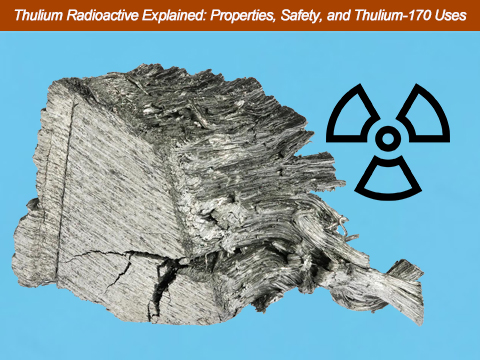
Thulium is not entirely radioactive, but most of its isotopes are. Natural thulium is mainly made of thulium-169, which is effectively stable. However, thulium-170 is a radioactive isotope widely used in medical and industrial applications due to its controlled radiation and practical half-life.
When people search for thulium radioactive, they often want a simple answer: is thulium safe or not? The truth is more nuanced. Thulium (chemical symbol Tm, atomic number 69) belongs to the lanthanide series, also known as rare earth elements. It is one of the rarest of these elements, with an average abundance of only about 0.5 parts per million in the Earth's crust.
Thulium has around 35 known isotopes. Among them, only one isotope—thulium-169—is considered stable. This means that natural thulium, which is almost entirely composed of thulium-169, does not emit radiation under normal conditions. Therefore, in its natural form, thulium is not considered hazardous from a radiation standpoint.
However, the phrase thulium radioactive becomes important when discussing its other isotopes. Most of the remaining isotopes, including thulium-170, are radioactive. These isotopes are typically produced in nuclear reactors through neutron activation processes.
In simple terms:
This distinction is critical for engineers, buyers, and researchers. The risks and applications of thulium depend entirely on which isotope is being used, not just the element itself.
To fully understand the topic of thulium radioactive, it is essential to focus on thulium-170 (¹⁷⁰Tm). This isotope is the most important radioactive form of thulium in practical applications.
Here is a clear data snapshot:
| Property | Value (for ¹⁷⁰Tm) | Why It Matters |
| Isotope | ¹⁷⁰Tm | Primary radioactive form used in industry |
| Half-life | ~128–128.6 days | Suitable for medium-term applications |
| Decay mode | β⁻ (~99.9%) | Provides controlled radiation output |
| Production | Neutron activation of thulium oxide | Reactor-based manufacturing |
| Specific activity | ~173 Ci/g (6.41 TBq/g) | High energy in small volume |
| Typical form | Oxide targets, labeled compounds | Flexible for different applications |
Thulium-170 is produced by exposing thulium oxide to neutrons inside a nuclear reactor. This process transforms stable thulium-169 into radioactive thulium-170.
One of the key reasons thulium radioactive isotopes are valuable is their half-life. At around 128 days, thulium-170 provides a balance between usability and decay. It lasts long enough for practical use but not so long that it creates long-term waste challenges.
Another important factor is its radiation type. Thulium-170 emits mainly beta radiation with low-energy gamma rays. This makes it easier to manage compared to high-energy isotopes.
For engineers, this means:
These properties make thulium-170 a unique and practical radioactive material.
Understanding thulium radioactive properties becomes especially important when selecting materials for real-world applications. Thulium-170 offers a combination of features that make it highly attractive to engineers and OEMs.
Here are the main advantages:
This allows for predictable use over several months without frequent replacement.
Compared to isotopes like cobalt-60, thulium-170 produces less penetrating radiation, which reduces shielding needs.
High specific activity enables strong output in small volumes, ideal for portable devices.
Lower energy radiation means reduced exposure risks when properly handled.
Comparison with other isotopes:
| Isotope | Half-life | Radiation Level | Typical Use |
| Thulium-170 | ~128 days | Low | Portable X-ray, medical |
| Iridium-192 | ~74 days | Medium | Industrial radiography |
| Cobalt-60 | 5.27 years | High | Heavy industrial use |
This comparison shows why thulium radioactive applications are growing. It fills a niche between high-energy industrial isotopes and short-lived medical isotopes.
For OEMs designing portable systems or precision devices, thulium-170 offers:
These advantages make it a strategic choice in modern engineering design.
The topic of thulium radioactive materials is especially important in healthcare. Thulium-170 has been studied and used in several medical applications due to its controlled radiation and manageable half-life.
One of the most promising uses is in treating bone pain caused by cancer metastases. Thulium-170 can be attached to compounds such as phosphonates, which naturally target bone tissue.
Studies have shown:
This makes thulium-170 a cost-effective alternative to isotopes like strontium-89.
Thulium-170 is also explored in brachytherapy, where radioactive sources are placed close to or inside tumors. Because of its low-energy radiation, it can deliver localized treatment with minimal damage to surrounding tissues.
| Parameter | Typical Value |
| Radiochemical purity | >98% |
| Radionuclidic purity | ~99.6% |
| Bone uptake | >50% (in some studies) |
| Clearance pathway | Renal (kidneys) |
For medical OEMs and radiopharmacy teams, the thulium radioactive profile offers several benefits:
However, success depends on high-quality starting materials. This is why consistent purity and reliable supply of thulium compounds are critical.
Beyond medicine, thulium radioactive isotopes play an important role in industrial applications, especially in non-destructive testing (NDT) and radiography.
Thulium-170 can be used as a radiation source in portable X-ray systems. These systems are valuable for inspecting materials such as welds, pipelines, and structural components without causing damage.
Best suited for:
Less suitable for:
Compared to iridium-192 or cobalt-60, thulium radioactive sources offer a lighter and more flexible solution, though with some limitations.
For engineers, the key is balancing:
This makes thulium-170 a specialized but valuable option in modern industrial inspection systems.
Safety is a major concern when discussing thulium radioactive materials. The answer depends on the form of thulium being used.
Natural thulium, composed mainly of thulium-169, is not radioactive in a meaningful way. It does not pose a radiation hazard under normal handling conditions. Standard rare earth handling practices are sufficient.
In contrast, thulium-170 must be handled under strict safety regulations. Because it emits radiation, it requires proper control measures.
Typical safety practices include:
A key point is that thulium radioactive risk depends on:
When handled correctly, thulium-170 can be used safely in both medical and industrial environments.
Another important aspect of thulium radioactive discussions is supply. Thulium is one of the rarest rare earth elements, with an abundance of about 0.5 ppm.
Comparison:
| Element | Abundance (ppm) |
| Thulium | ~0.5 |
| Neodymium | ~38 |
| Cerium | ~60 |
This rarity creates several challenges:
At the same time, demand is growing due to:
For engineers and procurement teams, this means thulium radioactive projects must consider supply risk early in the design stage.
Reliable sourcing partners can help:
While thulium radioactive isotopes like thulium-170 are important, thulium as a whole element plays a critical role across multiple advanced industries. Its unique combination of stability, optical properties, and high-temperature performance makes it valuable in both radioactive and non-radioactive forms.

In aerospace and power generation, thulium is used as a minor alloying element in high-performance materials designed for extreme environments. It helps improve oxidation resistance, thermal stability, and mechanical strength at elevated temperatures. These properties are essential for components exposed to high heat and stress, such as turbine systems and structural parts. Even small additions of thulium can enhance long-term durability and reduce material degradation. For engineers, this means longer service life and improved reliability in demanding conditions.
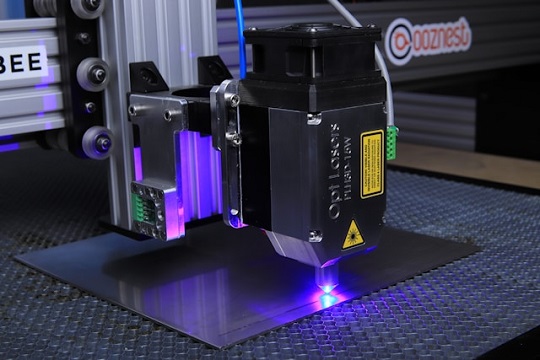
Thulium is widely used in optical and photonic systems, especially in thulium-doped lasers and fiber technologies. These materials operate in the infrared range, making them suitable for medical lasers, telecommunications, and sensing systems. Thulium-doped fiber lasers are valued for their efficiency, compact design, and precise wavelength output. In medical applications, they are used for minimally invasive procedures due to their controlled energy delivery. This makes thulium an important material for next-generation laser systems that require both performance and precision.

In the medical field, thulium contributes to high-performance devices that require precision and reliability. Beyond its radioactive applications, thulium is used in laser-based surgical tools and imaging systems. Thulium-doped lasers are especially useful in soft tissue procedures because they offer precise cutting with limited thermal damage. Additionally, thulium materials can support advanced diagnostic equipment where optical clarity and stability are critical. For medical device manufacturers, thulium provides a balance of performance, safety, and consistency in sensitive healthcare environments.

In research and nuclear science, thulium radioactive isotopes such as thulium-170 are used as controlled radiation sources in experimental studies. These isotopes help scientists investigate material behavior under radiation, calibrate instruments, and develop new radiopharmaceuticals. Thulium is also used as a tracer in nuclear experiments due to its predictable decay characteristics. For research institutions and laboratories, access to high-purity thulium materials is essential to ensure accurate and repeatable results. This makes thulium a valuable tool in both fundamental research and applied nuclear science.
Selecting the correct form is essential when working with thulium radioactive or non-radioactive applications.
| Application | Recommended Form |
| Reactor production | Thulium oxide |
| Laser systems | Doped glass or fiber |
| Research | Salts or metal |
| Alloys | Metallic thulium |
Choosing the wrong form can lead to:
Factors to consider include:
When planning a thulium radioactive project, engineers and buyers should ask:
Each of these factors impacts project success. Early planning helps avoid delays and compliance issues.
AEM REE supports customers working with thulium radioactive and non-radioactive materials by delivering high-purity thulium metal, oxide, and specialty compounds tailored to demanding industrial and research applications. With extensive experience in rare earth materials, the company provides customized solutions based on specific requirements such as purity levels, particle size, and final form, ensuring compatibility with medical, aerospace, electronics, and R&D needs.
In addition, AEM REE maintains a reliable global supply network, helping customers reduce sourcing risks associated with rare elements like thulium. Beyond material supply, the team offers technical consultation to assist engineers and procurement specialists in selecting the right specifications, improving performance, and ensuring consistency across projects. By combining quality control, flexibility, and application-focused support, AEM REE helps customers successfully develop and scale projects involving thulium radioactive materials. Discuss your thulium project with our team or request a custom quote tailored to your specifications.
 +86-731-89578196