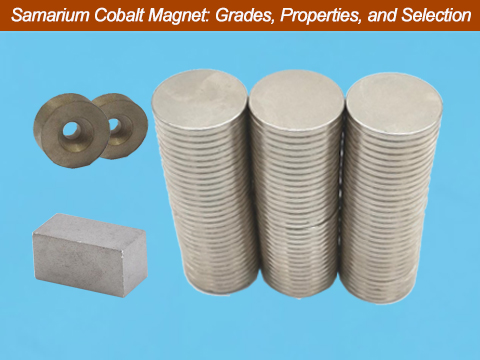
A samarium cobalt magnet is a rare-earth permanent magnet designed for applications that require strong magnetic performance, high-temperature stability, and good corrosion resistance. It is commonly used in demanding industrial environments where other magnet types may lose performance or require additional protection.
However, choosing the right samarium cobalt magnet involves more than comparing magnetic strength. Engineers and buyers must also consider operating temperature, magnet grade, magnetic properties, dimensions, corrosion exposure, and assembly conditions.
This guide explains the main properties of SmCo magnets, compares the two major material families, and provides practical advice for selecting and purchasing the right product.
| Selection Factor | What Buyers Should Know |
|
Main material families |
SmCo₅ (1:5) and Sm₂Co₁₇ (2:17) |
|
Key advantages |
High-temperature stability, strong resistance to demagnetization, and good corrosion resistance |
|
Magnetic properties |
Remanence (Br), intrinsic coercivity (Hcj), and maximum energy product (BH)max |
|
Operating temperature |
Depends on the specific grade and application conditions; some grades are designed for 300–350°C |
|
Main limitations |
High cost, brittleness, and machining challenges |
|
Important buying details |
Grade, dimensions, tolerances, magnetization direction, operating temperature, and inspection requirements |
Samarium-cobalt (SmCo) magnets are a type of rare-earth magnet. They are produced by alloying samarium, cobalt, and other rare-earth metals in specific proportions, followed by a process of pulverization, pressing, and sintering.
These magnets feature a high maximum energy product and an exceptionally low temperature coefficient. They can operate at temperatures as high as 350°C, with no lower limit on operating temperature. At temperatures above 180°C, their maximum energy product (BHmax), coercivity, and both thermal and chemical stability surpass those of neodymium-iron-boron (NdFeB) permanent magnets.
There are two main types:
During manufacturing, the material is processed to align its magnetic structure in a preferred direction. After magnetization, it can maintain a magnetic field without a continuous power supply.
A finished samarium cobalt magnet is an engineered magnetic product. It should not be confused with upstream materials such as samarium metal or samarium oxide, which have different compositions and uses.
High Magnetic Energy Product
The magnetic energy product is a key metric for evaluating magnet performance, and samarium-cobalt (SmCo) magnets excel in this regard. Their maximum magnetic energy product ranges from 16 MGOe to 32 MGOe, with a theoretical limit reaching 34 MGOe. This indicates an exceptional capacity to store and deliver magnetic energy.
High Coercivity
Coercivity reflects a magnet's ability to resist interference from external magnetic fields and maintain its own magnetization. SmCo magnets possess high coercivity, allowing them to retain their magnetic properties even within complex magnetic environments.
Adaptability to High-Temperature Environments
A standout feature of SmCo magnets is their ability to operate stably at high temperatures. They can function at temperatures up to 350°C, with certain specialized formulations capable of withstanding even higher temperatures. At temperatures above 180°C, SmCo magnets outperform neodymium-iron-boron (NdFeB) permanent magnets in terms of maximum magnetic energy product, coercivity, and both thermal and chemical stability.
Resilience in Low-Temperature Environments
Beyond their high-temperature tolerance, SmCo magnets also perform exceptionally well in low-temperature conditions. They can retain a degree of magnetization even at temperatures approaching absolute zero (-273°C).
Due to the properties of the metals—such as cobalt—contained in their composition, SmCo magnets exhibit robust resistance to corrosion and oxidation. They maintain stable magnetic and physical properties over long periods, even in harsh environments characterized by high humidity, acidity, or alkalinity. This offers a significant advantage over iron-based magnets, which are prone to rusting.
SmCo₅ and Sm₂Co₁₇ are the two main families of samarium cobalt magnets. Both offer good temperature stability and corrosion resistance, but their magnetic characteristics differ.
SmCo₅ magnets are known for relatively high coercivity and good resistance to demagnetization. Published commercial energy-product ranges for this family are commonly around 18–25 MGOe, depending on the grade and manufacturer.
They may be suitable for applications where resistance to demagnetization is a major requirement.
Sm₂Co₁₇ magnets often contain additional elements such as iron, copper, and zirconium to adjust their magnetic and thermal properties.
Commercial energy-product ranges are often reported around 24–32 MGOe. This family can provide higher magnetic energy product than many SmCo₅ grades and is commonly considered for high-performance motors and other demanding applications.
| Selection Requirement | Possible Consideration |
|
High resistance to demagnetization |
Evaluate suitable SmCo₅ grades |
|
Higher magnetic energy product |
Compare suitable Sm₂Co₁₇ grades |
|
High operating temperature |
Check the grade's coercivity and temperature data |
|
Compact magnetic design |
Compare (BH)max and the complete magnetic circuit |
|
Special operating conditions |
Request grade-specific technical data |
These are general guidelines rather than fixed rules. Buyers should compare actual datasheets and application requirements instead of choosing based on material family alone.
High-temperature performance is one of the main reasons engineers choose SmCo magnets. Some commercial grades are designed for operating temperatures of 300°C or 350°C. However, not every samarium cobalt magnet can operate safely at these temperatures.
The maximum recommended operating temperature varies with composition, magnetic properties, dimensions, and application conditions.
For example, Arnold publishes the following specifications for two RECOMA grades:
| Grade | Maximum Recommended Operating Temperature | Maximum Energy Product |
|
RECOMA 35E |
300°C |
33.3 MGOe |
|
RECOMA 33E |
350°C |
31.5 MGOe |
This comparison shows that a higher temperature rating does not necessarily mean a higher magnetic energy product. Engineers should evaluate the magnet's performance under actual service conditions.
These two temperature values describe different properties:
A magnet may lose useful magnetic performance well below its Curie temperature. Therefore, Curie temperature should not be used as the safe operating limit.
Before selecting a samarium cobalt magnet for high-temperature use, check:
For reference, Arnold publishes a reversible induction temperature coefficient of −0.035%/°C for its RECOMA 35E grade. This is a grade-specific value, not a universal specification for SmCo magnets.
Samarium cobalt and neodymium iron boron (NdFeB) are two important types of rare-earth permanent magnets. Both offer strong magnetic performance, but they suit different operating conditions.
| Comparison Factor | Samarium Cobalt (SmCo) | Neodymium (NdFeB) |
|
Magnetic strength |
High |
Generally higher |
|
Temperature stability |
Generally better |
Depends strongly on grade |
|
Demagnetization resistance |
Strong, especially in suitable high-coercivity grades |
Varies by grade and temperature |
|
Corrosion resistance |
Generally good |
Often requires protective coating |
|
Mechanical behavior |
Hard and brittle |
Also brittle |
|
Material cost |
Generally higher |
Often lower for comparable applications |
NdFeB may be preferable when maximum magnetic output and compact size are the main priorities, provided the selected grade meets the operating requirements.
A samarium cobalt magnet is often the better choice when temperature stability, resistance to demagnetization, and corrosion performance are more important.
For a more detailed comparison, see our related guide on Samarium Cobalt vs. Neodymium Magnets.
Samarium cobalt magnets have good natural corrosion resistance compared with many other permanent magnet materials. In many applications, they can be used without the same level of protective coating required by NdFeB magnets.
However, this does not mean every SmCo magnet is immune to corrosion or environmental damage.
Corrosion performance depends on composition, manufacturing quality, surface condition, and exposure environment.
For example, VAC has reported good corrosion performance for certain SmCo materials after prolonged exposure under conditions exceeding 80% relative humidity and 80°C. This result applies to the tested materials and conditions, not every SmCo grade.
Additional protection or special handling may be needed when magnets are exposed to:
Hydrogen exposure deserves particular attention. VAC warns that unprotected SmCo magnets should not be exposed to hydrogen.
Buyers should discuss environmental conditions and surface requirements with the supplier before ordering.

Motors manufactured using samarium-cobalt (SmCo) magnets are compact and lightweight. This helps reduce overall aircraft weight and improves energy efficiency. Furthermore, they maintain stable operation even in the complex temperature and magnetic field environments encountered at high altitudes. This ensures reliable power supply and propulsion for the aircraft.
Samarium-cobalt magnets are used to produce high-precision magnetic sensors capable of accurately detecting changes in magnetic fields within complex environments, thereby providing precise navigation data for aircraft. In inertial navigation systems, magnetometers incorporating samarium-cobalt magnets enhance system accuracy and stability. This ensures the aircraft maintains the correct heading throughout its flight.
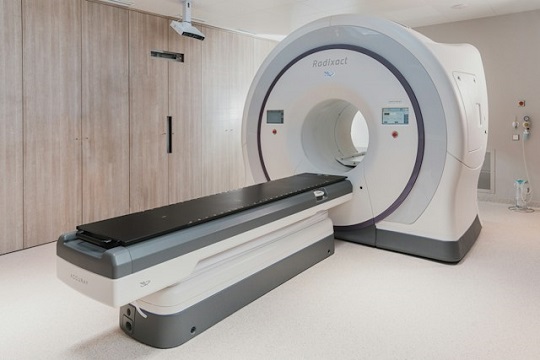
Samarium-cobalt magnets are utilized in the main magnets of MRI systems. They can generate the powerful, stable magnetic fields essential for imaging. Their high magnetic energy product and stability ensure clear, accurate diagnostic images. Additionally, the stability of samarium-cobalt magnets at elevated temperatures ensures consistent performance during prolonged, continuous operation of MRI equipment.
Due to their safe and reliable magnetic properties, samarium-cobalt magnets are used in the construction of magnetic therapy devices. These devices generate specific magnetic fields that stimulate acupoints and bodily tissues. This helps to promote blood circulation and alleviate pain.
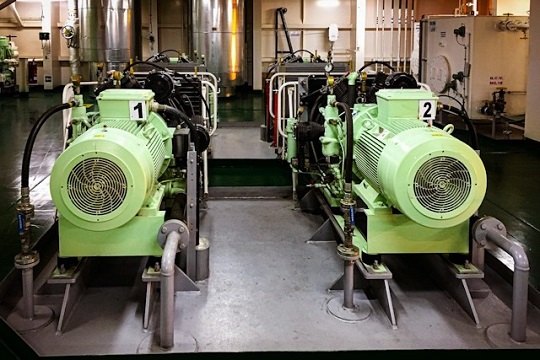
Motors built with samarium-cobalt magnets offer advantages such as high efficiency, energy savings, and operational stability. In some industrial automation production lines, high motor performance is critical. These magnets help boost productivity while reducing energy consumption. In the renewable energy sector, including wind and hydroelectric power generation, generators utilizing samarium-cobalt magnets can operate reliably across diverse environments, enhancing power generation efficiency.
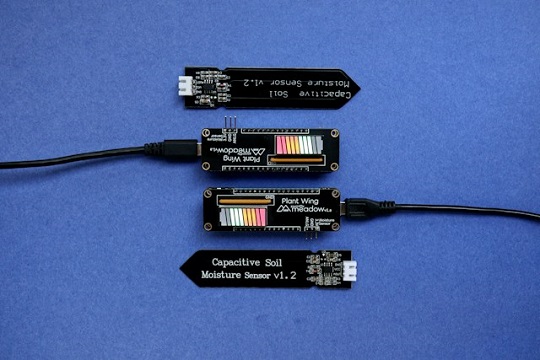
Samarium-cobalt magnets are employed in various types of sensors, such as position and speed sensors. These sensors accurately detect physical changes and convert them into electrical output signals. In magnetic transmission systems, these magnets enable non-contact power transmission. This can reduce wear and noise, while extending the service life and improving the operational precision of the equipment.
Although a samarium cobalt magnet offers several important advantages, it also has limitations that should be considered during product design and purchasing.
SmCo is hard and brittle, making it difficult to machine with ordinary metalworking methods. Specialized processes are normally required to achieve precise dimensions and surface finishes.
The material can also crack or chip if dropped, struck, or subjected to excessive mechanical stress. In high-speed applications, suitable mechanical retention may be needed to prevent movement or damage.
To reduce these risks:
Machining dust also requires controlled handling because of the material composition.
Selecting a suitable samarium cobalt magnet requires clear communication between the buyer, design team, and supplier. A detailed request for quotation (RFQ) helps suppliers understand the application and recommend an appropriate specification.
When requesting a quotation, provide the following information whenever possible:
| RFQ Detail | Information to Provide |
|
1. Application |
Motor, sensor, aerospace equipment, laboratory device, or other use |
|
2. Operating temperature |
Continuous temperature, peak temperature, and thermal cycling |
|
3. Dimensions |
Length, width, thickness, diameter, and dimensional tolerances |
|
4. Magnetic requirements |
Required Br, Hcj, (BH)max, or target magnetic performance |
|
5. Magnet grade |
SmCo₅, Sm₂Co₁₇, or a specific commercial grade if known |
|
6. Magnetization direction |
Axial, radial, diametric, or another required direction |
|
7. Surface requirements |
Coating, surface finish, corrosion protection, or other treatment |
|
8. Order requirements |
Prototype quantity, production volume, inspection documents, and delivery schedule |
If you have a technical drawing, include it with the RFQ. A drawing helps clarify dimensions, tolerances, magnetization direction, and assembly details.
You do not need to know every magnetic parameter before contacting a supplier. Providing the application, operating temperature, and basic dimensions can help the supplier identify the information needed for further evaluation.
Before placing an order, review the supplier's technical and quality information.
AEM REE supplies rare-earth materials and magnetic products for industrial manufacturers, technology companies, and research institutions. For samarium cobalt magnet requirements, buyers should confirm available grades, product forms, dimensions, and inspection options with the sales team.
Send your application details, operating temperature, technical drawing, magnetic specifications, and expected order quantity to help the team evaluate your requirements and prepare a quotation.
Not usually in terms of maximum energy product. NdFeB magnets generally offer higher magnetic strength, while SmCo often provides better temperature stability and corrosion resistance.
No. Maximum recommended operating temperature depends on the specific grade and application conditions. Some commercial grades are rated for 350°C, while others have lower limits.
Not always. SmCo has good natural corrosion resistance and may be used without plating in many applications. Special environments may still require additional protection or specific material selection.
A samarium cobalt magnet is a strong option for applications that require reliable magnetic performance at elevated temperatures and good resistance to demagnetization and corrosion. However, the best choice depends on more than maximum magnetic strength.
Engineers and buyers should compare SmCo₅ and Sm₂Co₁₇ grades, review temperature-dependent properties, consider mechanical limitations, and define clear dimensional and inspection requirements.
If you are sourcing samarium cobalt magnets for an industrial or research application, contact AEM REE with your drawing, operating conditions, and technical requirements to discuss available product options and request a quotation.
 +86-731-89578196