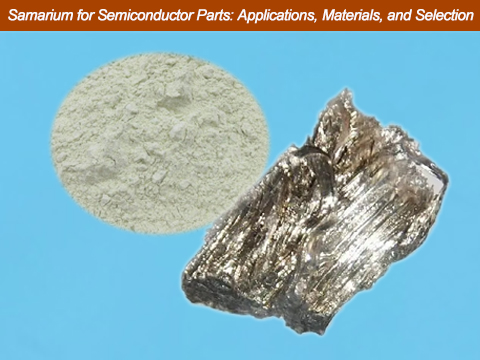
Samarium is mainly relevant to specialized semiconductor processing equipment and material research. It is generally not used directly inside semiconductor chips themselves. Key examples include samarium-containing aluminum nitride (AlN) ceramics for electrostatic chucks. Additionally, Sm₂O₃ thin films are frequently studied as dielectric layers. Samarium–cobalt (SmCo) magnets are a separate pathway for magnetic equipment components.
| Application | Material to Consider | Typical Form | What to Verify |
| AlN ceramic equipment parts | Samarium-containing AlN / Sm₂O₃ addition | Powder / formulated ceramic | Composition, resistivity, sintering behavior |
| Thin-film research | Samarium metal / Sm₂O₃ | Metal / target / film | Purity, deposition method, impurities, film properties |
| Magnetic equipment components | SmCo | Finished magnet / alloy | Grade, geometry, thermal limits |
| Material development | Samarium oxide or metal | Powder / metal forms | Purity basis, impurities, dimensions, documentation |
For buyers, the key point is simple: the right samarium material depends on the part, process, and required performance. A high-purity material alone does not automatically qualify it for semiconductor use.
Samarium has specialized roles in semiconductor-related applications. It is not a mainstream material used throughout semiconductor chips. Instead, samarium-containing materials can be used or investigated in semiconductor equipment parts, ceramic components, thin films, and magnetic components.
Samarium is also used to manufacture samarium phosphide light-emitting diodes (LEDs) in the semiconductor field. Its primary emission peak lies in the green spectrum, and it offers high luminous efficiency along with a long lifespan.
The main pathways are:
This distinction is important when evaluating samarium for semiconductor parts. The material used to manufacture a ceramic equipment part is not necessarily the same material used in thin-film research or a magnetic component.
Samarium for semiconductor parts requires precise specification. You should never order it using simply the general element name "samarium". Instead, clearly specify both the target application and the exact material form.
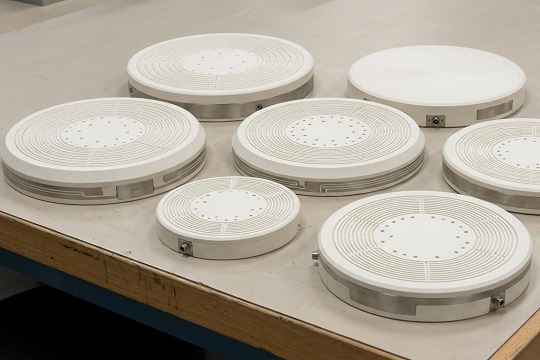
There is one of the clearest connections between samarium and semiconductor equipment. It's used in samarium-containing aluminum nitride ceramics in electrostatic chuck designs.
An electrostatic chuck holds a semiconductor wafer during processing. In a simplified structure, the wafer sits above a ceramic dielectric layer. An electrode is embedded within the component. The electrical properties of this ceramic layer are important to how the chuck operates.
A documented patent design describes a sintered AlN dielectric layer containing samarium. The samarium-containing ceramic forms part of the electrical structure of the chuck.
This example is particularly useful. It shows how samarium is incorporated into finished semiconductor equipment materials. It is not used directly as a wafer material.
However, a patent-specific composition should not be treated as a universal commercial recipe. Different chuck designs can use different formulations and processing conditions.
The cited patent describes a volume-resistivity range of approximately 4 × 10⁹ to 4 × 10¹⁰ Ω·cm for its samarium-containing AlN design.
This value is useful as an example of the type of property that may need to be controlled. However, it is not a universal resistivity specification for all samarium-containing electrostatic chucks.
For ceramic buyers, the important question is therefore not simply, "What purity of Sm₂O₃ should I buy?" Instead, the question is whether the selected formulation can produce the required electrical and physical properties after processing.
A raw powder specification and a finished ceramic specification are different things.
The final performance can depend on:
Therefore, adding Sm₂O₃ does not automatically guarantee a required resistivity or chuck performance. Qualification should include test coupons or finished-part measurements where appropriate.
Before ordering, provide the required ceramic composition and any samarium-containing additives. Specify purity requirements, powder characteristics, and target electrical properties. You should also define dimensions, processing conditions, and acceptance criteria upfront.
This detailed approach prevents misunderstandings. It is far safer than ordering generic "semiconductor-grade samarium oxide" without explaining its intended application.
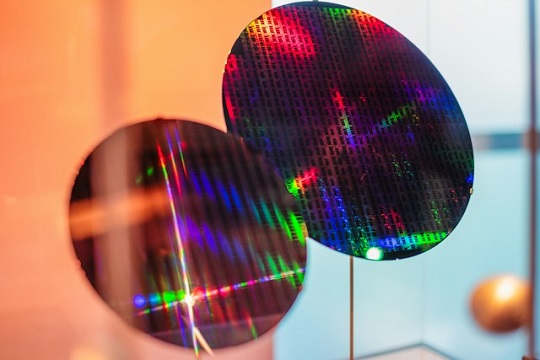
Sm₂O₃ is another important pathway when discussing samarium for semiconductor parts. However, it should be presented as a research application. It's not a proven high-volume commercial adoption.
Research has investigated Sm₂O₃ as a dielectric thin film on silicon. In one reported approach, researchers deposited approximately 150 nm Sm₂O₃ films. They first sputtered samarium metal directly onto silicon. Then, they oxidized the deposited material in oxygen at 700 °C.
A simplified version of the reported research process is:
Samarium metal deposition → oxidation → Sm₂O₃ film → electrical characterization
The reported thickness and temperature belong to that specific study. They should not be treated as universal processing recommendations for every semiconductor device.
For thin films, material performance depends on more than the starting material's nominal purity.
Important factors can include:
A separate study of reactively sputtered Sm₂O₃ gate dielectrics reported improved electrical characteristics after 700 °C annealing. This further shows why processing history must be considered when evaluating Sm₂O₃.
Researchers and materials engineers should consider:
These studies demonstrate research potential. However, Sm₂O₃ is not a universal replacement for conventional semiconductor gate dielectrics. Bulk powder purity also cannot directly predict the performance of a finished thin film.
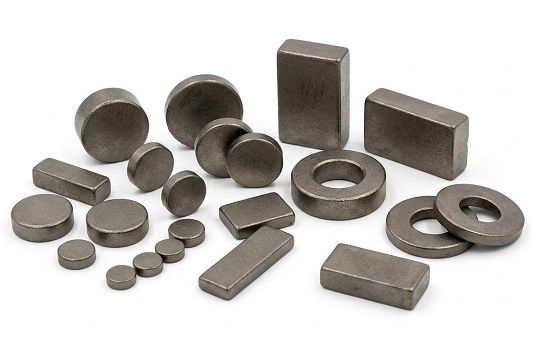
Samarium–cobalt is a separate material pathway. SmCo is an alloy-based permanent magnet, not samarium metal or samarium oxide.
Specialist supplier information connects SmCo magnets with high-vacuum equipment and semiconductor-processing applications. However, this evidence should not be used to claim that SmCo is used throughout semiconductor equipment.
For a magnetic equipment component, buyers should determine whether they need:
In other words, a samarium-containing material is not automatically suitable for a vacuum or semiconductor environment. The finished component and its surface condition must be qualified for the actual application.
Choosing the correct chemistry is one of the most important parts of sourcing samarium for semiconductor parts.
| Material | Main Chemistry | Potential Application | Main Buyer Concern |
| Samarium metal | Sm | Metal deposition / research | Purity, dimensions, physical form |
| Samarium oxide | Sm₂O₃ | Ceramic formulation / thin-film research | Purity basis, impurities, particle properties |
| SmCo | Sm-Co alloy | Magnetic components | Grade, geometry, thermal limits |
Sm₂O₃ is the more relevant starting material when developing a samarium-containing ceramic formulation or conducting oxide-related material research.
The buyer should specify the required purity basis, impurity limits, and particle characteristics. Quantity, packaging, and documentation are also important.
Samarium metal is relevant to research routes in which samarium is deposited and subsequently oxidized to form an Sm₂O₃ film.
However, samarium metal should not automatically be described as a sputtering target. If a target is required, the target's purity, geometry, density, dimensions, bonding, and other target-specific requirements should be confirmed separately.
For magnetic applications, specify the required SmCo grade or finished magnet. Samarium metal and Sm₂O₃ cannot simply replace an SmCo magnet because they contain the same rare-earth element.
There is no single purity number that defines "semiconductor-grade" samarium. The required specification depends on the application. Buyers should examine the complete impurity profile, not just the headline purity.
AEM REE's published samarium oxide specifications list four Sm₂O₃/TREO grades:
The same specification lists TREO at a minimum of 99 wt%.
These numbers describe different aspects of composition. They should not be combined into a statement that the product has 99.999% total chemical purity.
99.999% Sm₂O₃/TREO does not automatically mean 99.999% total chemical purity.
This distinction is especially important for semiconductor-related procurement. In these applications, trace impurities can matter even when the headline purity looks high.
The relevant impurity limits depend on the intended process. Depending on the application, buyers may need information on:
Do not rely only on a product name such as "high-purity samarium oxide". Ask for the actual specification and lot-specific data.
A useful CoA should allow the buyer to verify:
This level of documentation is more useful for qualification than a single purity percentage.
"Semiconductor grade" is not a complete purchasing specification. A useful RFQ should explain the actual application and acceptance requirements.
Providing this detailed information helps suppliers evaluate your request. They can quickly confirm whether the available material matches your intended process. This ensures the supply aligns with your specific semiconductor-related application.
Samarium is more relevant to specialized semiconductor-processing equipment and material. It's not commonly used in semiconductor chips themselves. For example, samarium-containing AlN ceramics for electrostatic chucks, Sm₂O₃ dielectric films.
A documented patent uses samarium-containing sintered AlN as a dielectric layer. It specifies a tightly controlled volume-resistivity range for this material. While this demonstrates a specific equipment-material application, it is not a universal rule. It should not be treated as a standard formulation for all electrostatic chucks.
No. Sm₂O₃ has been investigated as a dielectric thin film. It has shown research results under specific deposition and annealing conditions. These studies demonstrate research potential, not established universal commercial adoption.
No. Sm₂O₃/TREO is a relative rare-earth purity basis. It should not automatically be interpreted as total chemical purity. Buyers should review individual impurities and the complete product specification.
Provide clear baseline specifications before placing an order. State the target application, purity basis, and maximum allowed individual impurities. Detail required particle sizes, total quantities, packaging types, and shipping documentation. For ceramic applications, also supply processing parameters and target finished-material properties.
Samarium has specialized but meaningful roles in semiconductor-related applications. Samarium-containing AlN ceramics have been documented in electrostatic chuck designs. Sm₂O₃ thin films have also been investigated for dielectric applications on silicon. Samarium–cobalt magnets represent a separate material pathway for certain equipment components.
For buyers, the key lesson is clear. Samarium for semiconductor parts is not a single material specification. Samarium metal, samarium oxide, and SmCo serve completely different purposes. Each requires unique material forms, purity criteria, processing conditions, and qualification tests. High headline purity alone does not prove a material is suitable for semiconductor use. Buyers must also verify individual impurity limits, physical characteristics, documentation, and finished-part requirements.
AEM REE supplies samarium oxide, samarium metal, and other samarium-containing materials. Available forms include powder, rod, wire, foil, and sheet. There are also samarium–cobalt magnetic materials in supply. For application-specific requirements, AEM REE can evaluate the requested material form, purity basis, dimensions, quantity, and documentation against the buyer's needs.
If you are sourcing samarium for semiconductor parts, send AEM REE your application, material form, purity requirements, impurity limits, quantity, and other specifications. Contact AEM REE to discuss your requirements and request a quotation.
 +86-731-89578196