| Buyer Question | Key Takeaway |
| What is lanthanum nickel alloy for remelt? | Pre-alloyed La/Ni feedstock intended to be melted again to produce a specified alloy or cast form. |
| Is it the same as LaNi₅? | No. La/Ni alloy can have different compositions, while LaNi₅ has a specific 1:5 atomic ratio. |
| What should buyers specify? | La/Ni composition, tolerance, impurities, oxygen, block size, packaging, quantity, and documentation. |
| Why does oxidation matter? | Lanthanum–nickel alloy can oxidize in air, so controlled storage and handling are important. |
| How should quality be verified? | Check the incoming feedstock and the final remelted alloy through chemistry and, when needed, phase and microstructure analysis. |
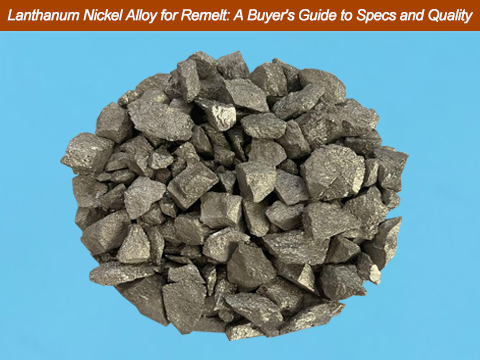
Lanthanum nickel alloy for remelt is pre-alloyed lanthanum–nickel feedstock intended to be melted again to produce a specified alloy composition or cast form. Buyers should define the La/Ni ratio, impurity limits, piece size, packaging, and analytical requirements rather than assume every lanthanum–nickel alloy is LaNi₅.
For industrial buyers, the key question is not simply whether a material is called a lanthanum nickel alloy. It is whether the feedstock has the right chemistry, physical form, and quality controls for the intended remelting process.
Lanthanum nickel alloy for remelt is a La/Ni alloy supplied as feedstock for a later melting and processing step. The phrase "for remelt" describes the intended use, not a single standardized alloy grade.
This distinction matters when ordering material. A lanthanum–nickel alloy may be produced with different La/Ni proportions depending on the target application. AEM REE's product information describes La/Ni alloys in irregular-block form and lists hydrogen-storage and battery-material applications.
Therefore, a buyer should identify the required final alloy before selecting the feedstock. Important questions include:
A clear specification at this stage can prevent chemistry problems later in the process.
One of the most important purchasing questions is whether lanthanum nickel alloy for remelt means LaNi₅. The answer is no.
"Lanthanum nickel alloy" is a broader term for alloys containing lanthanum and nickel. In contrast, LaNi₅ identifies a specific intermetallic composition with a 1:5 lanthanum-to-nickel atomic ratio.
This distinction is important because atomic ratio and weight percentage are not interchangeable. A purchase specification should state exactly how composition is reported and what tolerance is acceptable.
| Term | Meaning | Buyer Implication |
| La/Ni alloy | A broader lanthanum–nickel alloy category | Exact composition must be specified |
| LaNi₅ | A specific 1:5 La atomic ratio | Appropriate only when this composition is required |
| Substituted LaNi₅ | LaNi₅-based alloy with selected substitutions | Full formulation must be specified |
LaNi₅ is a well-known AB₅ hydrogen-storage alloy. However, substitutions with elements such as cobalt, aluminum, or tin can change its properties and performance.
Therefore, do not treat general La/Ni alloy, nominal LaNi₅, and substituted AB₅ feedstock as interchangeable materials.
The most important specifications for lanthanum nickel alloy for remelt are the target La/Ni composition, composition tolerance, impurity limits, oxygen content, physical form, packaging, quantity, and analytical documentation.
Start with the required lanthanum and nickel contents. State the target La/Ni ratio and the reporting basis, such as weight percentage or atomic ratio.
Also define the acceptable tolerance. "High purity" alone is usually not enough for a controlled remelting process.
Ask for limits on individual impurities rather than relying only on a headline purity value.
AEM REE's published La/Ni product information gives the following maximum contents:
| Element | Published Maximum |
| Silicon | ≤0.03% |
| Carbon | ≤0.05% |
| Oxygen | ≤0.03% |
| Magnesium | ≤0.02% |
These are published AEM REE product-page limits, not universal industry requirements. Buyers should confirm the applicable specification and analytical basis when requesting a quotation.
The same product information also lists "≥99.90%" purity and "RE(5–50)±2%." Because the displayed information does not fully establish the analytical basis of these terms, they should be confirmed with the supplier rather than automatically interpreted as total alloy purity or a universal composition tolerance.
Physical form can affect charging, handling, and repeatability. Confirm:
If your furnace has a specific charge-size requirement, include it in the RFQ.
For production or development work, request traceability information such as:
This creates a clearer link between the purchased feedstock and the final remelting record.
Also specify the required quantity, trial quantity, production quantity, packaging method, and delivery date. Packaging should protect the material from unnecessary exposure during storage and transportation.
Oxidation control matters because lanthanum–nickel alloy can oxidize when exposed to air. The condition of the material when it reaches the furnace is therefore important, not just its original chemical specification.
Before charging lanthanum nickel alloy for remelt, inspect the material and packaging. Check for visible surface changes, damaged packaging, and evidence of prolonged air exposure.
Controlled handling is also important. The material should be transferred and prepared according to the approved procedure for the alloy and facility.
During melting, the furnace atmosphere and containment system should match the validated process. Vacuum or inert-gas conditions may be used in LaNi₅-related research, but the correct conditions depend on the actual alloy, furnace, and processing method.
Do not assume that remelting automatically removes oxidation or restores contaminated feedstock.
A practical risk-control sequence is:
Air Exposure → Oxidation Risk → Receiving Inspection → Controlled Handling → Controlled Melting → Final Analysis
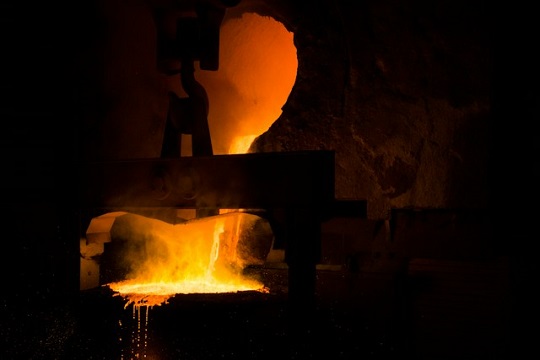
There is no single melting recipe that applies to every lanthanum nickel alloy for remelt. The appropriate process depends on composition, furnace design, atmosphere, charge size, containment, and the required final material.
A general qualification workflow is:
One published study prepared approximately 100 g LaNi₅-based ingots using vacuum induction melting at 1,350–1,400 °C, followed by remelting to improve chemical homogeneity.
These values should be treated carefully. They are study-specific laboratory conditions, not a melting-point value, an AEM REE manufacturing specification, or a universal industrial operating range.
For buyers, the more useful lesson is to tell the supplier how the material will be processed. Information about the target alloy, charge requirements, melting atmosphere, and final qualification method can help determine whether the supplied feedstock is appropriate.

A supplier Certificate of Analysis helps verify the incoming feedstock, but it does not by itself qualify the customer's final remelted alloy.
Final qualification should be based on the requirements of the finished material.
Check whether the remelted material meets the agreed La/Ni composition and impurity limits. Oxygen or other elements may also require specific analysis when they are important to the application.
X-ray diffraction can help determine whether the intended crystalline phases are present after processing. This is particularly useful when phase constitution affects the intended application.
Microscopy can provide information about microstructure and uniformity. Composition mapping may be useful when segregation or local chemistry differences are concerns.
For hydrogen-storage or battery-material development, test the actual processed material. Chemical composition alone cannot establish final performance.
| Qualification Stage | What to Check |
| Incoming feedstock | Chemistry, impurities, physical condition |
| Processing | Melting conditions and process records |
| Final alloy | Chemistry and phase constitution |
| Application qualification | Hydrogen-storage or electrochemical performance |
This separation helps procurement teams avoid a common mistake: assuming that a compliant feedstock automatically produces a compliant final alloy.
Composition is important because LaNi₅-based materials can behave differently when elements such as Co, Al, or Sn are introduced. However, final performance also depends on factors such as phase structure, microstructure, and activation conditions.
LaNi₅-based materials are studied for both gaseous hydrogen storage and Ni–MH battery applications.
For example, one published study reported:
| Alloy | Reported Hydrogen Capacity |
| LaNi₄.₃Co₀.₄Al₀.₃ | 1.4 wt.% |
| LaNi₄.₈Sn₀.₂ | >1.3 wt.% |
These figures are results for specific substituted alloys under defined test and activation conditions. They should not be treated as guaranteed performance for binary La/Ni feedstock from AEM REE.
The practical takeaway is simple: specify the composition needed for your application, then qualify the actual remelted material under your own test conditions.
A good RFQ should tell the supplier what final material you need and how the lanthanum nickel alloy for remelt will be used.
Use the following checklist:
AEM REE describes La/Ni alloy in irregular-block form, with argon-protected packaging and customization available by agreement. Current commercial specifications and packaging details should be confirmed during quotation.
No. Lanthanum nickel alloy can refer to different La/Ni compositions, while LaNi₅ identifies a specific 1:5 atomic ratio.
Remelting can be used to improve chemical homogeneity or produce a required final alloy form. Published LaNi₅-based research provides an example of remelting for improved homogeneity.
One published study used 1,350–1,400 °C under vacuum. This is a study-specific condition, not a universal temperature for every La/Ni alloy or furnace.
No. Composition, phase structure, microstructure, and activation conditions can all affect measured hydrogen-storage performance.
Specify the target composition, tolerance, impurity limits, physical form, block size, quantity, packaging, documentation, and intended remelting process.
Choosing lanthanum nickel alloy for remelt starts with defining the feedstock correctly. A general La/Ni designation does not automatically mean LaNi₅, and a supplier CoA does not replace qualification of the final remelted alloy.
For reliable procurement, define the target composition, impurity limits, physical form, packaging, and documentation before optimizing the melting process. Then verify the final material using the tests required for your application.
AEM REE supplies La/Ni alloy in irregular-block form and supports customized specifications by agreement. Send AEM REE your target La/Ni composition, impurity limits, block-size requirements, and trial quantity to discuss suitable feedstock and documentation for your remelting process.
 +86-731-89578196