| Property | Value | Why It Matters |
| Atomic Number | 57 | Identifies lanthanum as the first element in the lanthanide series. |
| Symbol | La | Standard chemical symbol used in research and industry. |
| Appearance | Soft, silvery-white metal | Easy to process but requires careful storage due to oxidation. |
| Density | 6.15 g/cm³ | Suitable for many alloy and specialty material applications. |
| Melting Point | 920°C | Important for high-temperature processing and alloy production. |
| Boiling Point | 3,464°C | Supports applications involving elevated temperatures. |
| Common Oxidation State | +3 | Determines most of lanthanum's chemical behavior and compound formation. |
| Reactivity | Highly reactive with air and water | Requires protective handling and packaging. |
| Common Industrial Uses | Catalysts, optical glass, batteries, alloys | Demonstrates the material's broad industrial value. |
Lanthanum is a key rare earth metal. Its properties make it crucial for many high-performance industries. It has a high reactivity. It maintains a stable +3 oxidation state. It also offers good ductility and forms useful compounds. These traits enable a wide range of applications. It is used in petroleum refining and optical glass. It is also vital for rechargeable batteries. Understanding these properties helps technical teams. Engineers, researchers, and procurement specialists can choose the right material for their projects.
This guide covers everything you need to know about lanthanum. First, it explains its most important properties. Second, it shows how they influence industrial performance. Third, it lists the common commercial forms available. Finally, it outlines why material quality matters when selecting a supplier.
Lanthanum is a rare earth metal with the chemical symbol La and atomic number 57. It is the first element in the lanthanide series. This group of metals is highly unique. They feature distinct magnetic and optical characteristics. They also offer specialized chemical traits. Do not let the term "rare earth" fool you. Lanthanum is relatively abundant. It is much more common than some other rare earth elements. However, it is usually found together with other lanthanides rather than as a pure metal.
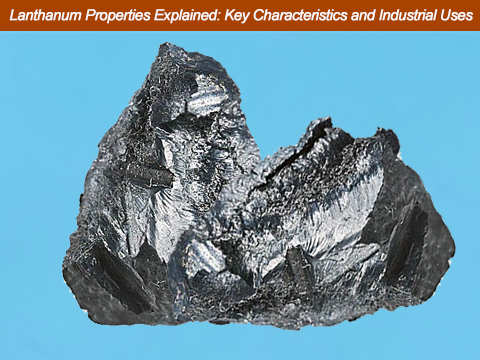
Pure lanthanum is soft, silvery-white, and easy to cut with common tools. Freshly prepared surfaces appear bright, but they quickly become dull because the metal reacts readily with oxygen in the air. This high reactivity is one of the defining lanthanum properties. It affects how the material is processed, stored, and transported.
Today, lanthanum is an essential raw material in many industries. This material has many widespread uses. It helps produce catalysts for petroleum refining. It is vital for high-performance optical glass. It is also used in nickel-metal hydride (NiMH) batteries. Furthermore, it strengthens specialty alloys. Finally, it is a key component in advanced ceramic materials. Lanthanum compounds also play important roles in electronics, chemical manufacturing, and environmental technologies.
Lanthanum has a wide range of industrial applications. Because of this versatility, manufacturers must understand its unique properties. This knowledge helps them select the correct material form. It also assists in choosing the right purity level. Finally, it helps them determine the best processing method. Looking at all these factors ensures reliable performance.
The following tables summarize the most important lanthanum properties.
| Property | Value |
| Element Name | Lanthanum |
| Symbol | La |
| Atomic Number | 57 |
| Atomic Weight | 138.91 |
| Appearance | Soft, silvery-white metal |
| Density | 6.15 g/cm³ |
| Melting Point | 920°C |
| Boiling Point | 3,464°C |
| Crystal Structure | Hexagonal at room temperature |
| Mechanical Property | Soft, ductile, and malleable |
| Property | Description |
| Common Oxidation State | +3 |
| Air Reactivity | Oxidizes rapidly when exposed to air |
| Water Reactivity | Reacts with cold water; faster in hot water |
| Acid Reactivity | Dissolves readily in dilute acids |
| Common Compounds | Oxide, chloride, fluoride, carbonate, hydroxide |
| Chemical Activity | Highly reactive rare earth metal |
These lanthanum properties explain why the material is valuable in industrial manufacturing. Its softness makes machining easier. Its chemical reactivity enables the formation of useful compounds for catalysts, batteries. At the same time, the metal's tendency to oxidize means proper storage and packaging are essential for maintaining quality.
The physical lanthanum properties determine how the metal performs during manufacturing, machining, transportation, and final application. Understanding these characteristics helps manufacturers improve production efficiency while reducing material waste.
Lanthanum is one of the softer rare earth metals. It can be cut, shaped, rolled, or machined more easily than many structural metals. It is also ductile and malleable, allowing it to be formed into different shapes without breaking.
These properties make lanthanum suitable for producing rods, wires, foils, sheets, and other customized forms used in research laboratories and industrial manufacturing.
Lanthanum has a density of approximately 6.15 g/cm³, which is lower than many engineering metals but higher than aluminum. This moderate density allows it to be incorporated into specialty alloys without adding excessive weight.
Pure lanthanum is rarely used as a structural material. However, it is still important in metallurgy. Its density provides unique advantages. Its mechanical characteristics also help. Together, they contribute to improved alloy performance. This makes the metal highly useful in selected applications.
Among the most important lanthanum properties are its thermal characteristics. The metal melts at approximately 920°C and boils at 3,464°C.
Its melting point is high enough for many industrial processing operations. At the same time, it remains practical for alloy manufacturing. These thermal properties make lanthanum useful in materials exposed to elevated temperatures during production or service.
Lanthanum has good electrical conductivity compared with many ceramic materials. It also exhibits paramagnetic behavior, meaning it is weakly attracted to magnetic fields.
Lanthanum is not a permanent magnet. It does not function like neodymium. However, it has excellent electrical characteristics. It also features unique magnetic properties. These traits support its use in electronic materials. They are also vital for specialty compounds. Ultimately, they play a major role in scientific research.
One of the defining lanthanum properties is its high sensitivity to oxygen. Fresh lanthanum surfaces quickly react with air to form a thin oxide layer. Continued exposure can lead to further oxidation and gradual degradation of the metal surface.
Because of this behavior, pure lanthanum is commonly packaged carefully. It is commonly placed in sealed containers. It can also be protected by inert gas. Another option is covering it with mineral oil. These methods keep the metal stable during storage. They are also vital during transportation.
Why does lanthanum oxidize quickly?
Lanthanum oxidizes rapidly. This is because it readily loses three electrons to form stable lanthanum ions. This strong tendency to react with oxygen makes the metal chemically active. Therefore, it requires careful storage to preserve its purity and performance.
Lanthanum has unique chemical properties. These traits enable many valuable industrial applications. The metal is highly reactive. This allows it to form stable compounds. These compounds are used in catalysts, batteries, ceramics and optics. They also support advanced manufacturing.
In most chemical reactions, lanthanum easily loses three electrons, forming stable La³⁺ ions. This predictable behavior makes the element useful in many commercial processes.
The most common oxidation state of lanthanum is +3. Nearly all commercially important lanthanum compounds contain lanthanum in this form.
This stable oxidation state contributes to reliable chemical performance. It makes lanthanum compounds suitable for a wide variety of industrial applications. For example, catalysts, optical materials, and specialty chemicals.
Lanthanum reacts readily with oxygen at room temperature. A thin oxide layer forms almost immediately after fresh metal is exposed to air. Although this layer offers limited protection, prolonged exposure continues to oxidize the material.
For this reason, manufacturers often package high-purity lanthanum in moisture-resistant, sealed containers. This package aims to minimize oxidation during shipping and storage.
Unlike many engineering metals, lanthanum reacts with water even at room temperature. The reaction becomes faster as the water temperature increases. This process produces lanthanum hydroxide and hydrogen gas.
This high water reactivity means the metal should be handled carefully in humid environments. This way can prevent unwanted chemical reactions and surface contamination.
Lanthanum dissolves readily in many dilute mineral acids. This process produces soluble lanthanum salts and releasing hydrogen gas. This property is useful during chemical processing and compound preparation.
Because of its predictable acid reactivity, lanthanum is widely used as a starting material for manufacturing numerous rare earth compounds.
| Compound | Key Property | Typical Application |
| Lanthanum Oxide (La₂O₃) | High refractive index | Optical glass, ceramics |
| Lanthanum Carbonate | Stable chemical compound | Water treatment, pharmaceuticals |
| Lanthanum Chloride | High solubility | Chemical synthesis, research |
| Lanthanum Fluoride | Excellent optical properties | Optical coatings, specialty optics |
These compounds demonstrate how lanthanum properties extend beyond the pure metal itself. These diverse compounds support a wide range of technologies. They are widely used in chemical processing, electronics and energy storage. They also play a major role in advanced manufacturing.
Lanthanum properties matter far beyond laboratory chemistry. Its physical characteristics directly influence manufacturing efficiency. Its chemical traits improve product performance. They also extend service life. Consequently, lanthanum is an important industrial material. It is widely used in energy, electronics, metallurgy and optics.
Lanthanum compounds are widely used in petroleum refining and chemical processing catalysts. Their ability to form stable oxides improves catalyst durability and thermal stability. This helps increase refining efficiency, extend catalyst life, and improve fuel production.
Lanthanum oxide is a key ingredient in high-performance optical glass. It increases the refractive index while maintaining low optical dispersion. These lanthanum properties allow manufacturers to produce clearer lenses with improved image quality. This is important for cameras, microscopes, telescopes, and scientific instruments.
Lanthanum is an important component in nickel-metal hydride (NiMH) batteries. It is commonly used in hydrogen storage alloys. These alloys can repeatedly absorb and release hydrogen during charging and discharging. This contributes to stable battery performance and long service life.
Adding small amounts of lanthanum to steel and non-ferrous alloys helps a lot. It can improve grain structure, reduce impurities, and enhance mechanical properties. These improvements help manufacturers produce higher-quality materials with better consistency.
High-purity lanthanum compounds and sputtering targets are widely used. They can be found in thin-film deposition, electronic ceramics, and semiconductor research. Their consistent composition supports reliable performance in advanced manufacturing.
Lanthanum is available in several commercial forms. Diverse forms meet different manufacturing and research needs. Choosing the appropriate form can improve processing efficiency and reduce production costs.
| Form | Typical Applications |
| Metal | Alloy production, research |
| Oxide | Optical glass, ceramics, catalysts |
| Carbonate | Water treatment, chemical production |
| Chloride | Chemical synthesis, laboratories |
| Fluoride | Optical materials, coatings |
| Alloy | Metallurgy, hydrogen storage |
| Powder | Powder metallurgy, additive manufacturing |
| Rod, Wire, Foil, Sheet | Research and specialty fabrication |
| Sputtering Target | Thin-film and semiconductor deposition |
Each form offers unique advantages. For example, lanthanum oxide is widely used in optics, while high-purity metal is preferred for alloy production. Powders support advanced manufacturing, and sputtering targets are essential for precision coating processes.
The wide range of lanthanum properties makes the element valuable across many industries.

Nickel-metal hydride (Ni-MH) batteries represent one of the most important application areas for lanthanum. Lanthanum-nickel alloy (LaNi₅) is a high-performance hydrogen storage material capable of absorbing large quantities of hydrogen—much like a sponge absorbs water—and releasing it when needed. This characteristic makes it a key component for the negative electrode materials in Ni-MH batteries.
Safe and efficient hydrogen storage has long been a challenge. Lanthanum-based hydrogen storage materials offer a promising solution.

Lanthanum oxide (La₂O₃) holds an irreplaceable position in the field of optical glass, enabling the production of glass with a high refractive index and low dispersion. This "lanthanum glass" is widely used in high-end camera lenses, microscope objectives, telescopes, and prisms for optical instruments, resulting in clearer, sharper images.

Lanthanum-containing rare-earth chlorides are excellent catalysts widely used in petroleum catalytic cracking processes, where they help increase gasoline yield and octane ratings. Additionally, lanthanum oxide serves as a selective catalyst for the oxidative coupling of methane to produce ethylene.
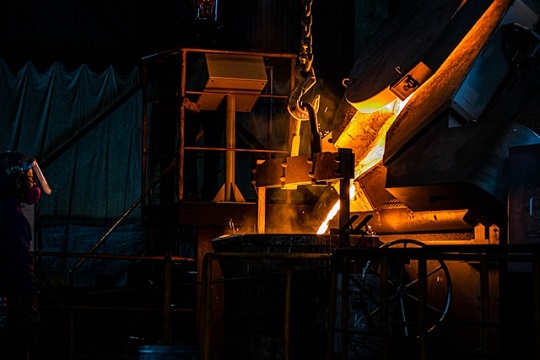
Adding small amounts of lanthanum (and other rare-earth elements) to iron and steel significantly improves mechanical properties, such as ductility, impact resistance, and corrosion resistance. This is why rare-earth elements are often hailed as the "vitamins" of the steel industry.


Industrial Applications Summary
| Industry | Property Utilized | Main Benefit |
| Catalysts | High chemical reactivity | Improved refining efficiency |
| Optical Glass | High refractive index | Better optical performance |
| Batteries | Hydrogen storage capability | Longer battery life |
| Metallurgy | Alloy modification | Improved material properties |
| Electronics | High purity | Reliable thin-film performance |
For industrial users, selecting the correct purity and product form is just as important as understanding lanthanum properties.
Higher-purity materials are often required for optical components, electronic devices, and research applications. This is because even small impurities can affect performance. Consistent quality from batch to batch also helps maintain stable manufacturing results.
Since pure lanthanum reacts readily with air and moisture, it should be stored in sealed, dry packaging. Proper handling reduces oxidation and helps preserve material quality during storage and transportation.
When sourcing lanthanum, buyers should consider:
Although all three elements belong to the rare earth family, they are used for different purposes.
| Property | Lanthanum | Cerium | Neodymium |
| Main Oxidation State | +3 | +3, +4 | +3 |
| Reactivity | High | Very high | Moderate |
| Major Applications | Catalysts, glass, batteries | Polishing, catalysts | Permanent magnets |
| Key Advantage | Stable compounds | Strong oxidation ability | Excellent magnetic properties |
This comparison helps engineers and buyers select the most suitable rare earth material. The choice is based on application requirements. This approach is much better than simply choosing another lanthanide.
The most important lanthanum properties include high chemical reactivity, a stable +3 oxidation state, moderate density, good ductility, and the ability to form useful compounds for industrial applications.
Lanthanum readily reacts with oxygen to form a surface oxide layer. Because of this high reactivity, pure metal should be stored in sealed, moisture-resistant packaging.
Lanthanum is commonly used in catalysts, optical glass, rechargeable batteries, specialty alloys. It's also found in electronic materials, ceramics, and thin-film deposition.
Yes. Lanthanum is the first element in the lanthanide series and is classified as a rare earth metal.
Lanthanum almost always forms compounds in the +3 oxidation state. This makes its chemical behavior predictable across many industrial processes.
High-purity lanthanum oxide is the preferred material. This is because it improves refractive index, optical clarity, and chemical durability.
Understanding lanthanum properties is essential for selecting the right material for industrial applications. It boasts softness, high reactivity, stable +3 oxidation state, and ability to form valuable compounds. These properties make it an important material for modern technology. It is widely used in catalysts, optical glass, and rechargeable batteries. Furthermore, it is essential for metallurgy and advanced electronics.
Beyond chemistry, choosing the correct product form, purity level, and handling method plays a major role in achieving reliable manufacturing results. Whether the application requires lanthanum metal, oxide, alloy, powder, or sputtering targets, high-quality materials help improve consistency, performance, and production efficiency.
For buyers seeking high-purity lanthanum materials with customized specifications, AEM REE supplies a wide range of lanthanum oxides, metals, alloys and other forms to support research, advanced manufacturing, and industrial production worldwide. Feel free to share your product requirements with our product experts. We will help you select the most suitable products to enhance application performance.
 +86-731-89578196