Lutetium in batteries at a glance
| Key point | Summary |
| Element | Lutetium (Lu), atomic number 71 |
| Material class | Heavy rare earth and lanthanide |
| Common research form | Lutetium oxide (Lu₂O₃), lutetium metal, and other compounds |
| Commercial battery status | Not a mainstream active material in commercial lithium-ion batteries |
| Research relevance | Dopants, coatings, ceramic phases, thin films, and interface studies |
| Main limitation | High cost and limited availability compared with common battery materials |
Lutetium is not a standard active material in commercial lithium-ion batteries. Instead, lutetium in batteries is mainly a research topic. Lutetium-containing materials are valuable subjects in advanced energy-storage research. Researchers test them as dopants, ceramic components, protective coatings, thin films, and interface modifiers. Despite these uses, high costs and supply limits restrict commercial adoption. Specialized research remains its main application, rather than large-scale battery manufacturing.
Lutetium is a rare earth element with the symbol Lu and atomic number 71. It is the heaviest lanthanide and has properties that make it useful in advanced materials research.
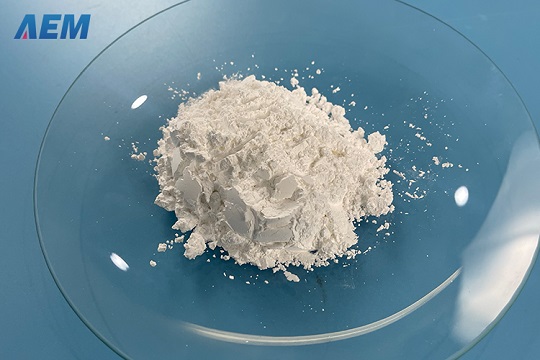
Lutetium can be supplied in several physical forms. Common options include metal, oxide, powders, compounds, and sputtering targets. Among these, lutetium oxide (Lu₂O₃) is an important ceramic material. It is widely used in advanced materials, optical systems, and other specialized applications.
So, why does lutetium in batteries attract research interest? Battery development is not limited to finding new cathode or anode materials. Researchers also investigate small additives and coatings. They study ceramic phases and interface materials as well. These components help improve structural integrity and overall battery stability.
This means lutetium does not need to replace a conventional battery material to have research value.
No. Lutetium is not a standard active ingredient in commercial lithium-ion batteries.
Mainstream lithium-ion batteries rely on established cathode chemistries. Common options include lithium iron phosphate (LFP), lithium cobalt oxide (LCO), and lithium manganese oxide (LMO). Nickel-manganese-cobalt (NMC) and nickel-cobalt-aluminum (NCA) are also widely used. On the anode side, graphite remains the primary material, though silicon-containing anodes are under active development.
| Battery area | Lutetium's current relevance |
| Commercial lithium-ion cathode | Not standard |
| Commercial lithium-ion anode | Not standard |
| EV battery production | Limited practicality |
| Experimental electrode materials | Possible research role |
| Ceramic and interface research | Potential specialty role |
| Thin-film battery research | Potential research role |
Commercial battery materials must balance several key requirements. Designers must weigh performance, safety, cost, availability, manufacturing compatibility, and supply security. Lutetium is much less suitable for large-scale use because of its relatively high cost and limited availability.
Therefore, lutetium in lithium-ion batteries is better understood as an advanced research topic rather than a current mass-production technology.
The possible roles of lutetium depend strongly on the battery chemistry and research objective. It may be investigated as a small additive or as part of a specialized material system rather than as the main battery electrode.
A dopant is a small amount of an additional element introduced into a host material to modify selected properties.
In lutetium-doped battery research, scientists test several material responses. They study changes to crystal structure and phase stability. Additionally, they measure surface behavior, thermal stability, and long-term degradation resistance.
However, a claim that lutetium "improves battery performance" needs specific experimental evidence. Researchers must report the exact composition, lutetium concentration, and synthesis method. They should also detail the cell configuration, voltage range, and cycling rate. Finally, capacity retention and a direct comparison with an undoped control are essential.
This distinction is important. A promising result in one experimental formulation is encouraging. However, it does not mean lutetium will improve every battery chemistry.
Lutetium oxide batteries are not a recognized commercial battery category. However, Lu₂O₃ may be investigated in advanced ceramic and solid-state material research.
Solid-state batteries use solid materials in place of conventional liquid electrolytes. Researchers are studying several solid-state electrolyte systems. Key categories include ceramic, sulfide, polymer, and composite materials. Their goal is to improve safety, stability, and overall energy-storage performance.
Within this field, researchers can investigate lutetium oxide in several ways. Depending on the formulation, it may serve as a ceramic-phase component or additive. It can also function as a precursor or interface-related material.
The presence of Lu₂O₃ in a battery research project is noteworthy. However, it should not automatically be interpreted as evidence of commercial viability. It is not yet a proven commercial solid electrolyte.
Battery researchers also study the surfaces and interfaces between electrodes and electrolytes. These regions can strongly affect degradation and long-term cell performance.
High-purity lutetium-containing materials may therefore be relevant to experimental thin films, coatings, and surface-engineering studies. Sputtering targets are one possible material form for thin-film deposition research.
This creates another potential pathway for lutetium in batteries. Instead of becoming part of the bulk electrode, it can serve a targeted role. Researchers may study a lutetium-containing layer at a specific surface or interface.
Some advanced energy-storage projects have strict material needs. They require materials that can tolerate harsh chemical environments. These components must also withstand extreme thermal conditions. Researchers may therefore investigate specialized lutetium-containing ceramic systems for niche electrochemical applications.
It is vital to describe these applications accurately. They remain strictly research-stage opportunities. They should not be presented as established commercial battery technologies.
Battery research addresses several key hurdles. Major goals include higher energy density and longer cycle life. Teams also focus on faster charging and improved safety. Finally, lowering costs and ensuring reliable material supplies remain critical.
Researchers therefore examine many approaches beyond conventional electrode chemistry. These include dopants, protective coatings, nanoscale structures, solid electrolytes, and engineered electrode-electrolyte interfaces.
This is where rare earth elements in batteries can become relevant. A rare earth element may be investigated for specific applications. Researchers focus on its unique chemical or physical properties. These distinct traits can help solve a particular materials problem.
However, not every rare earth is a battery material. Elements like neodymium, praseodymium, dysprosium, and terbium play a different role. They are essential to electrification through permanent magnets. These magnets are widely used in electric motors and other heavy equipment.
The broader lesson is simple. Rare earths support the electrification ecosystem in different ways. Their specific roles should not be confused with the primary materials inside a battery cell.
Potential benefits of lutetium in batteries are mainly related to controlled materials research.
These are research possibilities, not universal performance benefits. These are research possibilities. They are not universal performance benefits. The actual effect depends on the material system and concentration. It also relies on the processing method and test conditions.
The main limitation is economics. Lutetium is much less suitable for bulk battery manufacturing. It cannot compete with more abundant options. Established battery materials remain the standard for mass production.
Other challenges include:
A laboratory coin-cell result also does not automatically translate to a commercial pouch or cylindrical battery. Any promising lutetium-containing formulation must eventually be compared with scalable alternatives.
Lutetium has a different role from many better-known rare earth elements.
| Rare earth | Main battery or electrification relevance |
| Lutetium | Specialty and advanced-material research |
| Lanthanum | Important in some nickel-metal-hydride battery alloys |
| Cerium | Catalysts and other advanced-material applications |
| Yttrium | Ceramic and advanced-material research |
| Scandium | Specialized alloys and advanced materials |
| Neodymium | Permanent magnets for motors and electrification |
| Praseodymium | Permanent magnets and advanced materials |
| Dysprosium | High-performance permanent magnets |
| Terbium | Specialized permanent-magnet applications |
This comparison shows why lutetium in batteries should not be grouped with all rare-earth applications. Some rare earths have established roles in electrification. Lutetium remains primarily relevant to specialized research.
For battery R&D, simply asking for "high-purity lutetium" may not provide enough information. The material specification should match the experiment.
Specify whether you need lutetium metal, lutetium oxide, a salt or other compound, powder, granules, or a sputtering target.
Define the required base purity. When necessary, also set maximum acceptable levels for specific contaminants. This includes other rare earths, transition metals, and alkali metals. You should also define limits for carbon, moisture, and other impurities.
Particle size can affect powder mixing, sintering, coating, slurry preparation, and experimental reproducibility. Specify the required particle-size range and morphology when relevant.
For lutetium oxide and mixed-material research, phase composition and chemical consistency may be critical.
Depending on the material, buyers may require several key documents. These often include a Certificate of Analysis, SDS, and lot traceability records. Buyers may also request assay information, particle-size data, and impurity analysis.
Define the required project scale up front. Determine whether the project needs gram-scale screening or laboratory quantities. Alternatively, state if it requires pilot-scale material or a recurring supply.
Before requesting a lutetium material quote, define the chemical form, purity, impurity limits, particle size, quantity, packaging, analytical documentation, and intended application.
AEM REE supplies high-purity rare earth materials for industrial, high-tech, and research applications. For projects involving lutetium battery research, material selection can be tailored. Key factors include the required chemical form, purity, and particle size. Buyers must also consider quantity and specific application needs, subject to available product specifications.
Advanced battery research relies on quality materials. High-purity rare-earth inputs are critical to success. Reproducible specifications matter just as much as the core material concept itself.
Developing a lutetium-containing battery material or advanced ceramic system? Contact AEM REE to discuss suitable material options. Please share your required chemical form, purity, and particle-size range. Be sure to include your target quantity and testing needs.
Lutetium is not a standard material in commercial lithium-ion batteries. Its relevance is limited mainly to specialized research. Key areas include dopants, ceramics, coatings, thin films, and advanced battery interfaces.
It may be investigated in a specific material system. However, lutetium oxide is not a universal battery-performance enhancer. Any benefit depends on the host material, concentration, processing method, and test conditions.
Lutetium has limited material availability. It also carries a relatively high cost. Because of this, it cannot match the economics of mass-market lithium-ion battery materials. Large-scale EV production also requires materials with established supply chains and manufacturing processes.
The appropriate form depends on the experiment. Researchers may need lutetium oxide powder or lutetium metal. Alternatively, they may require another lutetium compound or a sputtering target. Purity and particle-size requirements should be defined in advance.
Not necessarily. Most commercial lithium-ion batteries do not rely on rare earth elements for their main electrodes. However, rare earths remain vital to the broader electrification industry. They play key roles in permanent magnets, catalysts, and advanced materials.
Lutetium in batteries is primarily a research topic. It is not a mainstream commercial battery technology. Its potential roles include doping, ceramic materials, coatings, thin films, and interface research. High-purity materials are essential for researchers exploring these applications. Well-controlled specifications are equally critical for reliable experiments. AEM REE provides reliable sourcing of rare earth materials to support this advanced development.
 +86-731-89578196