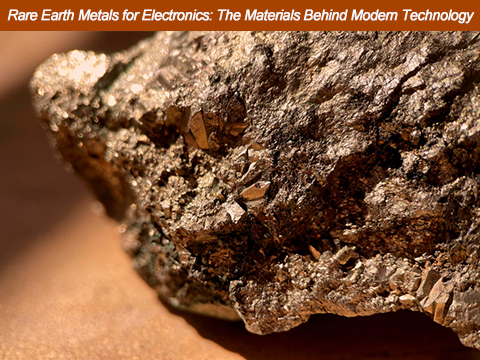
Modern electronics would not be possible without rare earth materials. These elements are often used in very small amounts. However, they help improve performance, efficiency, durability, and miniaturization. Rare earth metals for electronics play a critical role in modern technology. They're found in everything from smartphones and laptops to advanced semiconductor equipment. These materials are essential for making devices smaller, faster, and more reliable.
In fact, many everyday technologies depend on rare earth elements. Most people use these devices without even realizing it. These materials possess unique properties that benefit a wide variety of components. For example, they power strong magnets, bright displays, and high-performance speakers. They are also essential for LED lighting and precision sensors.
Due to their unique physical and chemical properties, rare earth metals play a pivotal role in the electronics industry. Their applications are ubiquitous. They range from everyday items like smartphones and tablets to heavy green tech like electric vehicles and wind turbines. These materials serve a critical function in high-performance magnets. Furthermore, they are completely indispensable in manufacturing other vital components. These include luminescent materials, batteries, and display screens.
| Rare Earth Element | Main Function | Common Electronic Applications |
| Neodymium (Nd) | High-strength magnets | Speakers, headphones, motors |
| Dysprosium (Dy) | Heat-resistant magnets | Industrial motors, electronic systems |
| Europium (Eu) | Red phosphors | Displays, monitors, LEDs |
| Terbium (Tb) | Green phosphors | Screens, lighting systems |
| Yttrium (Y) | LED and ceramic materials | LEDs, semiconductors |
| Lanthanum (La) | Optical and battery materials | Camera lenses, batteries |
Rare earth metals for electronics are valuable. They deliver significant performance improvements while occupying very little space inside a device. This makes them essential for modern electronics design.
Rare earth metals are a group of 17 chemical elements that include the 15 lanthanides along with scandium and yttrium. Despite their name, these elements are not necessarily rare in the Earth's crust. However, they are rarely found in concentrations that are economical to mine and process.
These elements are often divided into two categories:
Light rare earths include elements such as lanthanum, cerium, praseodymium, and neodymium. Heavy rare earths include terbium, dysprosium, erbium, ytterbium, and several others.
Rare earth metals for electronics are very important. This is because of their combination of magnetic, optical, electrical, and thermal properties. Many of these characteristics cannot be easily replicated by alternative materials.
For example, neodymium helps create extremely powerful permanent magnets. Europium and terbium help produce vivid colors in displays. Yttrium contributes to LED performance and advanced ceramic materials. These properties allow electronic manufacturers to achieve higher performance. At the same time, the size of devices are under control.
Another important fact is that rare earth metals for electronics are often used in very small quantities. A smartphone may contain only tiny amounts of several rare earth elements. Yet without those materials, many key functions would not perform as expected.
Electronics continue to become smaller and more sophisticated. Because of this trend, the demand for specialized rare earth materials continues to grow. Manufacturers must meet strict performance requirements. To do this, they increasingly rely on high-purity rare earth metals, oxides, alloys, and compounds.
Rare earth metals are used everywhere in electronics today. Their widespread use is not accidental. Instead, it's driven entirely by their exceptional physical and chemical properties. These materials help manufacturers overcome engineering challenges while improving product performance.
One of the most important advantages is magnetic strength. Rare earth elements like neodymium are powerful. They can produce magnets that are much stronger than conventional alternatives. This massive strength gives engineers new design flexibility. They can reduce the size of motors, speakers, and vibration systems. Best of all, these smaller devices still maintain excellent performance.
Another critical advantage is luminescence. Elements like europium and terbium are valuable. They are widely used in phosphors to generate bright and accurate colors. Modern displays and lighting systems depend a lot on these materials. Without them, our screens would completely lose their impressive color quality. They would also fail to achieve the same level of energy efficiency.
Thermal stability is also important. Electronics often operate under demanding conditions where heat can affect performance. Rare earth elements like dysprosium are valuable. They play a key role in improving the stability of magnets and other components. This extra stability is especially crucial when these parts operate at elevated temperatures.
The following table summarizes the main benefits of rare earth metals for electronics:
| Property | Benefit to Electronics |
| Strong magnetism | Smaller and more powerful devices |
| Luminescent performance | Brighter displays and LEDs |
| Thermal stability | Reliable operation at high temperatures |
| Optical properties | Improved lenses and imaging systems |
| Chemical stability | Longer component lifespan |
Rare earth metals for electronics also contribute to miniaturization. Consumers want thinner smartphones, lighter laptops, and smaller wearable devices. Manufacturers can successfully achieve these goals. They rely on rare earth materials to do so. These unique materials offer exceptionally high performance, even in very compact spaces.
In addition, these materials support energy efficiency. Strong magnets improve motor efficiency. Advanced phosphors help LED lighting consume less power. As sustainability becomes increasingly important, these efficiency gains add significant value.
Rare earth metals for electronics remain essential. They're used across countless everyday products. This is because they offer a unique combination of performance, reliability, and compact design.
Not all rare earth elements serve the same purpose. Electronic applications have unique performance requirements. Because of this, engineers must select different materials for different tasks. Manufacturers need to understand the exact role of each element. This knowledge helps them choose the right material for their specific products.
| Element | Key Function | Common Electronics Applications |
| Neodymium (Nd) | Powerful permanent magnets | Speakers, headphones, motors |
| Dysprosium (Dy) | Heat resistance for magnets | High-temperature electronics |
| Europium (Eu) | Red phosphors | Displays, monitors, LEDs |
| Terbium (Tb) | Green phosphors | Screens and lighting |
| Yttrium (Y) | LED and ceramic materials | Semiconductors and LEDs |
| Lanthanum (La) | Optical glass and batteries | Camera lenses and batteries |
| Cerium (Ce) | Glass polishing | Electronic displays |
| Samarium (Sm) | Permanent magnets | Sensors and specialized electronics |
Neodymium is one of the most important rare earth metals for electronics. It is widely used to manufacture high-strength permanent magnets. These magnets are found in speakers, headphones, microphones, hard drives, and miniature motors.
Neodymium magnets are extremely powerful. They help manufacturers create smaller and lighter products without sacrificing performance.
Dysprosium is often added to neodymium magnets. It helps to improve their ability to withstand high temperatures. This makes it especially valuable in electronic systems that operate under demanding conditions.
Electronic devices become more powerful. Thermal management also becomes increasingly important. These increase the value of dysprosium-containing materials.
Europium is best known for its role in red phosphors. It helps create the bright red colors seen in televisions, computer monitors, smartphones, and LED displays.
Without europium, many display technologies would struggle to achieve accurate color reproduction.
Terbium is commonly used in green phosphors. Together with europium and other phosphor materials, it helps create vivid and balanced display colors.
This makes terbium an important contributor to display quality and lighting efficiency.
Yttrium is frequently used in LED materials, advanced ceramics, and semiconductor-related applications. It often serves as a host material that supports the performance of phosphors and other electronic materials.
Its stability and versatility make it valuable in many high-tech manufacturing processes.
Lanthanum is widely used in optical glass and battery technologies. High-quality camera lenses often contain lanthanum-based materials because they improve optical performance.
Imaging technology continues to advance. Lanthanum therefore remains an important material for modern electronics.
These examples show why rare earth metals for electronics are indispensable. Each element contributes its own unique properties. These distinct traits help manufacturers achieve high performance levels. Without these materials, such results would be difficult or even impossible to obtain.
Rare earth metals for electronics are found in a wide range of products that people use every day. These materials are often hidden deep inside our devices. However, they still contribute significantly to performance. They are also essential for maintaining high reliability and efficiency.

Modern smartphones contain several rare earth elements. Neodymium magnets are used in speakers, microphones, and vibration motors. Europium and terbium help create bright and colorful displays. Lanthanum may be used in camera lens systems to improve image quality.
Smartphones continue to become thinner and more powerful. Because of this trend, manufacturers face a tougher engineering challenge. They increasingly depend on rare earth metals for electronics. These materials allow them to deliver advanced features in a compact design.

Displays and lighting systems are among the most important applications for rare earth materials. Europium produces red colors, while terbium contributes green colors. Yttrium is often used as a host material in phosphor systems.
These elements help displays achieve better color accuracy, brightness, and energy efficiency. They are found in televisions, computer monitors, smartphones, tablets, and LED lighting products.

Rare earth materials are also important in semiconductor manufacturing. High-purity rare earth compounds and sputtering targets are important. They're used during the production of advanced electronic components.
Rare earth oxides can also be found in specialized ceramics and electronic materials. These materials usually need exceptional thermal and electrical performance.
Semiconductor technologies continue to advance. The demand for high-purity rare earth metals for electronics is consequently expected to increase.

Audio equipment relies heavily on rare earth magnets. Neodymium magnets allow speakers and headphones to produce high-quality sound. At the same time, they remain lightweight and compact.
Precision motors benefit greatly from rare earth magnetic materials. These specialized motors are used across several major industries. You can find them in everyday consumer electronics. They are also vital for industrial automation systems and advanced robotics. These motors provide higher efficiency and greater power density than many traditional alternatives.
The following table shows how different electronic products use rare earth elements:
| Electronic Product | Rare Earth Elements Commonly Used |
| Smartphones | Neodymium, Europium, Terbium, Lanthanum |
| LED Displays | Europium, Terbium, Yttrium |
| Speakers | Neodymium |
| Headphones | Neodymium |
| Hard Drives | Neodymium, Dysprosium |
| Semiconductor Components | Yttrium, Cerium, Lanthanum |
| Precision Motors | Neodymium, Dysprosium |
These applications demonstrate the broad importance of rare earth metals for electronics. They play a vital role across both consumer and industrial markets.
Among all rare earth materials, neodymium is almost the most important for modern electronics. The popularity of rare earth metals for electronics is closely linked to the performance of neodymium-based permanent magnets.
Neodymium magnets are famous for their exceptional magnetic strength. They outperform many traditional magnetic materials. Specifically, they can generate significantly greater magnetic force. Best of all, they achieve this while occupying far less space. This allows manufacturers to design smaller and lighter products.
For electronics manufacturers, this advantage is critical. Consumers expect devices to become thinner, lighter, and more powerful every year. Stronger magnets help meet those expectations without sacrificing performance.
The following comparison highlights the differences between neodymium and ferrite magnets:
| Property | Neodymium Magnet | Ferrite Magnet |
| Magnetic Strength | Very High | Moderate |
| Size Requirement | Smaller | Larger |
| Weight | Lighter | Heavier |
| Efficiency | Higher | Lower |
| Performance in Compact Devices | Excellent | Limited |
Neodymium magnets are widely used in:
Many modern electronic products would be larger if neodymium magnets were unavailable.
In addition, manufacturers often combine neodymium with dysprosium to improve thermal stability. This helps maintain magnetic performance under demanding operating conditions.
The demand for compact electronics continues to grow. Because of this massive trend, neodymium will remain important. It will continue to be one of the most valuable rare earth metals for electronics worldwide.
Rare earth metals for electronics offer tremendous benefits. However, sourcing these materials still presents significant challenges for manufacturers and procurement teams.
One major concern is supply concentration. Rare earth production and processing capacity are concentrated in a limited number of regions. As a result, supply disruptions can affect availability and pricing.
Another challenge involves purity requirements. Electronics manufacturers often require extremely high-purity materials. This is because even minor impurities can affect performance. It's especially important for semiconductor applications, optical materials, phosphors, and advanced magnetic products.
Price volatility is another issue. Market conditions, geopolitical developments, and changing demand can all influence rare earth prices. Companies that rely on these materials must manage procurement strategies to reduce risk.
Common sourcing challenges include:
To address these challenges, manufacturers typically focus on supplier qualification and quality control. Choosing a reliable supplier helps ensure consistent material performance and dependable delivery schedules.
When evaluating a supplier of rare earth metals for electronics, buyers often consider:
Working with an experienced supplier can reduce sourcing risks. It can help manufacturers maintain stable production operations.
For many electronic applications, selecting the right material form is also important. Manufacturers choose their materials based on project requirements. They use a wide range of rare earth options. This includes raw metals, oxides, alloys, and compounds. They also use processed components like magnets and sputtering targets. For fabrication, they rely on shapes like rods, wires, foils, or sheets.
Modern electronic products are evolving. To succeed in this changing market, manufacturers need the right resources. Having reliable access to high-quality rare earth materials is essential. It gives companies a critical competitive advantage.
The future outlook for rare earth metals for electronics remains strong. As technology advances, electronic devices are becoming smaller, smarter, and more powerful. These trends are expected to drive continued demand for rare earth materials.
One major growth driver is device miniaturization. Consumers want compact products that offer greater performance. Rare earth materials help manufacturers achieve this goal. They do this by enabling powerful magnets, efficient displays, and advanced electronic components.
Another important trend is the growth of industrial automation. Factories increasingly use sensors, robotics, control systems, and precision motors. Many of these technologies rely on rare earth elements to achieve reliable and efficient operation.
The display industry also continues to evolve. Modern screens require advanced phosphor materials. These materials are essential for creating higher-resolution displays and improved color quality. They also drive energy-efficient lighting technologies. Crucially, all of these advanced phosphors must contain rare earth elements.
In addition, semiconductor manufacturing remains a significant opportunity. Chip technologies continue to become more sophisticated every day. Because of this rapid advancement, manufacturing requirements are shifting. Consequently, demand for high-purity rare earth compounds is likely to increase. The market will also see a rising need for specialized sputtering targets.
Several factors are expected to support future growth:
These trends suggest a clear future. Rare earth metals for electronics will remain essential. They will continue to drive technological innovation for years to come.
Rare earth metals for electronics play a vital role in modern technology. Although they are often used in small quantities, their impact on performance is enormous. Rare earth elements serve many different purposes. They enable powerful neodymium magnets and vibrant display phosphors. They are also used in advanced semiconductor materials and precision electronic components. Ultimately, these elements help make today's electronics more efficient, compact, and reliable.
The demand for high-performance electronic products continues to grow. Because of this massive trend, manufacturers face a tougher challenge. They will increasingly depend on high-quality rare earth materials to build their products. Reliable sourcing, consistent purity, and technical expertise are becoming more important than ever.
AEM REE offers a wide variety of high-purity rare earth materials. We supply metals, oxides, alloys, and compounds. We also offer specialized magnets and sputtering targets. These products serve multiple fields. They are ideal for electronics, semiconductors, research, and advanced manufacturing.
You can easily get materials tailored to your exact technical requirements. Simply contact AEM REE to discuss your specifications. Our expert team will help you request a customized quotation.
 +86-731-89578196