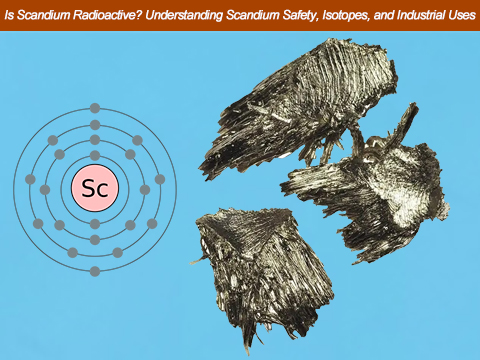
| Question | Short Answer |
| Is scandium radioactive? | No. Natural scandium is not radioactive. |
| What isotope occurs naturally? | Stable scandium-45. |
| Are there radioactive scandium isotopes? | Yes, including scandium-46 and scandium-47. |
| Are scandium alloys radioactive? | No. Commercial scandium alloys are not radioactive. |
| Is scandium safe for industrial use? | Yes, when handled according to standard industrial safety practices. |
| Is radioactive scandium used commercially? | Only in specialized research and medical applications. |
People often ask, "is scandium radioactive" out of concern for safety and compliance. They want to ensure proper transportation and material suitability for industrial use. Finding the answer is critical for several professionals. These include engineers, procurement managers, researchers, and manufacturers who handle advanced materials.
The short answer is simple: natural scandium is not radioactive. Commercial scandium products are based on stable scandium-45. These products are widely used in aerospace, additive manufacturing, and electronics. They are also common in advanced alloys. However, scientists have created several radioactive scandium isotopes. These are used strictly for specialized research and medical purposes.
Understanding the difference between natural and radioactive scandium is essential. It helps buyers make well-informed sourcing decisions. Ultimately, this clarity prevents confusion regarding safety and regulatory compliance. In this guide, we will explore the science behind scandium radioactivity. We will also discuss its key industrial applications and explain essential safety considerations.
Many people searching for "is scandium radioactive" want a straightforward answer. Fortunately, the answer is clear.
Natural scandium is not radioactive. Nearly all naturally occurring scandium exists as scandium-45, which is a stable isotope. A stable isotope does not undergo radioactive decay and does not emit harmful radiation.
Confusion often arises because some isotopes of scandium are radioactive. However, these isotopes are not the forms of scandium typically found in commercial products. Most industrial scandium products contain stable scandium-45 rather than radioactive isotopes. This includes scandium metal and scandium oxide. It also applies to scandium fluoride and aluminum-scandium alloys.
To better understand why this distinction matters, it helps to know the difference between an element and its isotopes. An element is defined by its number of protons. Scandium always has 21 protons. However, different isotopes of scandium contain different numbers of neutrons. Some of these isotopes are stable, while others are radioactive.
Industrial buyers should know that commercial scandium products use stable scandium. Therefore, concerns about radioactivity are typically unnecessary. This holds true across all major applications. These include aerospace components, sporting equipment, additive manufacturing, and electronics.
The question "is scandium radioactive" therefore has two answers depending on context. For natural or commercial scandium materials, the answer is no. They are not radioactive. However, laboratory-produced isotopes are different. In those specific forms, scandium can indeed be radioactive.
This distinction is essential for understanding scandium safety, compliance requirements, and application suitability.
| Natural Scandium | Radioactive Scandium Isotopes |
| Scandium-45 | Scandium-46 |
| Stable | Radioactive |
| Used in commercial materials | Used in specialized research |
| No radiation emission | Emits radiation |
| Commonly supplied by industrial vendors | Strictly controlled |
To fully answer the question "is scandium radioactive", it is important to understand scandium isotopes.
An isotope is a variation of an element that contains the same number of protons but a different number of neutrons. Scientists have identified more than twenty isotopes of scandium. However, only one isotope occurs naturally in significant amounts.
Scandium-45 is the only naturally occurring scandium isotope. It is stable and non-radioactive. This isotope represents almost all scandium found in nature. It makes up all scandium used in commercial products today.
Because scandium-45 is stable, it does not emit alpha particles, beta particles, or gamma rays. As a result, materials containing scandium-45 do not present radioactive hazards under normal conditions.
Scandium-45 is the foundation for most industrial scandium products. It is supplied to a variety of sectors, including aerospace and electronics. It is also the primary isotope used by alloy producers and research institutions.
Scandium-46 is one of the best-known radioactive scandium isotopes. It is typically produced in nuclear reactors through artificial processes.
Because scandium-46 emits radiation, it can be used as a tracer material in scientific research and industrial studies. Researchers may use it to track material movement or analyze physical processes.
Unlike scandium-45, scandium-46 requires specialized handling procedures and regulatory controls.
Scandium-47 has attracted attention in nuclear medicine research. Scientists are currently investigating its potential use in targeted radiopharmaceutical therapies. They are also exploring its role in advanced medical imaging technologies.
Although promising, scandium-47 is still in the development phase. It's used primarily as a research material. It has not yet transitioned into a mainstream commercial product.
| Isotope | Stable or Radioactive | Typical Use |
| Scandium-45 | Stable | Commercial materials and alloys |
| Scandium-46 | Radioactive | Scientific tracing and research |
| Scandium-47 | Radioactive | Medical research |
| Other scandium isotopes | Radioactive | Nuclear science studies |
Understanding these isotopes helps answer the question "is scandium radioactive" more accurately. The element itself is not generally considered radioactive in commercial use. However, specific isotopes can be radioactive under specialized conditions.
Most industrial professionals classify scandium as a non-radioactive material. This classification is based on its natural state. Naturally occurring scandium exists almost entirely as stable scandium-45.
Commercial scandium production focuses on extracting, refining, and processing this stable isotope. As a result, the scandium products entering industrial supply chains are non-radioactive.
For example, scandium is commonly supplied as:
Manufacturers choose these materials for their high performance. They offer excellent physical and chemical properties. Any radioactive characteristics play no role in their widespread use.
The aerospace industry provides a good example. Aluminum-scandium alloys are valued because they improve strength, reduce weight, and enhance weldability. Aerospace manufacturers select scandium purely to improve aircraft performance. It is valued for its strength and lightweight properties. Its use is completely unrelated to any radioactive property.
Similarly, additive manufacturing companies use scandium-containing alloys to produce stronger and lighter components. Electronics manufacturers may use scandium-containing materials to improve product performance. In all these applications, the scandium involved is non-radioactive.
This is why the answer to "is scandium radioactive" is usually no in industrial discussions. The scandium being purchased, transported, stored, and used is based on stable scandium-45.
If natural scandium is stable, when does scandium become radioactive?
Scandium becomes radioactive when unstable isotopes are created through nuclear reactions. These reactions do not occur during normal industrial processing or commercial manufacturing. Instead, they need highly specialized environments. They are typically performed in facilities like nuclear reactors or particle accelerators.
One common method involves neutron activation. In this process, stable atoms are exposed to neutrons. This causes nuclear transformations that create radioactive isotopes.
Scientists can produce scandium-46 by irradiating suitable target materials inside a nuclear reactor. The resulting isotope has different nuclear properties than stable scandium-45. It also undergoes radioactive decay.
Another method involves particle accelerators. These facilities can generate radioactive isotopes by bombarding materials with high-energy particles.
The important point for industrial users is that radioactive scandium does not occur simply. This is because scandium is melted, machined, alloyed, transported, or manufactured into products. Standard industrial processes do not convert stable scandium into radioactive scandium.
The transformation requires highly specialized nuclear equipment and carefully controlled conditions.
The process can be summarized as follows:
Natural Scandium
↓
Stable Scandium-45
↓
Commercial Products
OR
Nuclear Reaction
↓
Scandium-46 / Scandium-47
↓
Research and Medical Applications
This explanation helps answer the question "is scandium radioactive" from a scientific perspective. Natural scandium is entirely non-radioactive. It will remain this way under all normal circumstances. The only exception is if it is intentionally converted into radioactive isotopes. This requires specific, high-energy nuclear processes.
Therefore, industrial buyers sourcing scandium generally do not need to concern about radioactivity.
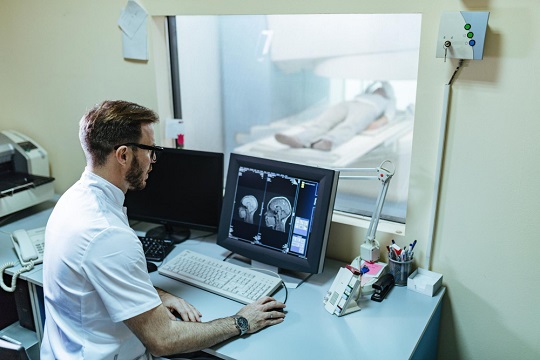
Although most commercial scandium is non-radioactive, radioactive scandium isotopes do have specialized applications.
These specific applications are not part of mainstream manufacturing. Instead, they are restricted to specialized settings. You will typically find them only in scientific, medical, and research environments.
Researchers use radioactive scandium isotopes as tracers. Radioactive materials emit detectable radiation. This signal allows for precise tracking. Scientists can use it to monitor movement through any system or process.
These studies help researchers understand:
Radioactive tracers have been valuable tools in science for decades.
Scandium-47 has attracted growing interest in nuclear medicine.
Researchers are investigating its use in:
Although research continues, these applications remain highly specialized.
Most manufacturers have no practical need for radioactive scandium. Radioactive isotopes introduce additional challenges, including:
As a result, several major industries overwhelmingly use stable scandium products. This includes the aerospace and automotive manufacturing sectors. It also applies to additive manufacturing, electronics, and metallurgy.
| Application Area | Stable Scandium | Radioactive Scandium |
| Aerospace alloys | Yes | No |
| Aluminum-scandium alloys | Yes | No |
| Additive manufacturing | Yes | No |
| Electronics | Yes | No |
| Nuclear research | No | Yes |
| Medical isotope studies | No | Yes |
Therefore, consider the industrial context when someone asks, "is scandium radioactive." The definitive answer remains that commercially used scandium is generally non-radioactive.
Safety is one of the main reasons people search for the phrase "is scandium radioactive."
Commercial scandium materials are generally safe to handle. This is excellent news for industrial teams. To maintain this safety, workers simply need to follow standard industrial safety practices.
Commercially available scandium products contain stable scandium-45. They do not present the radiation hazards associated with radioactive isotopes.
Scandium metal should be treated like many other industrial metals. Workers should follow standard workplace safety procedures. They should use appropriate personal protective equipment when handling powders or machining materials.
Scandium oxide is one of the most common scandium products in commercial supply chains. It is widely used as a raw material for producing alloys, ceramics, electronics, and other advanced materials.
As with many fine powders, workers should avoid unnecessary dust exposure.
Best practices include:
Importantly, these precautions are related to general industrial hygiene rather than radioactivity.
Radioactive scandium isotopes require entirely different safety protocols. These involve radiation monitoring, shielding, and specialized regulatory oversight. Commercial scandium products do not require these measures.
Engineers, procurement teams, and manufacturing teams can treat scandium like other standard materials. It fits perfectly into the safety framework applied to many advanced industrial materials. No specialized, over-the-top protocols are typically needed.
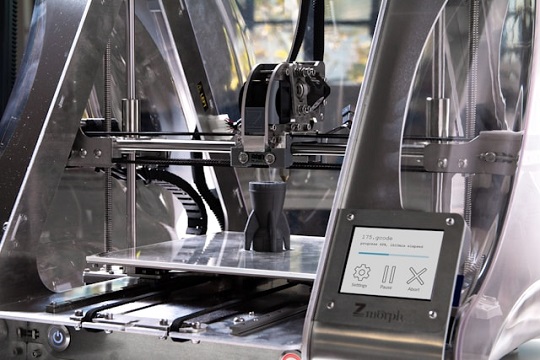
The fact that scandium is generally non-radioactive is highly beneficial. It has directly supported the material's growing adoption across multiple industries.
Aluminum-scandium alloys are widely valued in aerospace. This is because they combine low weight with high strength. These properties help improve fuel efficiency and structural performance.
Adding small amounts of scandium can significantly improve alloy performance. Benefits include:
Scandium-containing alloys are becoming increasingly important in 3D printing applications. They help manufacturers produce lightweight components with excellent mechanical properties.
Scandium compounds are essential to several high-tech fields. For example, they are used to develop specialized electronic materials. They are also utilized in lighting technologies and advanced ceramic systems.
Industries heavily rely on scandium today. This widespread use proves the material is trusted, practical, and safe. If scandium were inherently radioactive, everything would change. Many of these applications would face severe regulatory barriers.
Instead, companies look to stable scandium-45 for their manufacturing needs. This isotope allows them to utilize scandium's unique properties. It completely avoids the regulatory and handling complications associated with radioactive materials.
No. Natural scandium consists almost entirely of stable scandium-45, which is not radioactive.
No. Commercial scandium alloys are typically made using stable scandium-45 and are not radioactive.
Yes. Scandium-46 is a radioactive isotope. It is produced through nuclear processes and used primarily in research applications.
Yes. Commercial scandium materials are generally safe. They need to be handled according to standard industrial safety practices.
Natural scandium and commercial scandium products do not emit radiation. Certain radioactive scandium isotopes can emit radiation, but these are specialized materials.
Commercial scandium oxide is produced from stable scandium-45 and is not radioactive.
Some sources discuss radioactive isotopes such as scandium-46 and scandium-47. They are usually used in research and medical studies. These isotopes are different from the stable scandium found in commercial materials.
So, is scandium radioactive? For virtually all commercial and industrial purposes, the answer is no. Natural scandium exists primarily as stable scandium-45. It is a non-radioactive isotope that does not emit harmful radiation. Radioactive isotopes like scandium-46 and scandium-47 do exist. However, they are produced artificially. They are mainly used in specialized research and medical applications.
Are commercial scandium products safe for industrial use? Yes, materials like scandium metal, scandium oxide, and aluminum-scandium alloys are generally non-radioactive. This makes them a perfect fit for engineers and procurement teams in demanding fields. They are highly utilized across aerospace, electronics, additive manufacturing, and advanced engineering.
AEM REE is a professional supplier of high-purity scandium materials. It provides scandium metal, scandium oxide, scandium compounds, and rare-earth products. If you are looking for reliable scandium materials supported by technical expertise and consistent quality, feel free to contact AEM REE for assistance with your sourcing and application requirements.
 +86-731-89578196