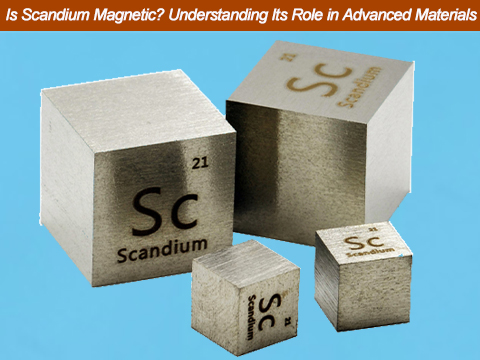
Scandium is paramagnetic. This means it is weakly attracted to a magnetic field but does not become a permanent magnet like iron or nickel. Many people ask, "Is scandium magnetic?" However, its real industrial value lies in its versatility. Scandium is used to improve alloys, advanced ceramics, and other high-performance materials.
Scandium is one of the most interesting rare earth elements used in modern industry. Although scandium does show weak magnetic behavior, it is not used to make magnets. Instead, manufacturers value scandium for several reasons. It can improve material strength and significantly reduce weight. Additionally, it increases heat resistance and supports advanced energy technologies.
Scandium materials are used in various sectors today. They are found in aerospace components and aluminum alloys. They also play a key role in fuel cells, electronics, research laboratories, and advanced manufacturing. As industries demand lighter and stronger materials, scandium's importance continues to grow.
|
Property |
Answer |
|
Is scandium magnetic? |
Yes, weakly |
|
Type of magnetism |
Paramagnetic |
|
Permanent magnet? |
No |
|
Main industrial value |
Alloys and advanced materials |
|
Common applications |
Aerospace, SOFCs, electronics |
|
Magnetic strength compared with iron |
Much weaker |
To answer the question "is scandium magnetic", you must first look at its properties. Specifically, it is important to understand the meaning of paramagnetism.
Paramagnetic materials are weakly attracted to magnetic fields. However, unlike iron or nickel, they do not stay magnetic after the magnetic field disappears. In simple terms, scandium only shows magnetic behavior temporarily.
This magnetic behavior happens because scandium atoms contain unpaired electrons. These electrons respond to an external magnetic field. Once the field is removed, the magnetic effect disappears immediately.
A simple way to understand this is to think of scandium as a material that reacts to magnetism only when influenced by an outside force. It does not naturally hold magnetic energy on its own.
This is very different from ferromagnetic metals such as iron, cobalt, and nickel. Ferromagnetic materials can become permanent magnets. This is possible because of their atomic structure. It allows their magnetic alignment to remain even after the external magnetic field is removed.
The table below shows the difference clearly.
|
Type of Material |
Magnetic Strength |
Retains Magnetism? |
Example |
|
Ferromagnetic |
Strong |
Yes |
Iron |
|
Paramagnetic |
Weak |
No |
Scandium |
|
Diamagnetic |
Very weak repulsion |
No |
Copper |
So, is scandium magnetic in the same way as iron? The answer is no. Scandium is only weakly magnetic. Its magnetic response is temporary and much weaker than traditional magnetic metals.
This distinction matters in industrial applications. Engineers and buyers looking for permanent magnetic materials do not usually choose scandium. Instead, scandium is selected because of its excellent structural and thermal properties.
Understanding the magnetic properties of scandium is essential for buyers. It helps them choose the right material for aerospace systems and energy equipment. This knowledge is also vital for electronic ceramics and research projects.
Many people searching "is scandium magnetic" also wonder whether scandium can be used to make magnets. Technically, scandium does respond to magnetic fields. However, it is not suitable for permanent magnet applications.
Permanent magnets require strong ferromagnetic behavior. Materials such as iron, cobalt, and nickel are ideal because they can retain magnetism for a long time. Scandium cannot do this. Its paramagnetic response disappears immediately after the external magnetic field is removed.
Because of this limitation, scandium is rarely used in products that require strong magnetic force. For example, it is not common in electric motors or industrial magnets. You also won't find it in magnetic separators or consumer electronics that rely on permanent magnets.
However, this does not reduce the importance of scandium in modern industry. In fact, scandium is considered a highly valuable advanced material. This is because of its ability to improve mechanical and thermal performance.
Scandium is especially important in aluminum-scandium alloys. Adding a small amount of scandium to aluminum is extremely helpful. It can significantly improve strength, weldability, and corrosion resistance. This makes scandium extremely useful in industries that require lightweight but durable materials.
Industries value scandium because it can:
This is why scandium is commonly found in aerospace components, fuel cells, military systems, and advanced manufacturing equipment rather than magnetic devices.
For industrial buyers, the real question is not simply "is scandium magnetic". A more important question is how scandium improves material performance in demanding environments.
Industries continue to seek lighter and stronger materials. scandium's role in advanced engineering also continues to grow.
Many readers may begin by asking "is scandium magnetic". However, industrial users are usually more interested in scandium's physical and chemical properties.
Scandium has several characteristics that make it valuable in high-performance industrial environments. These properties help engineers improve strength, reduce weight, and increase material durability.
Scandium has a relatively low density compared with many engineering metals. This makes it useful in lightweight applications where reducing weight is important.
Adding scandium to aluminum creates a high-performance alloy. This mixture increases the material's strength. At the same time, it maintains a low overall weight. This combination is especially important in aerospace and transportation industries.
Aircraft manufacturers constantly search for ways to reduce weight. This is because lighter aircraft consume less fuel. Aluminum-scandium alloys help solve this challenge by offering excellent strength-to-weight performance.
Scandium also performs well in high-temperature environments. It has a high melting point and excellent thermal stability.
This allows scandium-containing materials to maintain their structural integrity under heat and stress. Many industries require materials that can survive demanding thermal conditions. These include aerospace, energy generation, and defense.
Corrosion resistance is another valuable scandium property. Aluminum-scandium alloys often show improved resistance to corrosion and cracking.
This helps reduce maintenance costs and extend component lifespan. In industrial systems, better corrosion resistance means improved reliability and lower replacement costs.
One of scandium's greatest strengths is its ability to improve alloys. Even small additions of scandium can refine grain structure and improve weldability.
This is especially valuable in 3D printing and additive manufacturing. Advanced manufacturing systems are evolving rapidly. In these systems, stronger and more stable printed parts are becoming increasingly important.
The table below summarizes important scandium properties and their industrial benefits.
|
Property |
Industrial Benefit |
|
Low density |
Weight reduction |
|
High melting point |
Better heat resistance |
|
Alloy strengthening |
Improved durability |
|
Good weldability |
Easier manufacturing |
|
Corrosion resistance |
Longer component life |
|
Thermal stability |
Reliable high-temperature performance |
These properties explain why scandium continues to gain attention across multiple industries. While the answer to "is scandium magnetic" is technically yes, its commercial value comes from much more than magnetism.
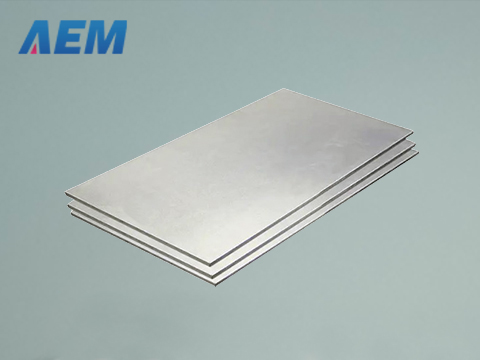
Scandium materials are available in several different forms. Each form supports different industrial and research applications.
For procurement teams and engineers, choosing the correct scandium product is extremely important. The right form depends on purity requirements, manufacturing methods, and end-use applications.
There are many common scandium products. These include scandium oxide, scandium metal, aluminum-scandium alloys, and scandium compounds.
|
Product Form |
Common Applications |
Buyer Advantages |
|
Scandium oxide |
SOFCs, ceramics, lasers |
High purity and stable processing |
|
Scandium metal |
Research, alloying |
Direct use in specialty materials |
|
Aluminum-scandium alloy |
Aerospace, 3D printing |
Stronger and lighter structures |
|
Scandium compounds |
Electronics, catalysts |
Controlled chemical performance |
Scandium oxide is one of the most commercially important scandium products. It is widely used in solid oxide fuel cells, advanced ceramics, laser materials, and specialty optical systems.
High-purity scandium oxide is especially important in technical applications. In these uses, stable chemical performance is important.
Scandium metal is often used for research, alloy development, and specialized industrial processes.
Scandium metal is relatively rare and expensive. Thus it is commonly used in high-value applications rather than large-volume production.
Aluminum-scandium alloys are becoming increasingly important in aerospace, transportation, and additive manufacturing industries.
These alloys provide excellent strength while remaining lightweight. They also improve weld quality and structural reliability.
Various scandium compounds are used in catalysts, ceramics, electronics, and laboratory research.
These materials allow researchers and manufacturers to control chemical behavior more precisely in advanced industrial systems.
For buyers, selecting the correct scandium product depends on several factors:
A reliable supplier can help customers select appropriate scandium material for their application.
Scandium may not be widely known outside technical industries. However, it plays an important role in many advanced applications. Today, more companies are searching for stronger and lighter materials. Therefore, scandium demand continues to increase.

The aerospace industry is one of the largest users of scandium-containing alloys.
Aircraft manufacturers value aluminum-scandium alloys because they reduce weight while maintaining strength. Lightweight aircraft components improve fuel efficiency and overall performance.
Scandium alloys are also used in structural parts. These components usually require excellent weldability and long-term durability.

The transportation industry also benefits from scandium materials.
Lighter vehicles consume less energy and produce fewer emissions. Aluminum-scandium alloys help manufacturers achieve these goals without sacrificing mechanical strength.
As electric vehicles become more common, lightweight materials will become even more important.

Scandium oxide is widely used in solid oxide fuel cells, also called SOFCs.
SOFC systems are important for efficient energy generation. This is because they can operate at high temperatures with excellent efficiency. Scandium-stabilized materials help improve conductivity and system performance.
This makes scandium important in modern energy infrastructure and industrial power systems.

Scandium materials are also used in electronics, optical systems, lasers, and advanced ceramics.
These applications often require highly controlled material properties and high purity levels.

Research institutes and laboratories are major users of scandium products.
Scientists use scandium materials for many applications. These include alloy development, chemical analysis, thin-film research, and experimental manufacturing technologies.
This growing research demand supports continued interest in scandium across global markets.
The industries using scandium continue to expand. This growth happens because modern engineering increasingly depends on specialized materials. Specifically, engineers need materials that are lightweight, heat-resistant, and high-performance.
The scandium market is relatively small compared with many other industrial metals. However, scandium is considered strategically important because of its specialized applications.
Global scandium oxide production is estimated at only about 30 tonnes per year. This limited supply contributes to scandium's high market value.
Unlike copper or aluminum, scandium is rarely mined as a primary product. Instead, it is usually recovered as a byproduct during the processing of other ores.
Currently, there are very few dedicated scandium mining operations worldwide. This creates supply challenges for industries that require stable access to high-purity scandium materials.
The table below highlights important scandium market facts.
|
Market Insight |
Detail |
|
Estimated annual scandium oxide production |
About 30 tonnes |
|
Dedicated scandium mines |
Very limited |
|
Key growth sectors |
Aerospace, energy, additive manufacturing |
|
Strategic importance |
Considered a critical mineral |
Several countries now classify scandium as a critical mineral. This is because of its importance in advanced manufacturing and energy systems.
Demand is growing in industries such as:
At the same time, supply remains limited. This combination could increase long-term interest in scandium production and recycling technologies.
For industrial buyers, supply consistency and purity control are extremely important. Reliable suppliers play a critical role in the supply chain. They help manufacturers secure high-quality scandium materials. This support is essential for both research and commercial production.
Scandium applications continue to expand. The global market is also expected to receive more investment and technical development.
Scandium is magnetic in a weak paramagnetic sense. It responds weakly to magnetic fields but does not retain magnetism permanently.
No. Scandium is not a permanent magnet. Its magnetic behavior disappears when the external magnetic field is removed.
Scandium contains unpaired electrons that respond temporarily to magnetic fields. This creates weak magnetic attraction.
Scandium is widely used in many industries. These include aerospace, automotive, fuel cells, electronics, ceramics, and research laboratories.
Yes. Scandium is considered a relatively rare material, and global production remains limited.
So, is scandium magnetic? The answer is yes, but only weakly. Scandium is a paramagnetic material. This means it responds temporarily to magnetic fields without becoming a permanent magnet.
However, scandium's true value extends far beyond magnetism. Modern industries rely on scandium. It's used to improve alloy strength and significantly reduce weight. Additionally, it enhances heat resistance and supports advanced material technologies.
Today, scandium is essential for sectors like aerospace and energy systems. It is also a key component in electronics, additive manufacturing, and research. Modern industries now require materials that are both lighter and more durable. Consequently, scandium's importance in advanced engineering is set to increase.
AEM REE specializes in high-purity scandium products, including oxides, metals, and alloys. We also supply custom rare-earth materials to a global network of researchers and industrial clients. With strong technical expertise and reliable supply capability, AEM REE supports advanced applications across multiple high-tech industries.
Looking for reliable scandium products? Contact AEM REE today. Our team can help you choose the right scandium material for your application. We support both research and industrial projects. High purity products are available. Custom specifications are also supported. Fast response and professional service are our priorities. Send your inquiry to AEM REE to discuss your scandium material needs.
 +86-731-89578196