| Quick Facts | Details |
| Main Types | Neodymium (NdFeB) and Samarium Cobalt (SmCo) |
| Key Advantage | Extremely strong magnetic force |
| Common Industries | Automotive, aerospace, electronics, medical, robotics |
| Key Selection Factors | Strength, temperature resistance, corrosion resistance, cost |
| Typical Applications | EV motors, MRI systems, wind turbines, sensors, speakers |
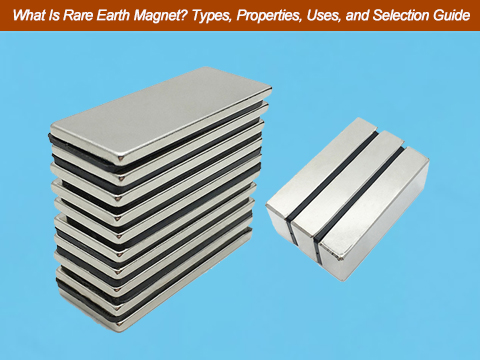
What is rare earth magnet? A rare earth magnet is a powerful permanent magnet made mainly from neodymium or samarium cobalt alloys. These magnets provide very high magnetic strength. As a result, many industries rely on them. They are widely used in electric vehicles, aerospace systems, and everyday electronics. They are also vital for medical devices and industrial automation.
Because of their excellent performance, rare earth magnets have become essential materials in many modern technologies.
Many people ask, what is rare earth magnet and why these materials are so important. Simply put, a rare earth magnet is a high-performance permanent magnet made from rare earth elements. The two main types are neodymium iron boron (NdFeB) magnets and samarium cobalt (SmCo) magnets.
These magnets are known for producing very strong magnetic fields while remaining relatively small and lightweight. Because of this, they are widely used in industries where space, efficiency, and reliability are important.
Although they are called "rare earth" magnets, the elements themselves are not extremely rare. In fact, some rare earth elements are relatively abundant in the Earth's crust. The challenge lies in extracting, separating, and refining them into high-purity materials. These processes are complex and require advanced technology.
Rare earth magnets are considered the strongest commercially available permanent magnets. Compared with ferrite magnets or alnico magnets, they can deliver much higher magnetic force in a smaller size. This allows engineers to design compact and efficient devices.
Today, rare earth magnets play a vital role in:
As industries continue to pursue higher efficiency and miniaturization, the demand for rare earth magnets continues to grow.
When discussing what is rare earth magnet, it is important to understand that there are two major categories. Each type offers unique advantages and is designed for different operating environments.
Neodymium magnets are the most widely used rare earth magnets. They are often considered the strongest permanent magnets available today.
Their advantages include:
Because of these properties, neodymium magnets are commonly found in:
However, neodymium magnets also have some limitations. They are more susceptible to corrosion and may lose magnetic performance under very high temperatures. Therefore, protective coatings are often applied to improve durability.
Samarium cobalt magnets are another important type of rare earth magnet. Although they are not as strong as neodymium magnets, they offer exceptional stability under harsh conditions.
Their advantages include:
Common applications include:
Samarium cobalt magnets are generally more expensive and brittle than neodymium magnets, but their reliability makes them ideal for demanding environments.
| Property | Neodymium Magnet | Samarium Cobalt Magnet |
| Magnetic Strength | Excellent | Very High |
| Temperature Resistance | Moderate | Excellent |
| Corrosion Resistance | Moderate | Excellent |
| Cost | Lower | Higher |
| Brittleness | Moderate | High |
| Typical Uses | EVs, electronics, robotics | Aerospace, medical, defense |
Understanding these two types helps answer the question, what is rare earth magnet, and allows buyers to select the most suitable material for their applications.
The magnetic energy product is a key indicator of magnet performance. It reflects the maximum magnetic energy a magnet can store per unit volume. The addition of rare-earth elements significantly boosts this metric for NdFeB (neodymium-iron-boron) magnets. Neodymium, for instance, possesses a large atomic magnetic moment. When arranged in an ordered structure within the magnet, it markedly enhances internal magnetic field strength. This chemical structure substantially increases the magnetic energy product.
Standard ferrite magnets typically have a magnetic energy product of 1–10 MGOe (Mega-Gauss-Oersted). In contrast, high-performance NdFeB magnets can reach 40–50 MGOe or higher. This capacity is several times that of ferrite magnets. This massive difference allows high-strength magnets to generate stronger magnetic force for the same volume or weight. Ultimately, they provide more efficient power support for various devices. In hard disk drives, for example, the high magnetic energy product enables magnets to drive read/write heads rapidly and precisely. This mechanical speed greatly accelerates data storage and transfer speeds.
Coercivity refers to a magnet's resistance to demagnetization. Higher coercivity indicates greater magnetic stability. Rare-earth elements like neodymium and dysprosium significantly enhance this trait. They do this by altering the magnet's crystal structure and electronic state. In NdFeB magnets, rare-earth atoms form specific crystal structures with iron atoms. This unique structure impedes the movement of magnetic domain walls. Consequently, it improves the magnet's ability to resist external magnetic interference and maintain its own magnetism.
The coercivity of standard ferrite magnets is generally around a few hundred Oersteds. In contrast, that of NdFeB magnets can reach several thousand Oersteds or more. This massive difference enables high-strength magnets to operate stably in complex electromagnetic environments. As a result, they are widely applicable in fields requiring high magnetic stability. Key examples include electric motors and sensors.
Extreme heat is a major threat to magnet performance. Many ordinary magnets easily weaken or demagnetize when temperatures rise. To combat this, manufacturers add rare-earth elements to improve temperature performance. For example, adding dysprosium increases the magnet's magnetocrystalline anisotropy field. It also raises the Curie temperature, which is the point where a material changes from ferromagnetic to paramagnetic. By raising this threshold, the metal retains its strong magnetic properties in hot environments.
Advanced engineering has pushed these boundaries even further. By using specialized formulations and processing techniques, NdFeB magnets can now withstand operating temperatures of up to 200°C. This heat resistance makes them perfect for automotive engine components and industrial high-temperature equipment. Additionally, these rare-earth elements lower the magnet's temperature coefficient. This minimizes how much the magnetic properties fluctuate as temperatures shift. Ultimately, it ensures stable performance in any climate.
Another important aspect of understanding what is rare earth magnet is learning where these materials are used.
Rare earth magnets are found in many advanced technologies because they offer powerful performance, reliability, and compact designs.

Electric vehicles represent one of the fastest-growing applications for rare earth magnets.
They are used in:
High-performance magnets help improve energy efficiency and driving range.

Modern electronic products depend heavily on rare earth magnets.
Examples include:
Their compact size enables smaller and lighter devices.

Aerospace applications demand exceptional reliability and temperature resistance.
Rare earth magnets are used in:
Samarium cobalt magnets are especially popular in these applications because of their excellent thermal stability.

The medical industry also relies on rare earth magnets.
Examples include:
These systems require stable magnetic performance and long-term reliability.

Factories are increasingly adopting automation technologies.
Rare earth magnets are commonly used in:
Their high power density supports more compact and efficient equipment.

Wind energy systems use large numbers of neodymium magnets.
Applications include:
Permanent magnet generators help reduce maintenance and improve energy efficiency.
| Industry | Typical Use | Preferred Magnet Type |
| Electric Vehicles | Traction motors | NdFeB |
| Robotics | Servo motors | NdFeB |
| Wind Energy | Generators | NdFeB |
| Aerospace | High-temperature components | SmCo |
| Medical Devices | MRI systems | SmCo |
As technology advances, new applications for rare earth magnets continue to emerge.
After understanding what is rare earth magnet, buyers often face another question: which type should they choose?
The answer depends on operating conditions and performance requirements.
Neodymium magnets are ideal when:
Typical industries include:
Because of their high strength-to-weight ratio, neodymium magnets dominate many commercial applications.
Samarium cobalt magnets are preferred when:
These magnets are widely used in:
Although their cost is higher, their durability often justifies the investment.
Before purchasing, buyers should consider several important factors:
Answering these questions can help engineers and procurement teams choose the most suitable magnet material.
Understanding what is rare earth magnet also means understanding the supply chain behind these materials.
Although demand continues to rise, several challenges affect the market.
Rare earth magnet production depends on specialized mining and refining operations.
Because supply is concentrated in certain regions, market fluctuations can influence:
Changes in raw material costs can significantly affect magnet prices.
Industrial applications require strict quality control.
Manufacturers must ensure:
Even small variations can affect product quality.
Many industries require comprehensive documentation.
Typical documents include:
These documents are particularly important for aerospace, medical, and research applications.
Choosing a reliable supplier can help reduce risks and ensure stable production.
Important factors include:
Long-term supplier relationships often provide greater consistency and lower procurement risks.
As demand for electric vehicles, renewable energy, and advanced electronics continues to increase, maintaining a stable rare earth magnet supply chain becomes even more important.
A rare earth magnet is a permanent magnet made from rare earth alloys, mainly neodymium iron boron and samarium cobalt. These magnets produce extremely strong magnetic fields and are widely used in automotive, aerospace, electronics, medical, and industrial applications.
Yes. Rare earth magnets are significantly stronger than ferrite magnets and alnico magnets. Their higher magnetic strength allows manufacturers to create smaller and more efficient devices.
Neodymium magnets provide maximum magnetic strength and lower cost. Samarium cobalt magnets offer better heat resistance and corrosion resistance.
Yes. Rare earth magnets are widely used in electric vehicle motors. They provide high torque, improved efficiency, and compact designs.
Rare earth magnets require complex mining, refining, and manufacturing processes. High purity requirements and supply chain factors also contribute to their cost.
Neodymium iron boron (NdFeB) magnets are generally considered the strongest commercially available permanent magnets.
Understanding what is rare earth magnet is important for engineers, manufacturers, and procurement professionals seeking high-performance magnetic materials.
Rare earth magnets offer exceptional magnetic strength, compact size, and reliable performance. Among them, neodymium magnets provide outstanding power and efficiency, while samarium cobalt magnets excel in high-temperature and corrosive environments. These advantages have made rare earth magnets essential in industries ranging from electric vehicles and aerospace to medical devices, robotics, and renewable energy.
As applications become more demanding, selecting the right magnet material and working with a trusted supplier become increasingly important.
With more than 10 years of experience, AEM REE specializes in supplying high-quality rare earth materials and rare earth magnets for industrial and research applications worldwide. The company provides customized solutions, strict quality control, technical support, and complete documentation to meet diverse customer requirements.
Whether you need NdFeB magnets, SmCo magnets, or other advanced rare earth materials, AEM REE can provide reliable bulk supply and tailored solutions. Contact our team today to discuss your project requirements and request a quotation.
 +86-731-89578196