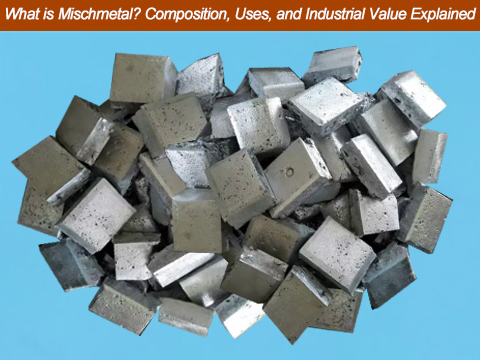
Mischmetal is a mixed rare earth alloy, mainly made of cerium and lanthanum, used in industrial applications as a cost-effective source of reactive rare earth elements.
When people ask what is mischmetal, they are usually trying to understand not just a chemical definition, but also why this material is used in real manufacturing systems. Mischmetal is not a single pure element. Instead, it is a natural blend of several rare earth metals extracted and refined together. It is widely used in metallurgy, alloy production, and deoxidizing processes because it delivers strong chemical activity at a lower cost than separated rare earth metals.
In simple terms, what is mischmetal can be answered like this:
For industrial buyers, understanding what is mischmetal is important because it sits at the intersection of raw rare earth production and advanced manufacturing. It is not a high-purity laboratory metal. Instead, it is a working industrial material designed for performance, consistency, and cost efficiency.
To fully understand what is mischmetal, it is important to see why industries use it at all. Mischmetal plays a key role in large-scale manufacturing because it offers a practical way to apply rare earth chemistry without the high cost of separation and purification.
In modern metallurgy and materials engineering, manufacturers constantly balance performance with cost. Pure rare earth metals such as neodymium or lanthanum can be expensive and require complex refining. Mischmetal solves this problem by combining multiple rare earth elements into one usable alloy. This reduces production cost while still providing the chemical benefits of rare earth materials.
When we study what is mischmetal from a manufacturing point of view, its importance becomes clear:
Another reason what is mischmetal matters is supply chain efficiency. Instead of sourcing multiple separated rare earth metals, companies can use mischmetal as a single feedstock material. This makes logistics simpler and more predictable.
For industries such as aerospace alloys, automotive components, and steel production, mischmetal is not just a material—it is a functional tool that improves efficiency and performance at the same time.
When answering what is mischmetal, composition is one of the most important factors. Mischmetal is not a fixed formula. Instead, its composition depends on the ore source and refining process used during production.
Typically, mischmetal contains a mixture of light rare earth elements, with cerium being the dominant element. A common composition includes cerium, lanthanum, neodymium, and praseodymium, along with small amounts of iron and other trace elements.
A general breakdown of what is mischmetal in terms of composition is:
Because of this variability, what is mischmetal cannot be described as one exact chemical recipe. Instead, it is a family of mixed rare earth alloys that differ slightly depending on production methods and raw material sources.
From a buyer's perspective, this variation is important. When sourcing mischmetal, companies often request:
Understanding what is mischmetal also means understanding that composition directly affects performance. Higher cerium content may improve deoxidizing ability, while different ratios may influence alloy behavior in specific applications.
To go deeper into what is mischmetal, it is helpful to look at commercial grading. In real industrial supply chains, mischmetal is not sold as a single uniform product. Instead, it is categorized into different grades based on composition and intended use.
Below is a simplified table showing common mischmetal types:
| Type | Major Elements | Approximate Composition |
| Cerium-rich mischmetal | Ce, La, Nd, Pr | Ce 48–55%, La 25–34%, Nd 13–18%, Pr 4–5% |
| Lanthanum-rich mischmetal | La, Ce, Nd, Pr | La ~48%, Ce ~25%, Nd + Pr balance |
| Commercial mixed RE alloy | Mixed REEs + Fe | ~95% rare earth content with trace impurities |
When analyzing what is mischmetal, this table shows a key idea: it is not one fixed material, but a flexible industrial alloy system.
Cerium-rich mischmetal is commonly used where strong deoxidizing performance is needed. Lanthanum-rich versions may be preferred in specific alloy modification processes. Commercial mixed rare earth alloys are often optimized for cost efficiency and large-scale production.
For procurement teams, understanding what is mischmetal at the grade level is essential. It helps match material performance with production requirements while controlling cost and supply stability.
To fully answer what is mischmetal, we must also understand how it is made. Mischmetal is produced through the processing of rare earth ores. It is usually created as an intermediate product during the separation and refining stages of rare earth production.
The production process generally involves:
One important point when discussing what is mischmetal is that its composition depends heavily on the raw material source. Different ore deposits produce different ratios of rare earth elements, which directly affects the final alloy.
For industrial buyers, this variability means quality control is essential. Reliable suppliers provide:
Understanding what is mischmetal from a supply chain perspective also highlights its role as a bridge material. It connects raw rare earth extraction with high-value industrial manufacturing, making it an essential part of the global rare earth ecosystem.
When exploring what is mischmetal, its properties explain why it is widely used. Mischmetal has several functional characteristics that make it valuable in metallurgy and industrial chemistry.
Key properties include:
One of the most important aspects of what is mischmetal is its role as an oxygen scavenger. In metal production, oxygen can weaken alloys and create defects. Mischmetal helps remove oxygen, improving purity and mechanical strength.
Another important property is alloy modification. When added in small amounts, mischmetal can refine grain structure and improve corrosion resistance. This makes it valuable in high-performance industrial materials.
From a practical perspective, what is mischmetal is not chosen for precision chemistry. Instead, it is chosen for reliable performance, scalability, and cost balance in industrial environments.
To understand what is mischmetal, we must look at where it is used. Mischmetal has a wide range of industrial applications, especially in metallurgy and materials processing.
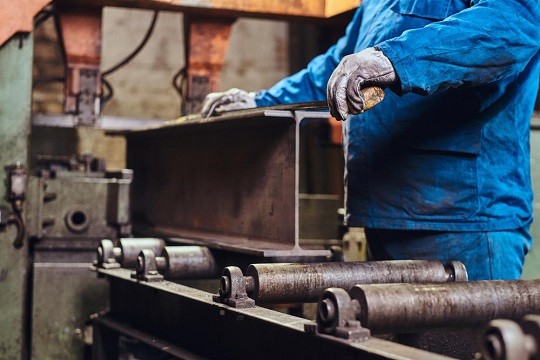
One of the most important uses when studying what is mischmetal is its role in alloy engineering. In aluminum and magnesium alloys, mischmetal improves strength, hardness, and thermal stability. It helps refine grain structure, which enhances mechanical performance and reduces internal defects. In copper and nickel alloys, it improves corrosion resistance and stabilizes high-temperature behavior. Because mischmetal contains multiple reactive rare earth elements, it interacts efficiently with molten metals, making it a cost-effective additive for large-scale alloy production.
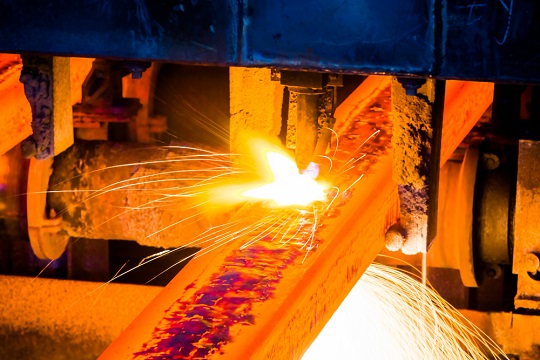
In steel and high-temperature metal processing, what is mischmetal is closely linked to its deoxidizing function. During steel refining, oxygen and sulfur impurities can weaken the final product and cause brittleness. Mischmetal acts as a strong oxygen scavenger, binding with dissolved oxygen and forming stable oxides that are removed from the melt. This improves steel cleanliness, mechanical strength, and fatigue resistance. It is especially useful in specialty steels where consistent quality and reduced impurity levels are critical for performance and safety.
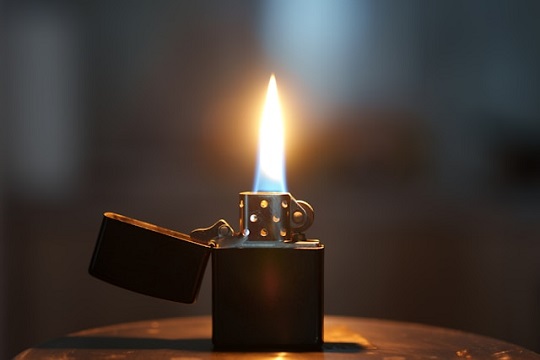
Another key application of what is mischmetal is in ignition systems and pyrotechnic uses. Due to its high reactivity, mischmetal can generate sparks easily when struck or friction is applied. This property makes it widely used in lighter flints and ignition devices. The presence of cerium is particularly important because it oxidizes rapidly and releases energy in the form of heat and sparks. This controlled reactivity makes mischmetal a reliable and cost-efficient material for consumer and industrial ignition systems.
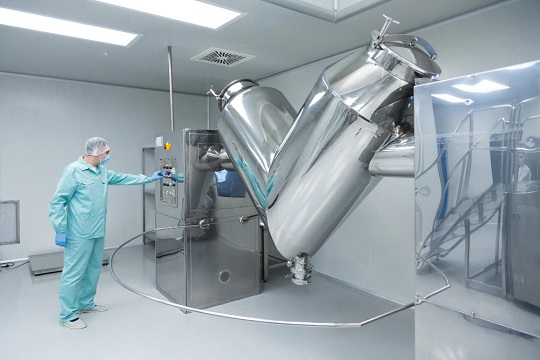
In vacuum technology and controlled-atmosphere systems, what is mischmetal plays a supporting but important role. It is used to remove residual oxygen and trace gases that can interfere with sensitive processes such as coating, thin-film deposition, and high-purity material synthesis. Mischmetal acts as a reactive getter material, chemically binding unwanted gases and improving system vacuum quality. This helps maintain stable processing conditions in research labs, semiconductor production, and advanced materials manufacturing where even small amounts of contamination can affect results.
From a purchasing perspective, understanding what is mischmetal helps explain why it is widely used in global supply chains. Buyers choose mischmetal for several practical reasons.
First, it offers a strong cost advantage. Since it is not fully separated into individual rare earth elements, production costs are lower. This makes it attractive for large-scale industrial use.
Second, it provides flexible supply options. Mischmetal can be delivered in different forms such as ingots, powders, or customized shapes. This flexibility supports different manufacturing processes.
Third, it offers stable functional performance. While not as precise as single-element rare earth metals, it performs reliably in alloying and deoxidizing applications.
However, buyers must also consider:
For companies like AEM REE, what is mischmetal is not only a product definition but also a supply chain solution. It supports industries that need scalable rare earth functionality without excessive cost or complexity.
A key part of understanding what is mischmetal is comparing it with separated rare earth metals.
| Factor | Mischmetal | Separated Rare Earth Metals |
| Composition | Mixed rare earth elements | Single pure element |
| Cost | Lower | Higher |
| Consistency | Varies by source | Highly controlled |
| Best Use | Alloying, deoxidizing | Precision engineering and electronics |
This comparison shows that what is mischmetal is best understood as a practical industrial solution, while separated rare earth metals are used when exact chemical control is required.
Mischmetal is chosen when performance, scalability, and cost efficiency matter more than ultra-high purity.
Mischmetal is mainly made of cerium, lanthanum, neodymium, and praseodymium, with small amounts of other rare earth elements and impurities.
No. Mischmetal is a mixed rare earth alloy, not a single pure element.
It is used in metallurgy, deoxidation, alloy modification, and ignition materials such as lighter flints.
It provides a cost-effective way to use rare earth properties in industrial manufacturing without needing fully separated metals.
So, when we ask what is mischmetal, the answer goes beyond chemistry. It is a practical industrial alloy that connects rare earth production with real-world manufacturing needs.
Mischmetal plays a key role in modern supply chains because it:
In today's global materials industry, what is mischmetal represents efficiency and practicality. It allows manufacturers to access the benefits of rare earth chemistry without the high cost and complexity of fully separated elements.
For industrial buyers and engineers, mischmetal is not just a material—it is a strategic solution in advanced manufacturing systems.
If you need rare earth alloys or other rare earth materials suitable for your application, don't hesitate to contact AEM REE. Our team will help you select the most suitable product, ensuring you have a satisfactory purchasing and usage experience.
 +86-731-89578196